What a slow juicer actually does in the kitchen
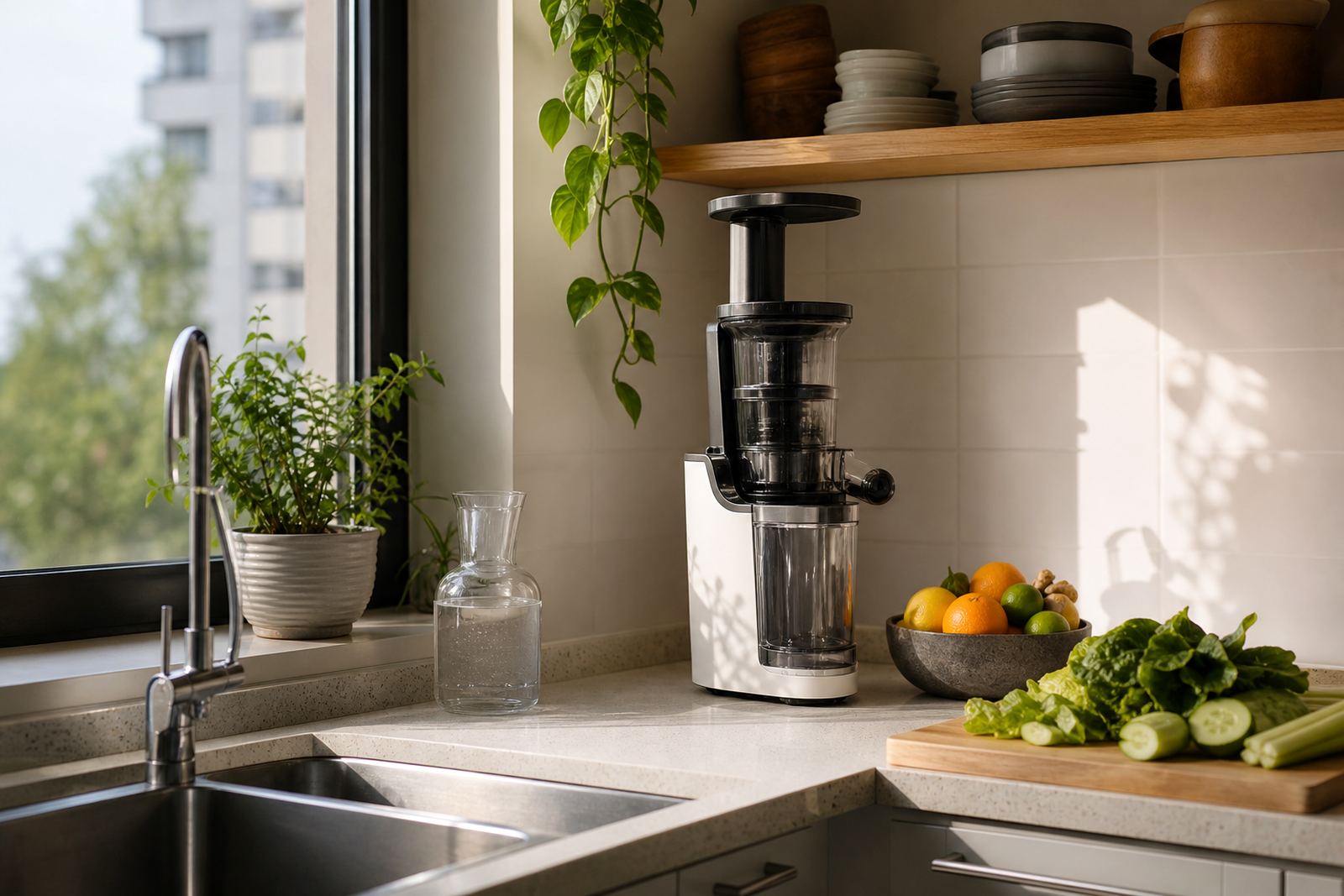
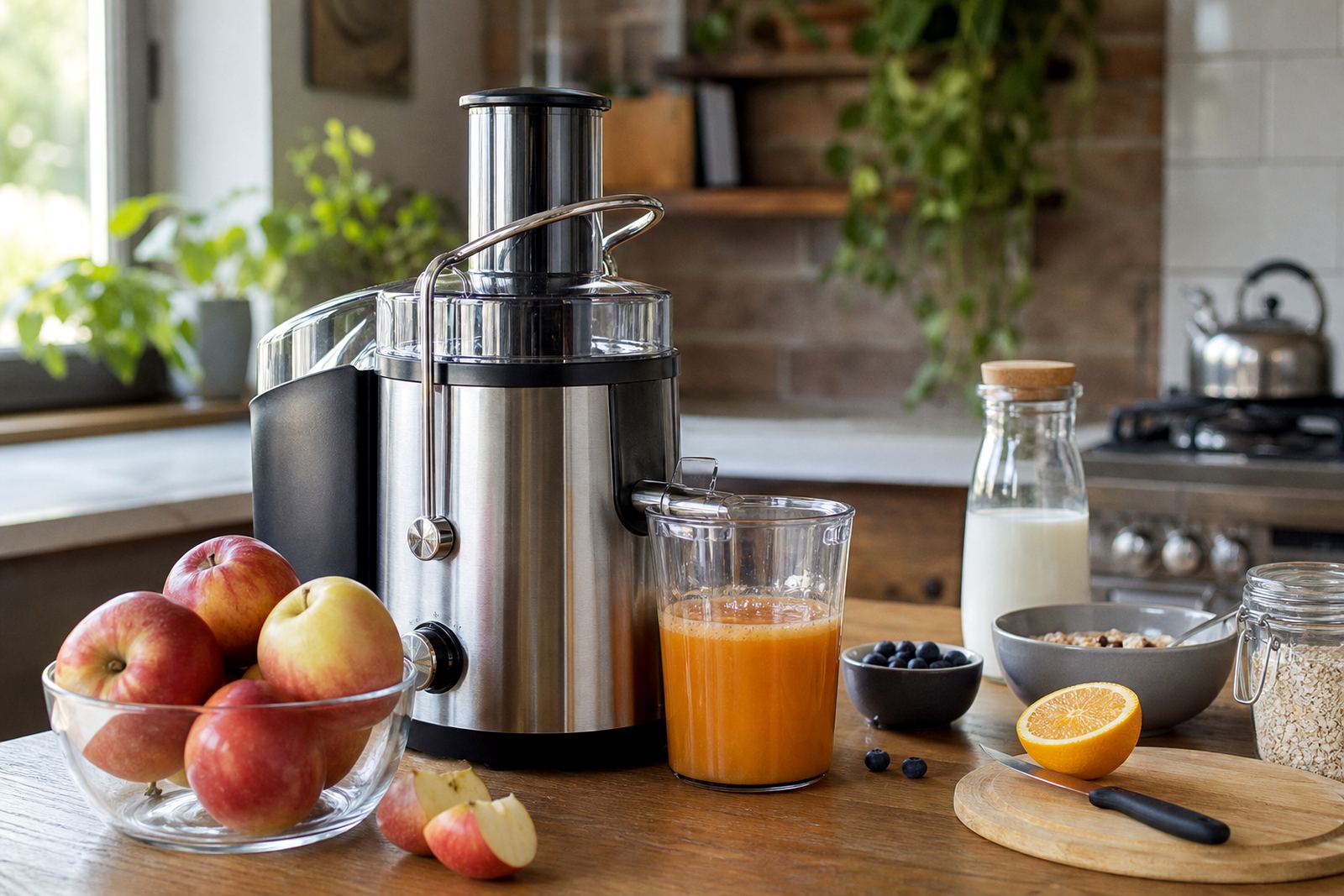
A slow juicer, often called a masticating juicer, feeds fruit and veg into a turning auger rather than a fast spinning blade. That slower action helps separate juice from pulp with less froth, and it usually gives you more control over soft produce, leafy greens and firmer items like carrots or beetroot.
In practical terms, you should expect a calmer pace than with a centrifugal juicer. There is less rushing, more feeding and a bit more patience. If you are making juice for the family before work, it helps to think in terms of chopping, loading and pressing in stages instead of trying to finish everything at once.
Prep that saves time before the first slice
The machine works best when the food is ready for it. Wash produce properly, trim tough ends and cut pieces to a size that fits the chute without forcing them. Apples may need coring, citrus should be peeled, and hard roots can be cut into slimmer strips for smoother feeding.
- Sort soft produce and hard produce separately.
- Remove large pips, stones and tough stems.
- Cut long items into shorter lengths for steadier feeding.
- Keep a tray or bowl nearby for pulp and peel.
- Dry slippery produce lightly so it grips better in the feed chute.
For households in Cape Town, Durban or George where humidity can be high, it also helps to prep in small batches. That keeps cut fruit from sitting too long on the counter and makes the whole process neater.
Pace, feeding and the feel of a slow press
A masticating juicer likes a steady hand. Feed one piece at a time unless the manual says otherwise, and let the auger draw the produce through at its own speed. If the motor starts to labour, slow down and reduce the load. Pushing harder does not improve the result, it usually just makes more mess.
With a cold press style machine, the goal is controlled pressure rather than speed. That means the result can take a bit longer, especially with fibrous vegetables or a mix of soft and hard items.
- Listen for a steady hum rather than strain.
- Alternate softer and harder pieces if the machine handles mixed feeding well.
- Stop and clear any jam before continuing.
- Use the reverse function only when needed, not as a habit.
Cleaning without turning it into a chore
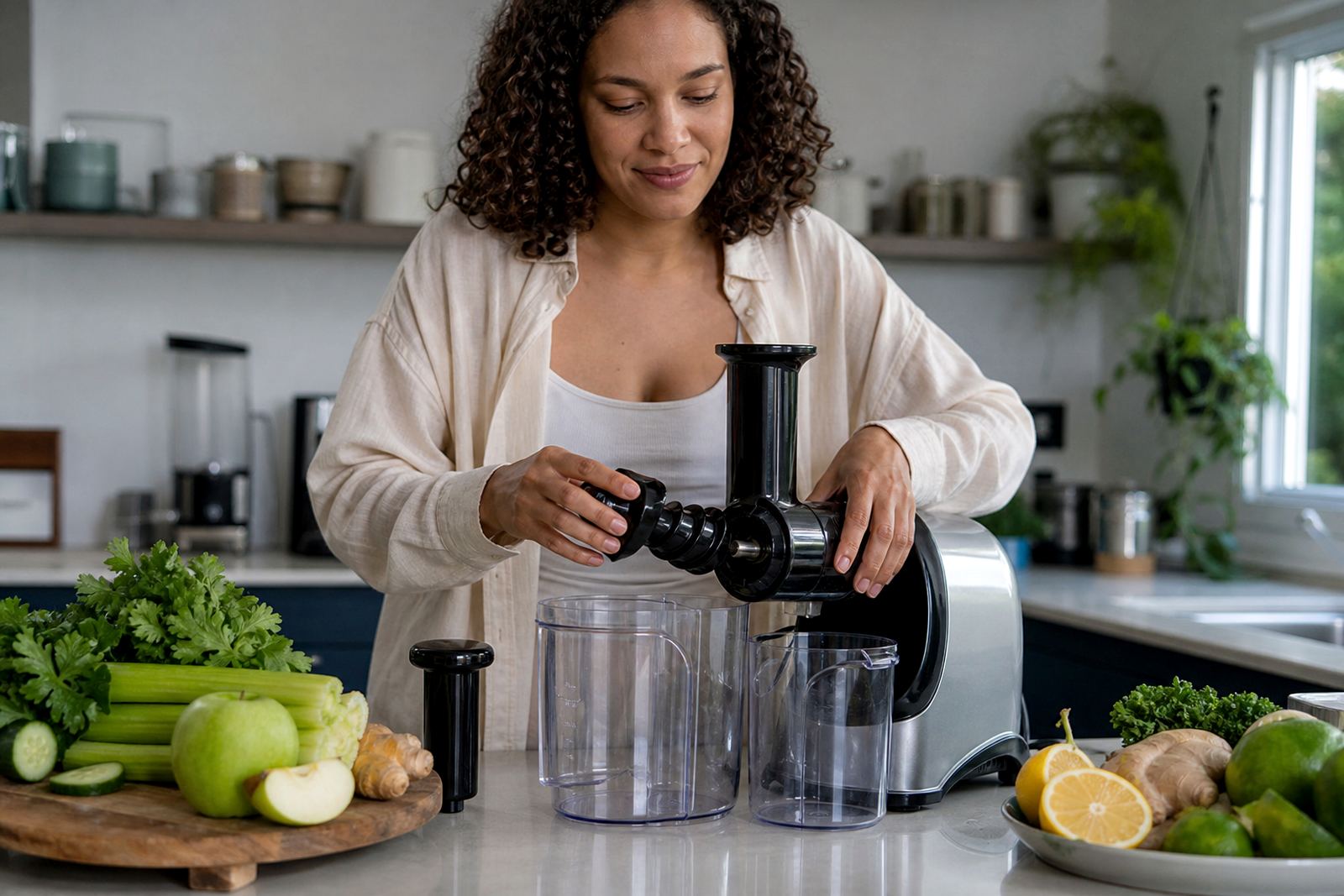
The best time to clean a slow juicer is right after use, before pulp dries onto the parts. Take the machine apart in the order shown in the manual, rinse the removable pieces and use a soft brush on the screen, auger and pulp outlet. Harsh scouring pads can damage fine surfaces and shorten the life of seals and screens.
Pay attention to food-safe handling as you clean. Use clean water, keep the work area free from old pulp and dry the parts fully before storage. If you live near the coast, where moisture hangs around in the air, make sure screens and metal pieces are completely dry so rust and odours do not build up.
- Rinse each part before pulp dries hard.
- Use a dedicated brush for mesh screens and narrow corners.
- Wash the feeding pusher, lid and juice jug separately.
- Check seals and gaskets for trapped pulp.
- Let everything air dry on a clean rack or towel.
Food safety and storage habits that matter
Clean produce and clean parts matter just as much as the machine itself. Use cold water for washing fruit and vegetables, and keep raw ingredients away from cleaned components to avoid cross-contamination. If you are juicing for the day, refrigerate the juice promptly in a sealed container and do not leave it standing out on the counter in summer heat.
For home kitchens in Johannesburg, Pretoria or Paarl where routines can be busy, storage habits make a real difference. Keep spare parts, brushes and small tools in one dry place, and store the juicer with the lid off if that helps airflow. That reduces trapped smell and makes the next clean-up easier.
When a slow juicer needs a bit of attention
Most issues show up early if you know what to look for. A leak around the base can point to a seal problem, while unusual vibration may mean an item has not been seated properly. A noisy run can also come from overfeeding, a blocked screen or a worn part. Do not keep forcing the machine if the sound changes sharply.
MiniPress supports customers across South Africa with first time setup, deep clean guidance, spare parts help, seal replacement, screen care, leak troubleshooting, noise vibration checks, storage care, cable plug checks, brushes and tools, routine care plans and video support calls. If you are in Paarden Eiland, Cape Town or need delivery support to Johannesburg, Durban, Pretoria, George, Stellenbosch or Somerset West, keep the model details handy when you ask for help.
- Check that all parts lock into place properly.
- Look for wear on seals, gaskets and screens.
- Inspect the cable and plug for damage before use.
- Listen for grinding, scraping or repeated stalling.