Why a centrifugal juicer suits a short prep window
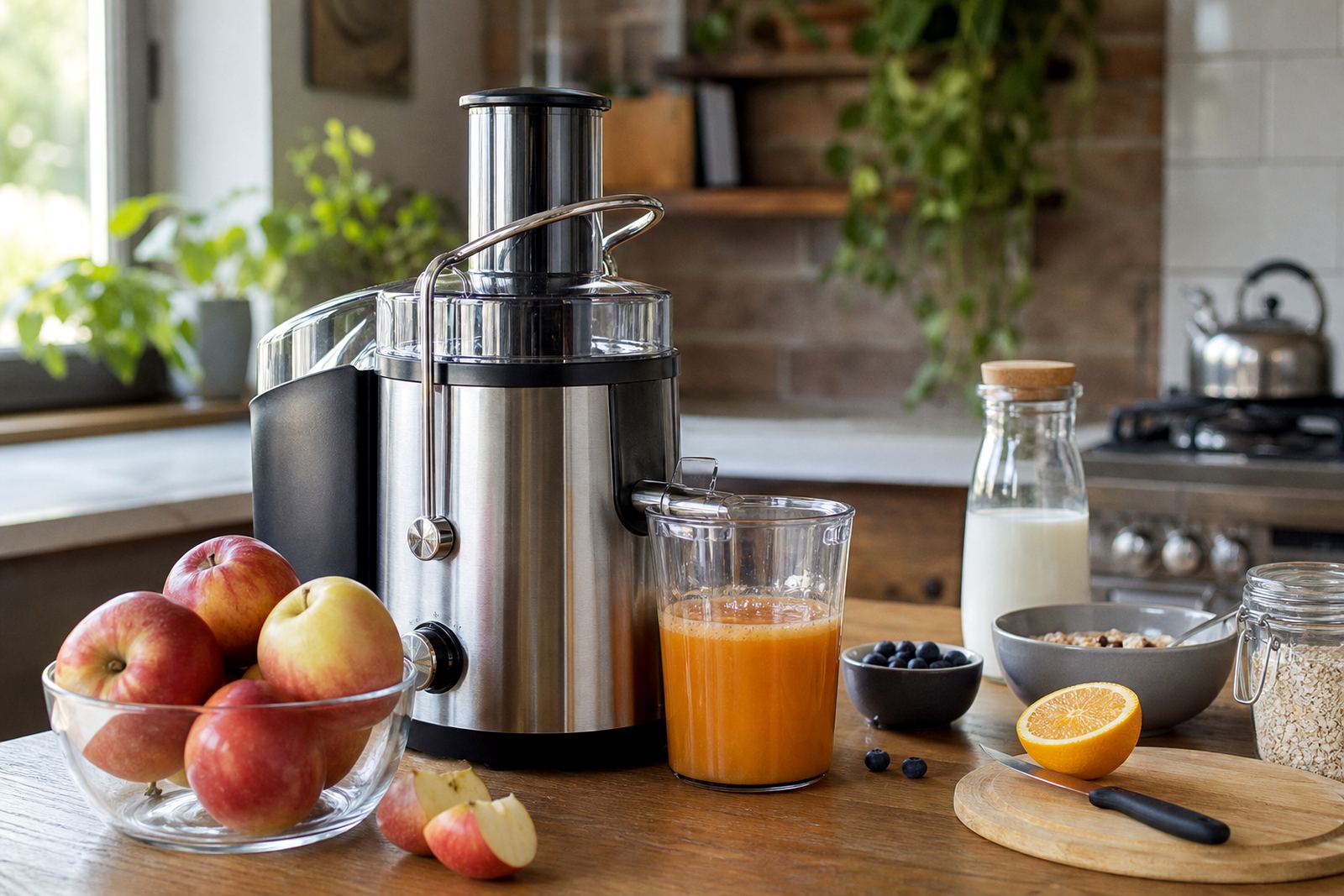
A centrifugal juicer uses a fast spinning blade and mesh screen to separate juice from pulp. It is generally chosen when speed matters, especially for morning prep, small family kitchens, or places where produce is being juiced in batches rather than left standing around. Apples, carrots, pears and similar firm produce are often handled well, while leafy greens usually need more careful feeding and may give a lighter yield.
Compared with slow masticating juicers and cold presses, a centrifugal unit usually works faster and asks less patience from the operator. That does not make it better for every task, but it does make sense when you need quick turnaround and a straightforward routine.
What to line up before the first spin
Before the first use, place the machine on a level counter with enough space for a jug, pulp container and cleaning tray. Keep the cable clear of sinks and hot plates. If the kitchen is coastal or close to the sea, wipe down the work area often because salt air can leave moisture on metal parts and plugs.
- Wash hands and rinse produce under clean running water.
- Trim bruised sections, hard stems and any damaged peel.
- Cut fruit and veg into pieces that fit the feed chute without forcing.
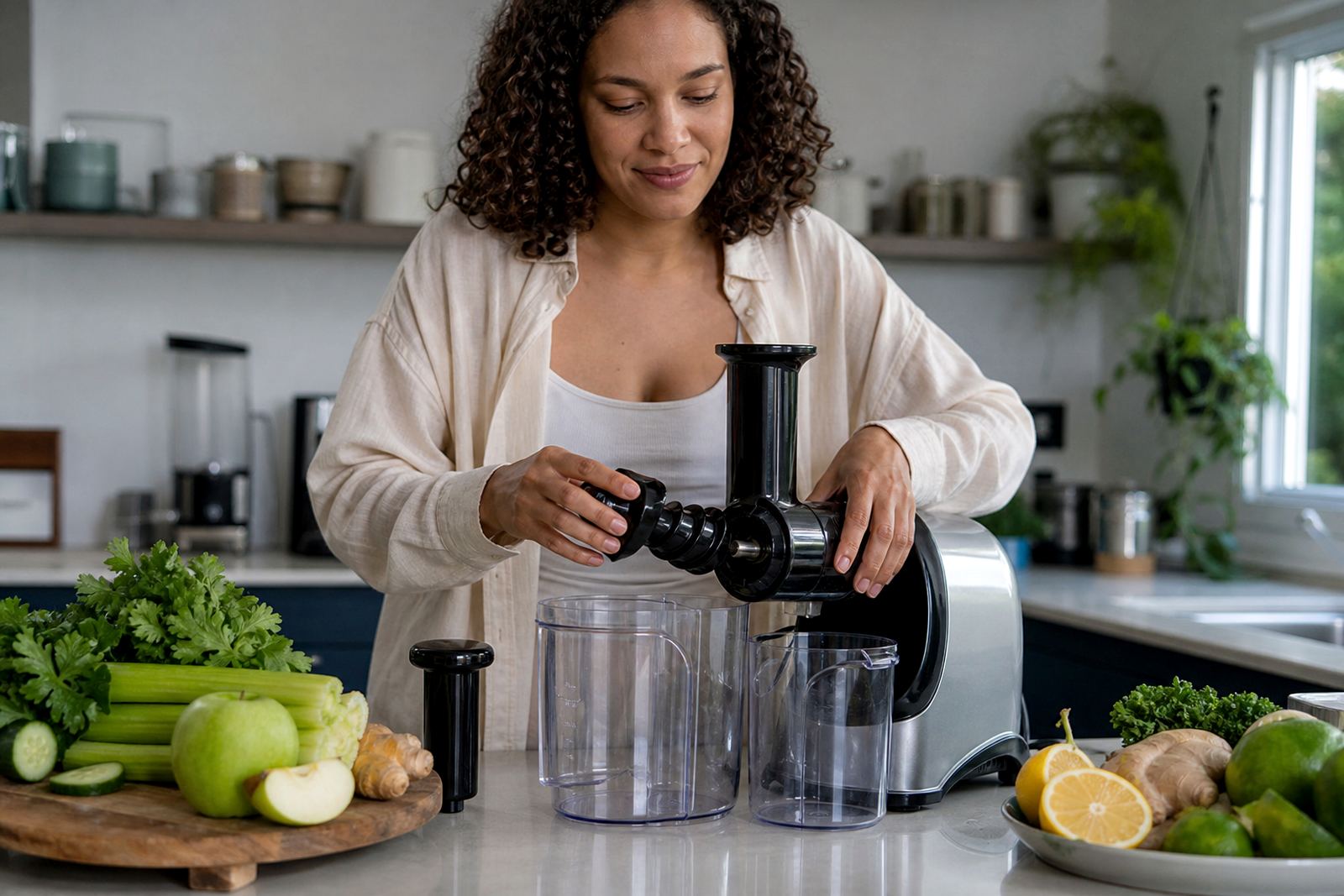
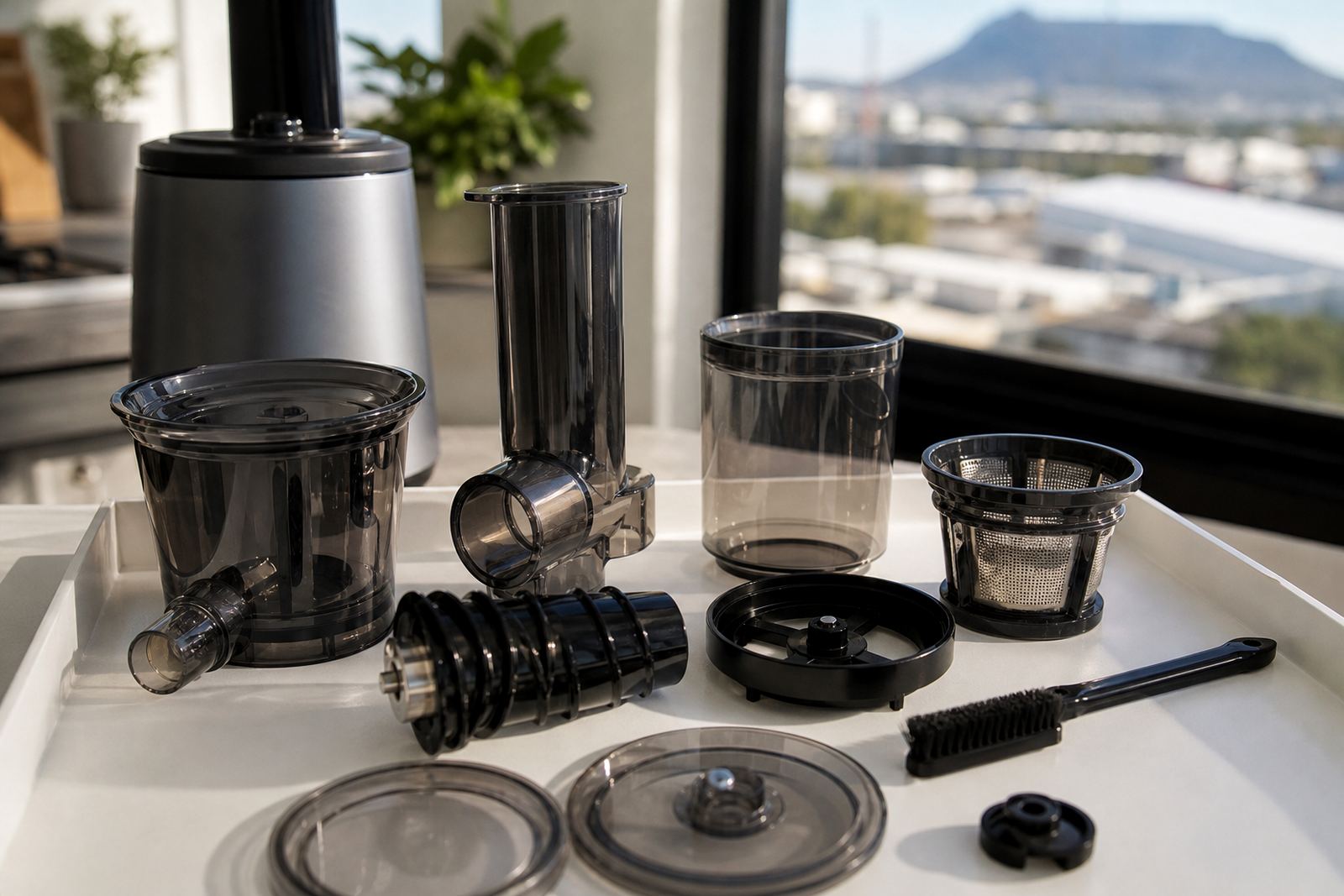
- Check that the lock points, screen and lid are seated properly.
- Keep a brush, soft cloth and drying rack within reach.
If the juicer has a safety latch, use it every time. A loose lid can lead to vibration, splashing or a noisy start. For first-time users in Johannesburg, Durban, Pretoria or George, a quick trial run with water and a small amount of produce can help the household get the feel of the feed rate before a full batch is prepared.
Feed the machine in the right order
A centrifugal juicer performs best when produce is fed steadily, not packed down hard. Soft items can be pushed through too quickly and overload the screen, so it helps to alternate softer pieces with firmer ones. This keeps the basket moving more evenly and can reduce clogging around the mesh. If the machine starts to sound strained, slow down instead of pressing harder.
For cleaner results, follow a simple order: hard items first, then medium produce, then softer pieces. This is not a strict rule but it often helps with balance. If the pulp looks very wet, the screen may need a rinse or the feed rate may be too fast. If the juicer shakes a lot, stop and check the assembly before continuing.
- Use short, even pushes through the chute.
- Do not use knives, spoons or fingers near the spinning basket.
- Keep children away from the feed area.
- Switch off before opening the lid or lifting parts.
Cleaning after use without making a mess of the kitchen
Cleaning right after use is easier than leaving pulp to dry on the screen. Rinse removable parts under warm water as soon as juicing is done, then use the supplied brush or a soft bristle brush to clear the mesh. A small soaking time may help with fibre, but long soaking is not needed unless the instruction sheet allows it. Never scrub the mesh with metal tools because that can damage the screen and affect future flow.
Food safety starts with clean parts, dry storage and careful handling. If juice is being stored, use a clean covered container and refrigerate it promptly. Do not leave residue in the jug or on seals, as this can cause odour and a sticky film. In warmer inland homes and humid coastal areas alike, moisture trapped under the lid can encourage spoilage, so drying matters. Make sure every part is fully dry before packing the unit away.
Noise, vibration and the little faults that can slow you down
Centrifugal juicers are often louder than slow juicers because of the high-speed motor. A steady hum is normal, but knocking, rattling or strong movement on the counter usually points to a fitment issue, a worn seal or an unbalanced load. Start by checking that the base sits flat and the basket is locked correctly. If the unit still vibrates heavily, stop the machine and inspect the screen for trapped pulp or damage.
Common checks at home include cable condition, plug fit, lid alignment and the state of the pulp outlet. A small leak near the jug or spout can come from an overfilled container or a tired seal. If a part shows wear, replacement before further use is often the safer route. For households in Paarden Eiland, Stellenbosch or Somerset West that use the machine regularly, a routine care plan with periodic checks can help keep the unit in better working order.
Picking the right kind of juicer for the job at hand
Not every kitchen needs the same machine. A centrifugal juicer suits quicker batches and simpler day to day use. Slow masticating juicers tend to work more gradually and can suit users who prefer a slower feed pace, while cold presses are used for pressing produce with less spinning action. The best choice depends on the size of the household, how often the machine will be used, and how much counter space is available.
If you are comparing types, look at the following points:
- How fast you need to prepare juice before work, school or guests arrive.
- How much time you can spend on cleaning after use.
- Whether the kitchen needs a compact footprint or more prep space.
- How often you will use the machine in a week.
- Whether you prefer a louder, faster cycle or a slower pace.
MiniPress supplies home juicers and cold presses online with delivery across South Africa, including Cape Town, Johannesburg, Durban, Pretoria and George. Support for setup, spare parts, screen care, seal replacement and leak troubleshooting is available through the enquiry form on the contact page, with guidance from the team in Paarden Eiland, Cape Town.