
The parts that usually need attention first
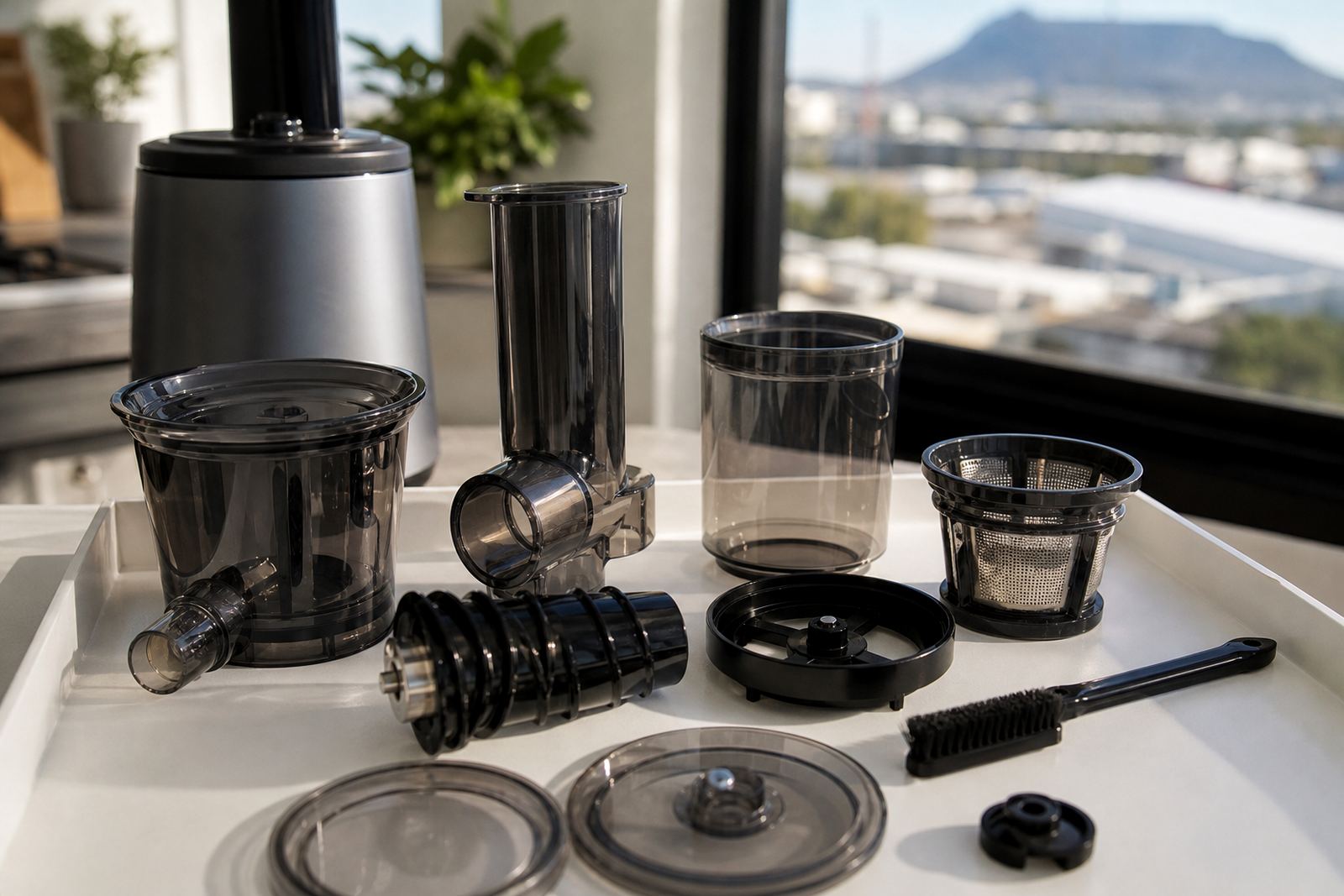
Most home juicers and cold presses rely on a small group of working parts that handle the pulp, juice flow and cleaning cycle. The screen or strainer sits under strain every time you press fruit or vegetables, while seals and gaskets keep liquid in the right place and help prevent drips onto the motor base or counter.
Brushes and cleaning tools matter too. A good brush clears fibre from fine mesh screens, pulp outlets and narrow corners without forcing grit back into the part. On some units, the hopper, feed chute and auger or spinning basket also need regular inspection because buildup can make the machine work harder and leave more residue behind.
- Screen or mesh: check for blocked holes, dents and staining that does not rinse away
- Seal or gasket: look for flattening, cracks, twisting and leaks around joins
- Brushes and tools: replace if bristles are bent, loose or missing
- Feed parts: inspect for chips, heavy scratching or loose fit
How to tell a screen is past its best
The screen does the fine work, so wear usually shows up here first. A centrifugal juicer screen can clog with fibrous pulp or show tiny bent sections after repeated use, while a slow masticating screen may trap more residue if it is not cleaned soon after juicing. When the screen starts to stain badly or the juice flow slows even after a full clean, it is worth checking for damage rather than just dirt.
Look for small tears, warped edges, bent mesh and parts that no longer sit evenly in the housing. If the machine sounds harsher than usual or the pulp comes out wetter than normal, the screen may not be separating properly. That does not always mean a fault in the motor, sometimes it is just wear on a part that takes the day to day pressure.
- Rinse immediately after use to stop fibres drying in the mesh
- Hold the screen up to the light and check for blocked holes
- Run a soft brush in one direction rather than scrubbing across the mesh
- Replace screens that are bent, cracked or no longer secure
Seals, gaskets and leak points around the housing
Seals and gaskets are small but important. They stop liquid from escaping where two parts meet and help protect the motor area, counter top and plug point from moisture. In kitchens where the machine is used often, or where coastal humidity sits high like in Cape Town and Durban, rubber parts can harden faster and lose their shape.
Check the seal around the juice outlet, lid and chamber cover. If there is persistent dripping, a damp ring after use, or a whistle like air is pulling through a gap, the seal may need replacement. Clean seals with mild dish soap and warm water only, then dry them well before refitting. Never force a swollen or twisted gasket back into place, it may fit for a while but fail again quickly.
- Inspect for flattening, splits and sticky surfaces
- Make sure the seal is seated evenly all the way around
- Dry parts fully before storage to reduce mould growth
- Replace any seal that smells musty after washing and drying
Brushes, paddles and the bits that help cleaning
Brushes are often treated as throwaway items, but they make a real difference to food safety and upkeep. A proper cleaning brush reaches the rim of a screen, the pulp port and the underside of a lid without scratching the plastic or metal. If the bristles splay out or the tip goes stiff, it stops cleaning properly and can push debris into tight corners.
Keep a separate brush for the juicer rather than using one from general kitchen cleaning. That helps avoid cross contamination from grease, detergents or old food residue. For households using the machine every day, a second small brush can help with the screen and another for the feed chute or auger grooves. It saves time and gives a better clean after beetroot, carrots or leafy greens.
- Replace brushes with bent or flattened bristles
- Keep tools dry between uses so the handle does not go tacky
- Do not use metal scourers on fine parts
- Wash removable tools in warm soapy water and dry them fully
Cleaning steps that protect the part and the juice
Good cleaning is not only about looks. It helps stop old residue from building up, reduces odour and keeps food contact surfaces in better condition. Start by switching off and unplugging the machine, then strip it down in the order shown in the manual or setup guide. Rinse loose pulp first, so you do not grind it into the mesh or gasket while scrubbing.
Use warm water and mild dish soap on removable parts. Avoid harsh chemicals on plastics and never soak the motor base. For a slow masticating unit, clean the auger grooves and strainers carefully because pulp can hide in narrow channels. For a centrifugal unit, check the basket and lid for tiny fibres after every use. Dry each part before reassembly, because trapped moisture can lead to smells and slip during the next setup.
- Unplug before cleaning
- Rinse pulp away before scrubbing
- Use mild soap and a soft brush
- Dry all parts before storing or refitting
When a small part is enough and when it is not
Not every problem means the machine needs major repair. A loose lid, worn seal or clogged screen can create noise, leaks or poor output that look more serious than they are. If the unit vibrates more than usual, check that it sits level on the counter and that all clips are locked. A wobble can come from a part that is not seated properly, not only from wear.
If you see repeated sparking, burning smell, cracked housing or a plug that heats up, stop using the machine and have it checked before further use. For ordinary wear, keep a small list of parts you use most often and replace them before they fail completely. In homes across Paarden Eiland, Johannesburg, Pretoria, George and other delivery areas, that can mean fewer interruptions and less wasted produce.
- Check fit, noise, vibration and leaks after each clean
- Replace small wear parts before they split fully
- Store clean parts dry, in a covered container if possible
- Keep spare brushes and seals with the machine accessories