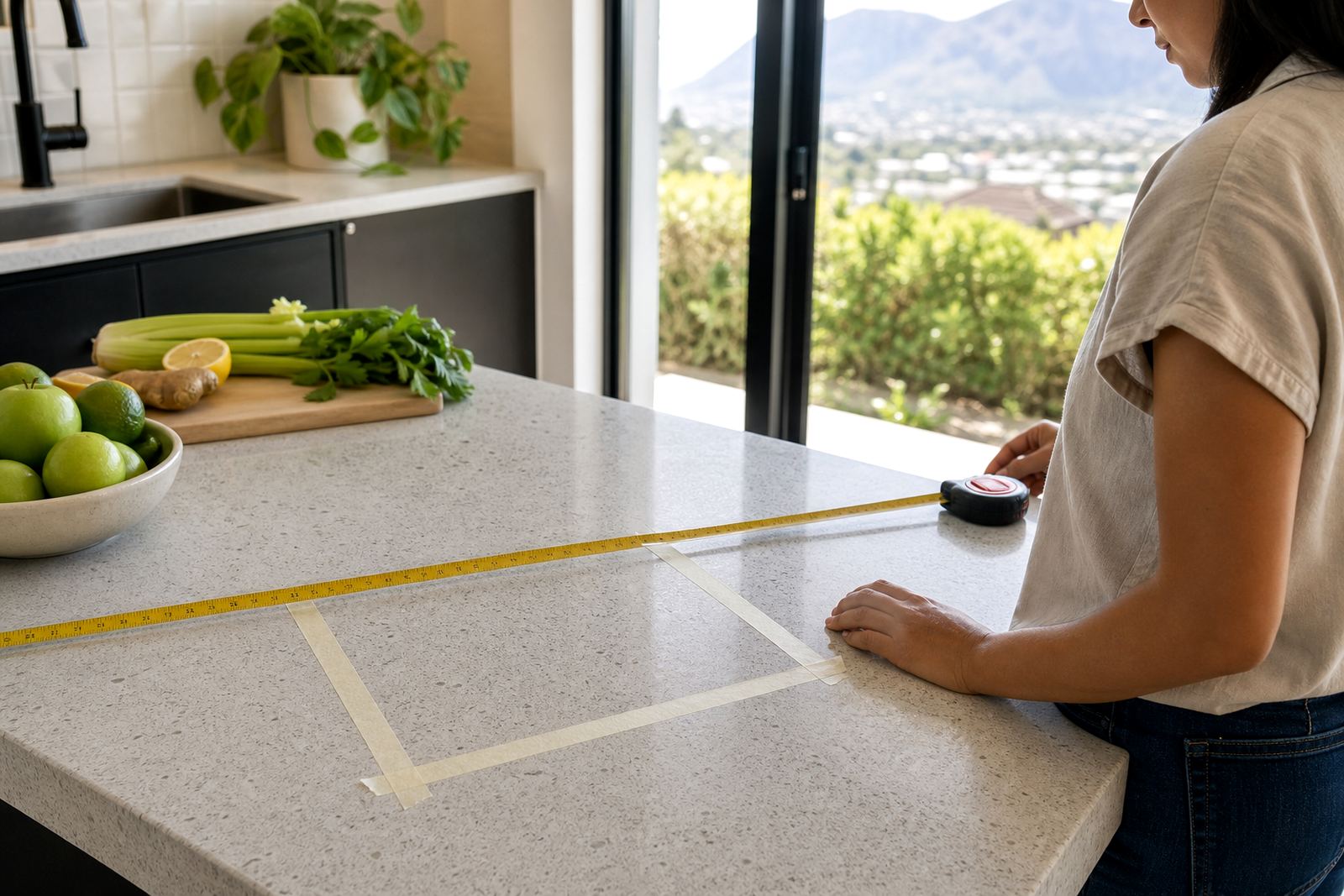

Measure the counter before you look at the machine
Start with the space you actually have, not the space you hope you have. Measure the length and depth of your prep area, then check the height under cupboards and shelves, especially if you keep the machine near a kettle, air fryer or dish rack. In many apartments a juicer ends up living in a corner, so allow for room to remove the lid, lift out the pulp bin and pour into a jug without knocking into a backsplash or window frame.
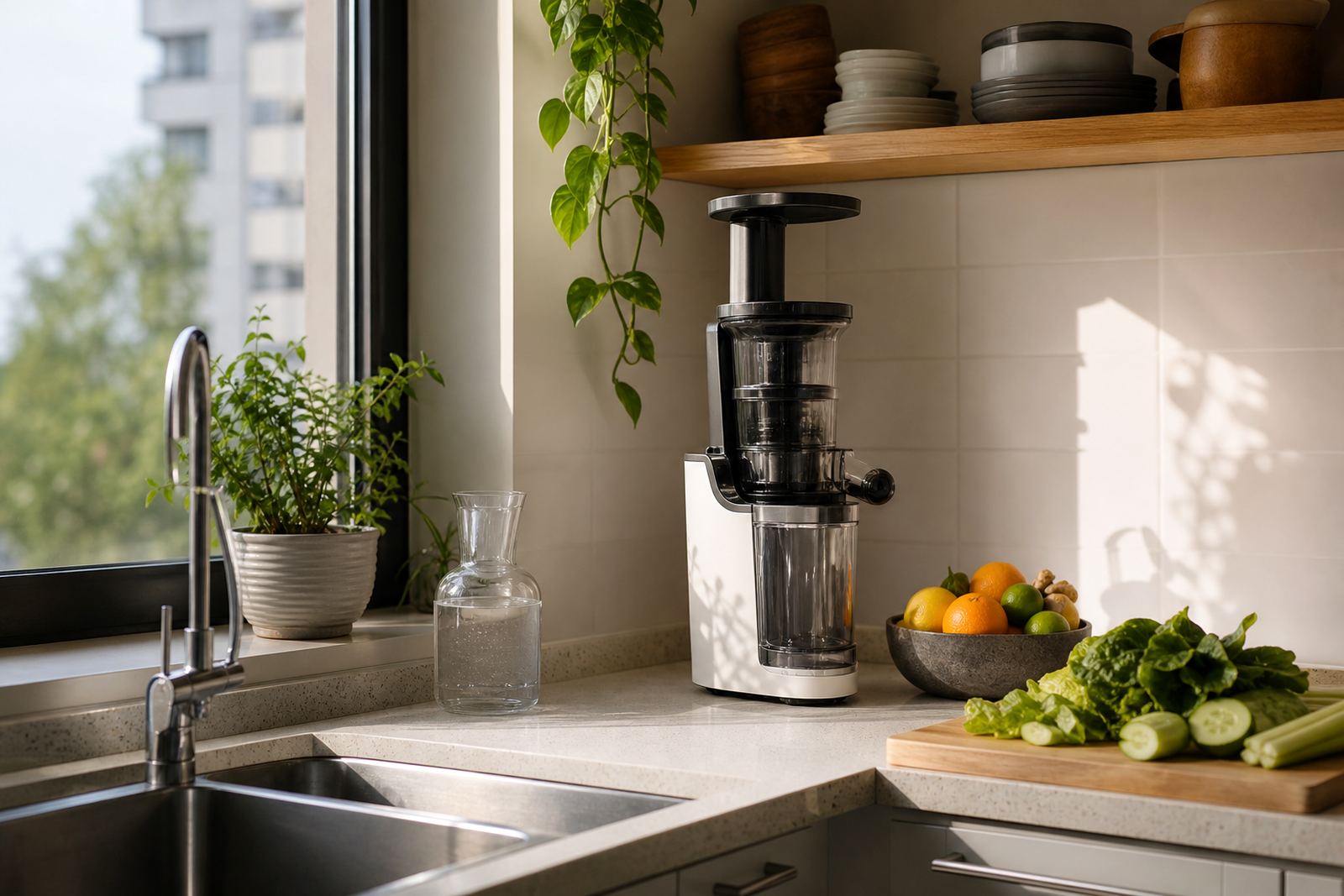
For compact kitchens, a lower-profile body often works better than a tall, narrow one. A stable base matters too, because a machine that walks across the counter is awkward in a tight space and can shake loose on a light table during a power fluctuation. If you have limited storage, note the cord length and where you can tuck the cable so it does not bunch up behind the appliance.
Match the juicer type to your routine
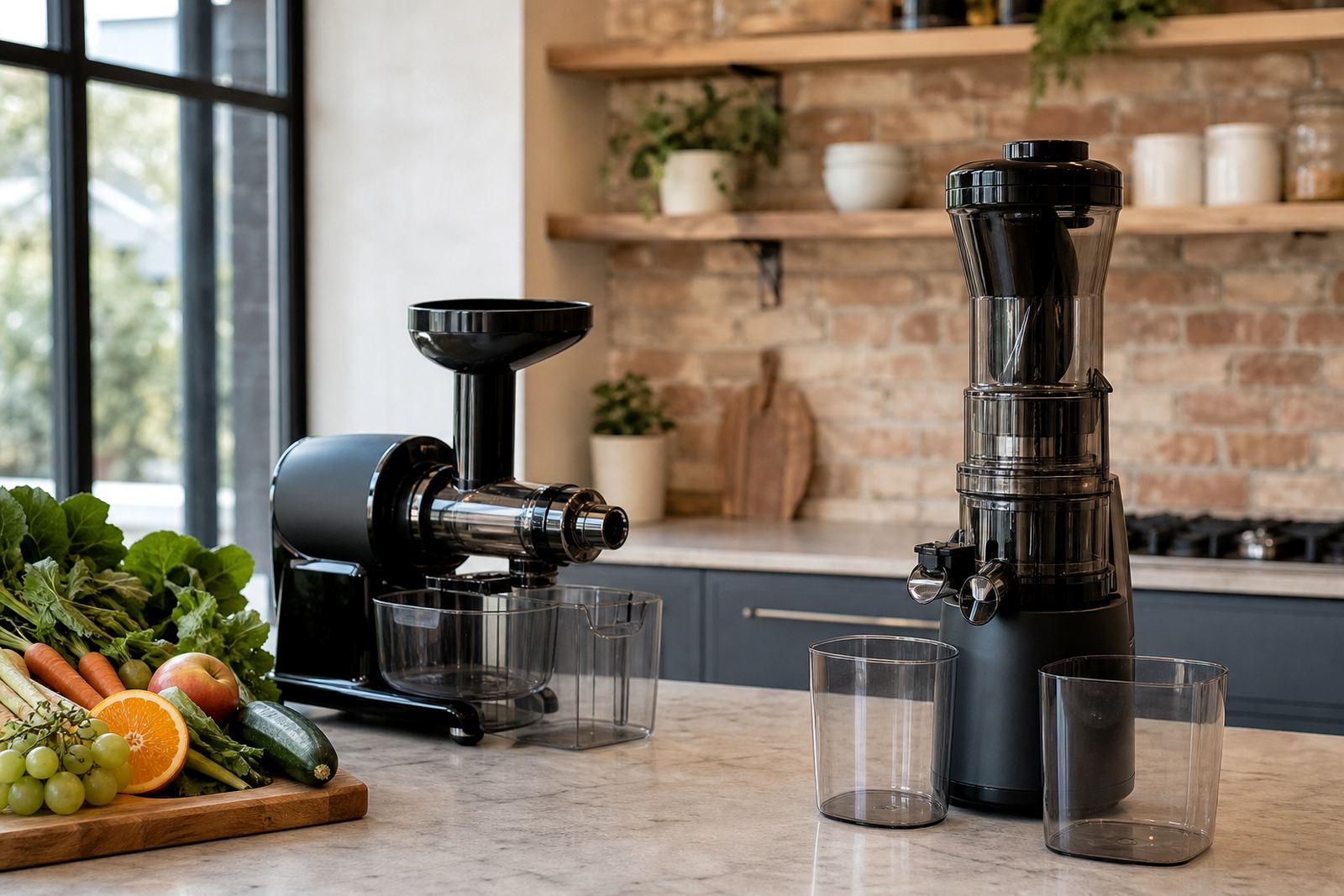
Slow masticating juicers use an auger to press produce at a slower speed. They usually work well for leafy greens, softer fruit and longer juicing sessions, and they are often a better choice when you want less foam and a drier pulp. Because they run slower, they can feel calmer on a small counter and are usually easier to position in a narrow kitchen nook.
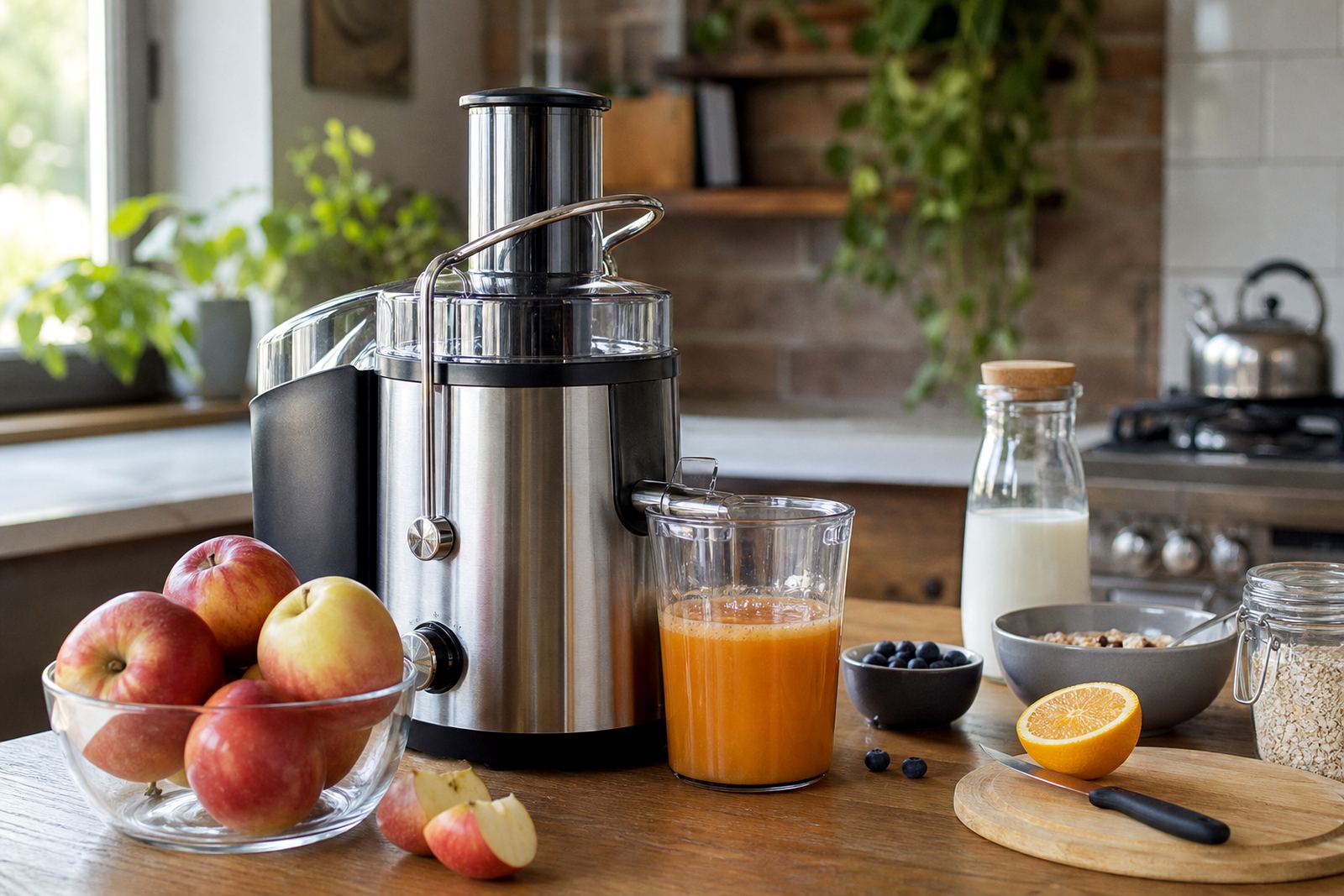
Centrifugal juicers use a fast spinning basket and are often quicker for apples, carrots and other firm produce. They suit households that want a fast start in the morning and do not want a long prep session. Cold presses use pressure to extract juice, and in home use the term is often used for machines that focus on slower extraction and less heat during the process. The right choice depends on how often you juicer, what you make most and how much cleaning time you can allow.
- Choose slow masticating if you prefer quieter operation and more leafy greens.
- Choose centrifugal if speed matters most and counter space is very limited.
- Choose a cold press style if you want a slower process and careful handling of produce.
The parts that matter in a tight cupboard
In a small kitchen, every removable part counts. Look at the feed chute, juicing screen, pulp container and juice jug. A wide feed chute can reduce chopping, which helps when your prep space is tiny, while a screen that lifts out in one piece is easier to rinse in a shallow sink. If the pulp bin is oversized, make sure you still have somewhere to place it while you work.
For storage, check whether the machine separates into pieces that stack neatly. A juicer with fewer awkward corners is easier to fit into a cupboard beside plates, containers and baking trays. If your kitchen gets humid or near the coast, wipe parts dry before storing them away so moisture does not sit in seams, seals or plug points.
- Look for removable parts that do not need special tools.
- Choose surfaces that wipe clean without trapping pulp.
- Check that the machine stands steady on a small shelf or trolley.
Cleaning should be quick enough for weekday use
If cleaning feels heavy, the machine will end up in the cupboard too often. For most home juicers, rinse parts as soon as possible after use, then wash with warm water and a mild kitchen detergent. Use a soft brush for screens, small slots and around the pulp outlet. Do not leave citrus skins, carrot fibres or spinach bits to dry hard on the mesh, because dried residue is harder to remove and can affect flow the next time you use the machine.
Food safety is not complicated, but it does need routine. Keep raw produce separate from washed produce, clean the counter before and after juicing, and dry hands before handling plugs or switches. If a machine has seals, make sure they are seated properly before each use, because a loose seal can lead to leaks and mess on the counter. In a small flat, less mess is a real advantage.
A narrow-kitchen checklist for first-time buyers
Before ordering, work through a simple checklist. It saves you from buying a machine that looks neat online but crowds the kitchen once it arrives. Think about where you will cut produce, where the juice will pour, and where the machine will dry after washing.
- Measure the available counter height, width and depth.
- Check how many parts need washing after each use.
- Confirm whether the machine fits under your cupboards.
- Think about noise if you juice early or late.
- Make sure the pulp bin and jug fit in your cupboard or shelf.
- Look at the weight if you need to move it often.
A lighter unit is not always better, but if you store it in a high cupboard or on a top shelf, weight becomes important. In smaller homes, convenience is often about how quickly you can set up, use and put away the machine without clearing the whole kitchen.
Getting the most from a small-footprint juicer
Once the machine is in your home, a few habits help it work better. Wash produce before juicing, trim large pieces so the feed chute is not forced, and alternate soft and hard ingredients if the manual suggests it. If you are using a slow machine, do not overload the chute. If you are using a centrifugal unit, keep the feed steady so the basket does not jam. For cold press style units, allow enough time for the slower extraction, especially when making several glasses.
MiniPress supports customers across Cape Town, Johannesburg, Durban, Pretoria and George, with delivery to Stellenbosch and Somerset West as well. From the Paarden Eiland base, the team assists with first time setup, seal replacement, screen care, leak troubleshooting, brush and tool guidance, storage care and video support calls. That is useful when a small kitchen needs practical advice, not guesswork.