Start With the Counter That Will Carry It
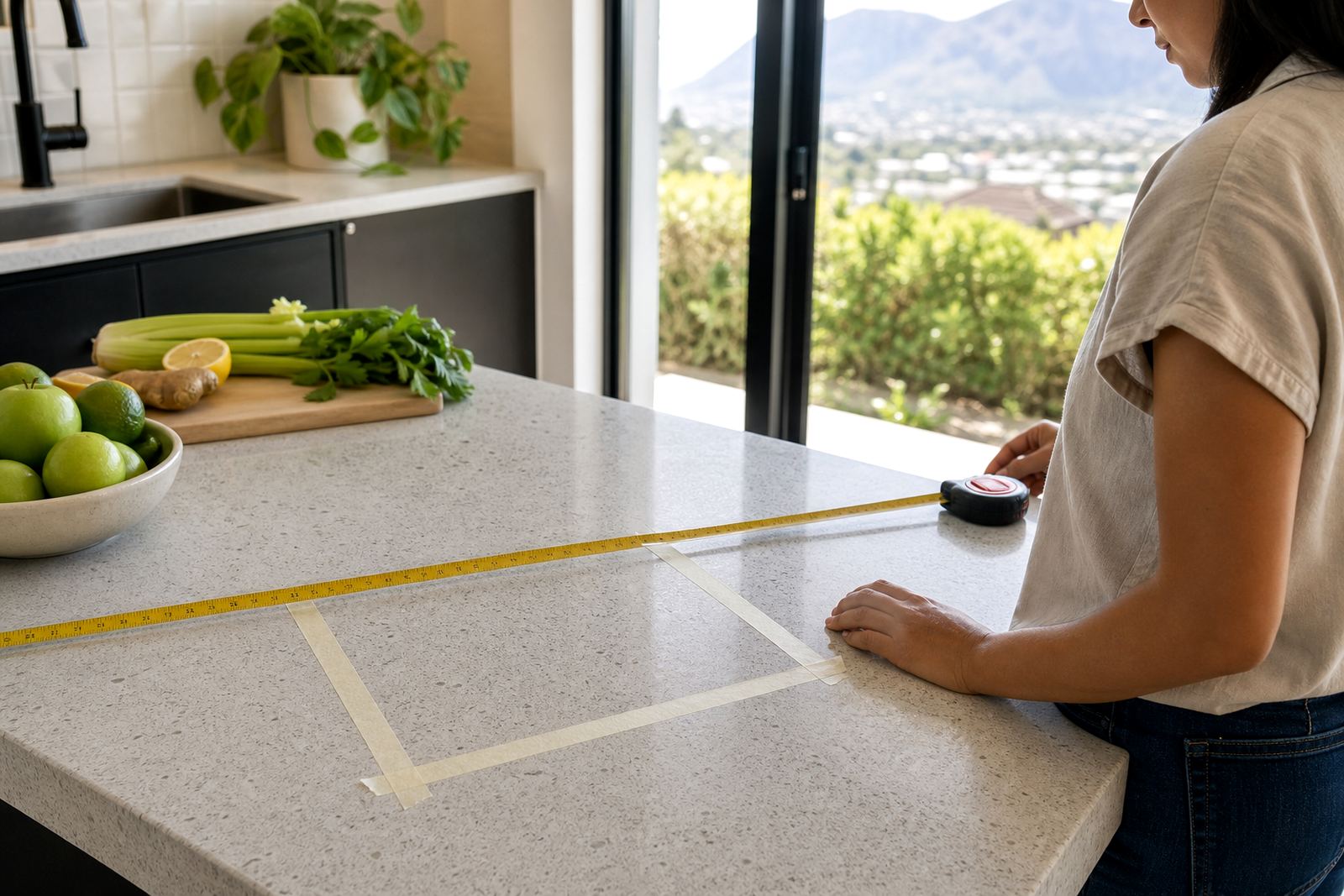
Pick the counter where the machine will live most days, then measure the usable length and depth, not just the full slab. Leave room for the machine body, the lid to lift, and space beside it for a jug, fruit bowl or waste container. If your kitchen is narrow, a machine that fits on paper but touches the wall or hob is a poor choice in practice.
Measure from the wall to the front edge of the counter and note any overhang from a tiled splashback or power point. In many Cape Town flats and townhouses, the usable strip is smaller than it first looks. A quick tape measure check saves a lot of moving things around later.
Cupboards, Lift-Out Space and Top Shelf Reach
Think about where the machine will be stored when not in use. Some kitchens have deep cupboards, but the opening may be tight or the shelf too high for a heavy base unit. A cold press or a larger slow masticating juicer can be awkward to lift in and out if you need both hands and a twist at the same time.
Before you order, open the cupboard door fully and check these points:
- Clear opening height and width
- Shelf depth from front lip to back panel
- Space for attachments, pusher, brush and jug
- Whether the unit can stand upright without tilting
- How far you must lift it over the sink or counter edge
If the unit will stay on the counter, still allow storage for spare parts and brushes nearby so cleaning is easier after use.
Sink Access and Wash-Up Flow
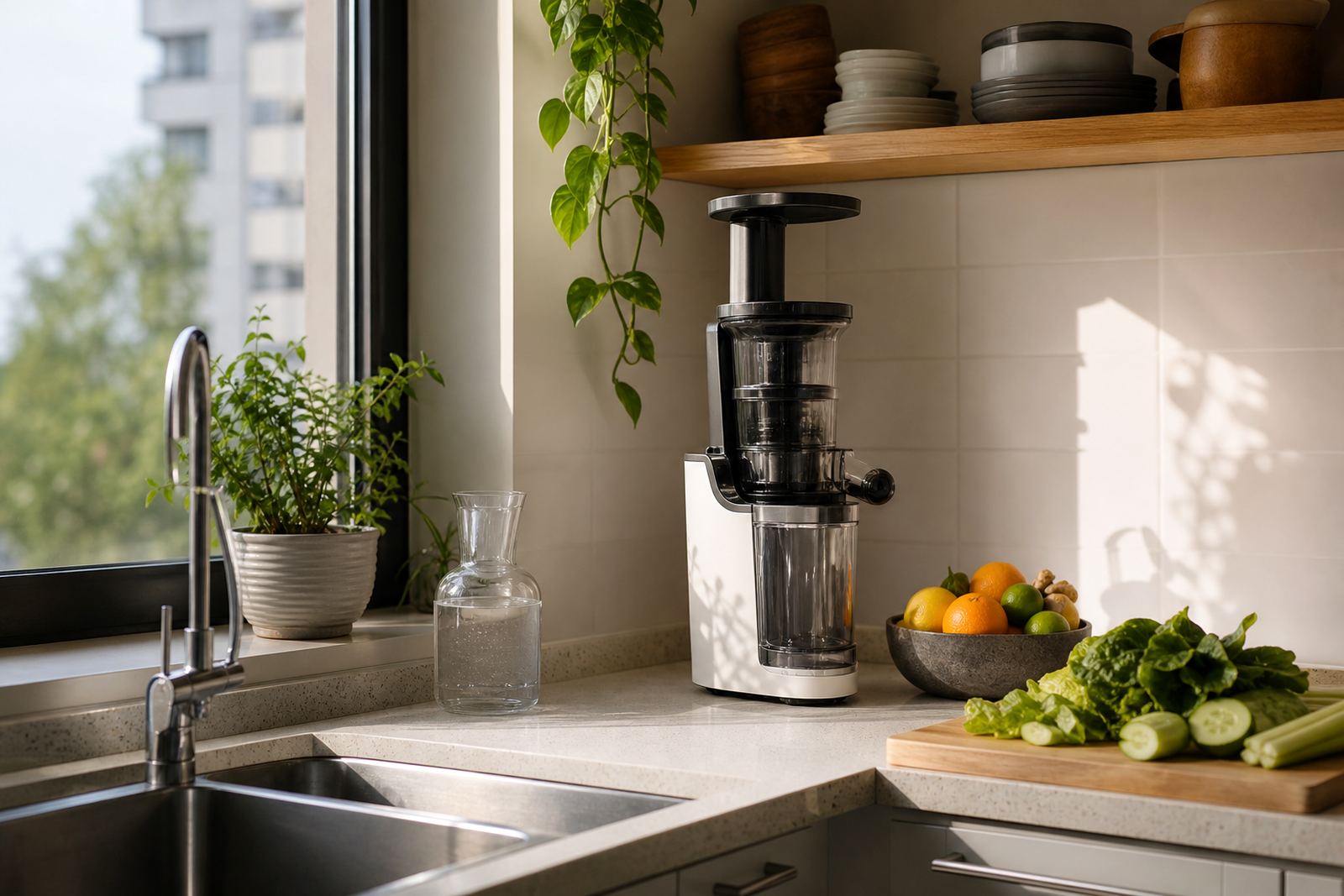
Cleaning matters when choosing a juicer because wet parts, pulp and filters need space around the sink. Check whether your sink is large enough to rinse baskets, screens and lids without knocking other dishes aside. In smaller kitchens, a double sink can help, but a single deep sink may be enough if the parts are not too bulky.
Look at the route from counter to sink and back again. If you have to carry drips over a tiled floor or around a narrow island, that adds mess and slip risk. For households in coastal areas like Durban or George, drying space also matters because damp air slows down air drying and can leave parts sitting wet longer than you expect.
Power Points, Cable Length and Sense
Check where the nearest power point sits and whether the cable reaches without stretching across a walkway. The safest setup is a point close to the working area, with the cord kept out of water and away from the stove. If your counter is packed, a trailing cable can get caught under containers or tug the machine sideways.
Also think about local power cuts.A simpler layout with a clear outlet, a dry surface and easy storage makes life easier when power comes and goes. If you use a surge protector, keep it off the wet zone and never coil the cord tightly around a warm motor housing.
Slow Masticating, Centrifugal and Cold Press Size Differences
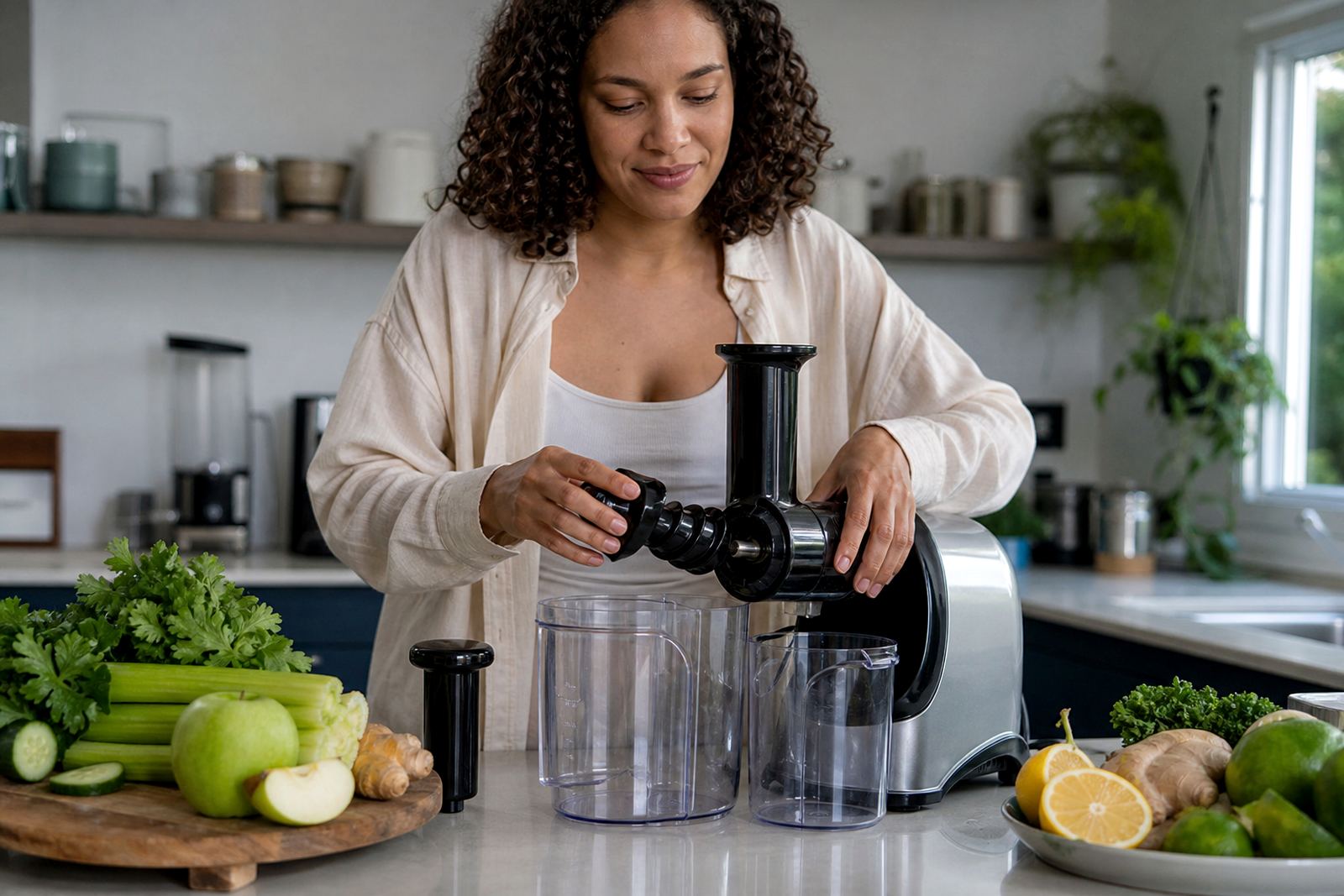
Different juicing types take up different amounts of kitchen space. Slow masticating juicers often have a taller profile because of the feed chute and auger housing. They can also need more room for parts such as strainers, caps and pulp outlets. Centrifugal juicers are usually wider and may need extra clearance for a fast-spinning basket lid and a larger pulp collector. Cold presses can include separate pressing parts or a larger footprint, depending on the style.
When comparing sizes, do not look only at the main body. Measure:
- Total height with lid open if the lid lifts upwards
- Width including spout and side attachments
- Depth with the pulp bin in place
- Storage space for cleaning tools and spare seals
- Room for you to place fruit, chopping board and bowl nearby
A machine that fits your counter but blocks the tap or cupboard door will frustrate you every day, so check the working shape and not only the carton size.
A Quick Checklist Before You Choose
Use a tape measure and a notebook, then walk through the kitchen from start to finish. Measure the intended counter, the cupboard where the machine may be stored, and the sink path. If more than one person in the home will use it, check that everyone can lift and wash the parts without strain. One person may manage a heavy base unit easily while another may need a lighter setup.
Keep this checklist close when comparing options:
- Counter length and depth available every day
- Clear height under cupboards and shelves
- Sink size and drying space
- Power point position and cable reach
- Storage space for accessories and brushes
- Weight you can lift comfortably
- Space for fruit, prep bowls and cleanup
If the numbers are tight, choose the machine that leaves a little breathing room. In a busy kitchen, a few extra centimetres matter more than a glossy photo.
After Delivery, Set It Up With Less Fuss
Once the machine arrives, place it on a dry, level surface and keep it away from steam, sink spray and direct hob heat. Check that seals are seated properly, screens are fitted correctly and moving parts turn as they should before the first wash. A quick first-time setup and leak check can prevent avoidable spills later.
Keep a soft brush, small cloth and a clean tray nearby for routine care. Wipe the base before moisture builds up, rinse food-contact parts soon after use and let them dry fully before storing. For homes near the coast, this is especially useful because salt air and humidity can leave parts sticky if they sit too long. If you need help with setup, seal replacement or noise and vibration checks, MiniPress can assist through the enquiry form on the contact page.