What takes the time after the last glass
The clean-up on a home juicer is not only about how many parts come off. It is also about how fine the screen is, how wet the pulp runs, and whether juice has had time to dry on the mesh. A slow masticating juicer usually has more parts to rinse and re-fit, while a centrifugal unit can leave pulp splatter around the lid and basket area. A cold press setup may look calm on the counter, but the press cloths, filter baskets and collection containers still need careful attention.
A useful rule is to clean straight after use if you can. Once fibre dries on a screen or around a seal, the job takes longer and the water use goes up. In a coastal kitchen, especially in places like Cape Town or George, moisture in the air can also leave parts damp for longer so drying matters just as much as washing.
Slow masticating juicers: fewer splashes, more detail work
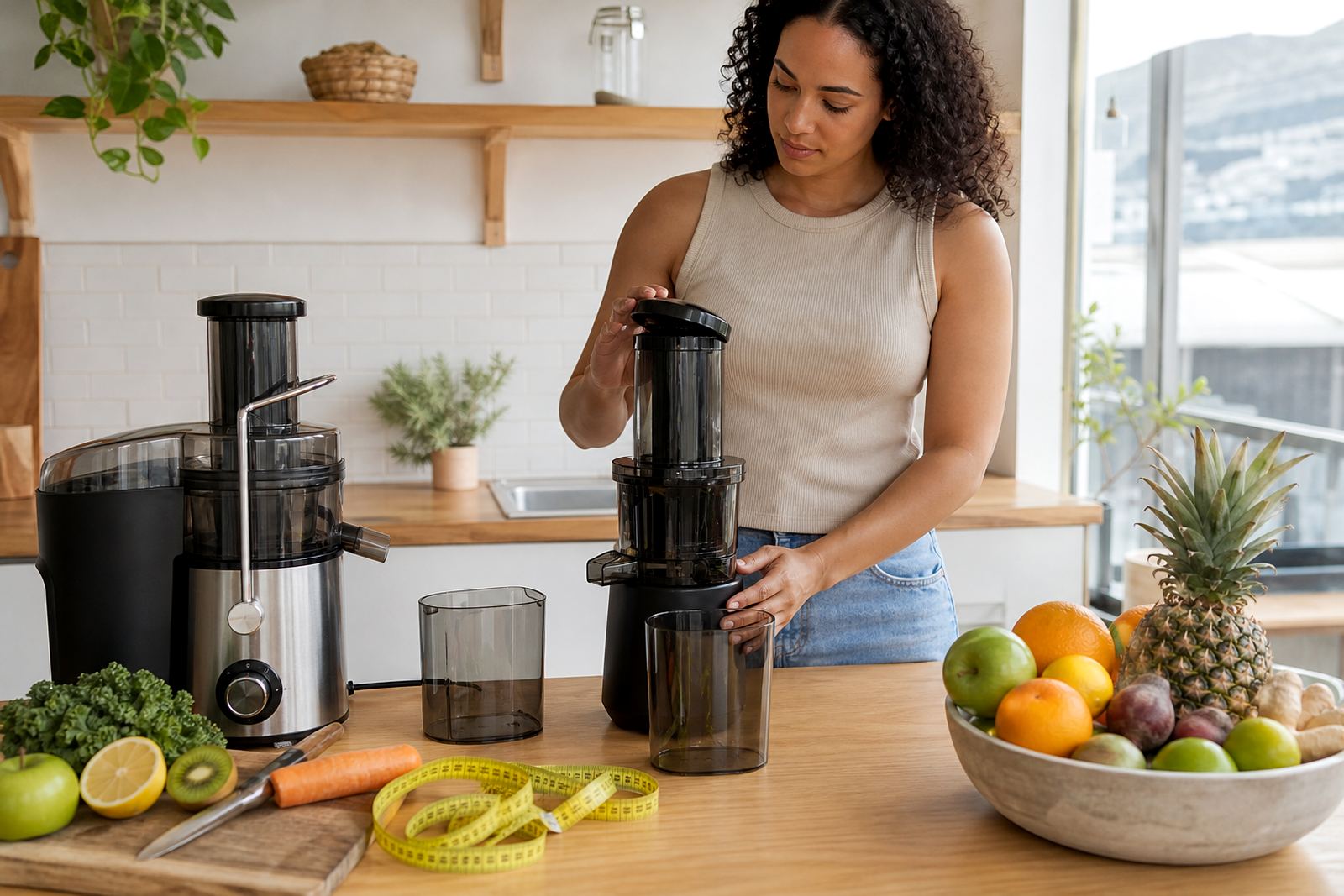
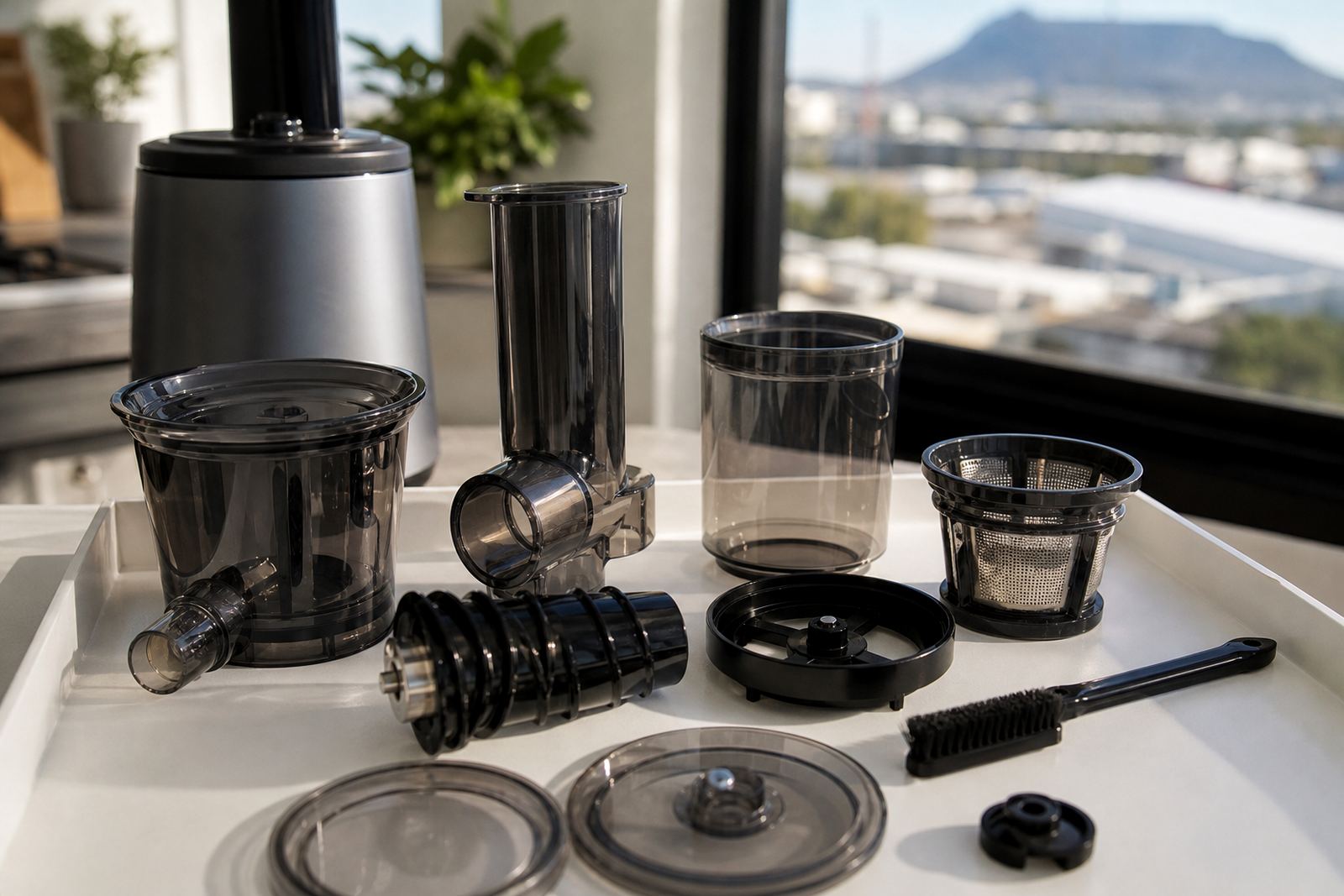
Slow masticating machines work at a lower speed, which usually means less foam and less splatter. The trade-off is that the auger, screen, juice outlet, pulp outlet and sealing rings need proper rinsing. The fine screen is often the part that takes longest, because tiny fibres can sit in the mesh and stop water from moving through it cleanly.
- Switch off and unplug before taking anything apart.
- Lift off the feed chute, auger, screen and juice bowl in the order shown in the manual.
- Rinse loose pulp first, then use a soft brush on the screen.
- Check the silicone seal and the pulp outlet for trapped fibre.
- Dry all parts fully before reassembly, especially rubber edges and the motor base area.
These machines are usually manageable for daily use if you keep a brush nearby and do not let residue sit overnight. If a seal looks loose or the pulp comes out wetter than usual, it is worth checking for a blocked screen or worn part before the next batch.
Centrifugal juicers: fast to use, quick to wipe down
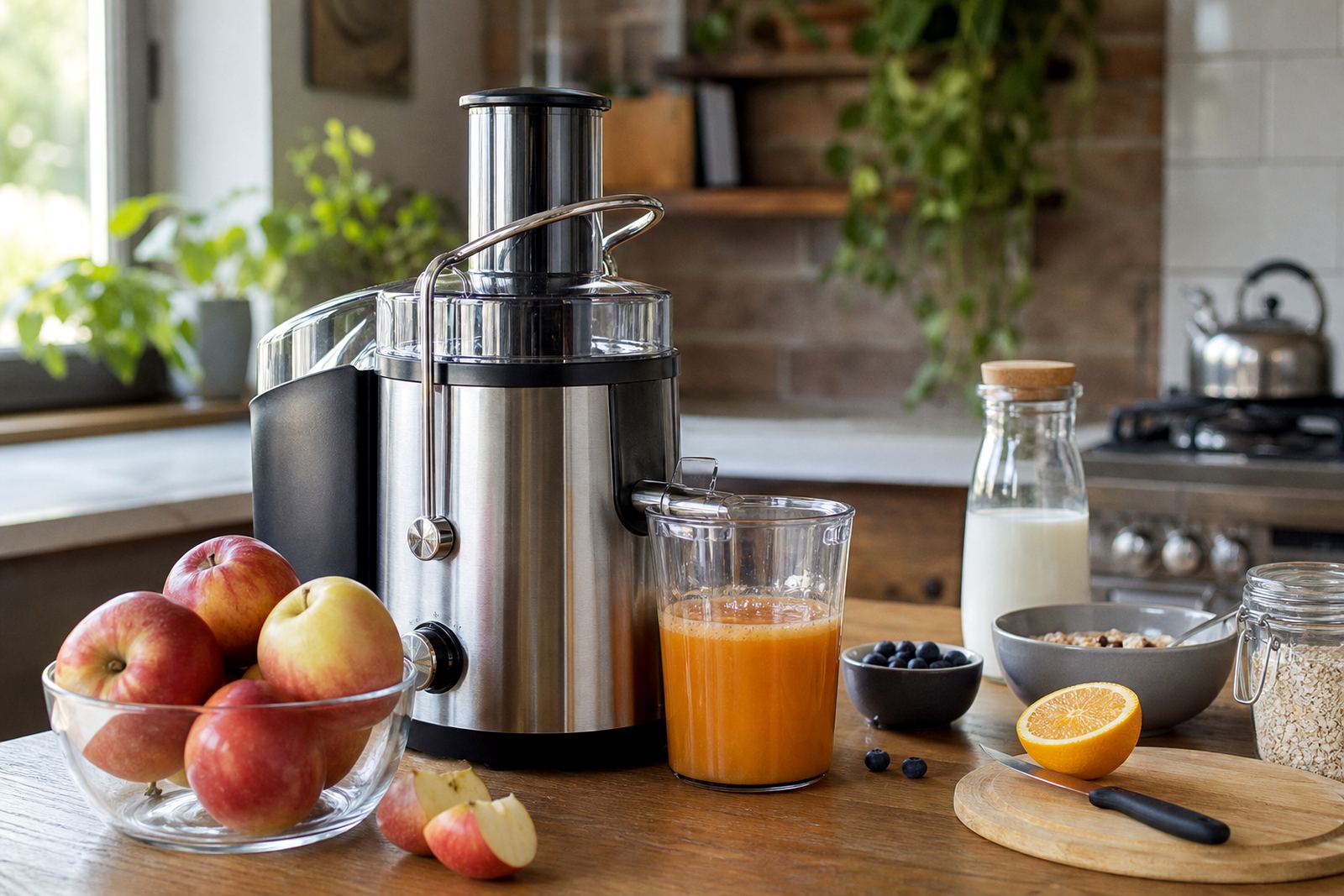
Centrifugal juicers are popular where speed matters. They tend to produce more spray around the lid, and the basket can collect a thick ring of wet pulp. The cleaning time is often short if you rinse at once, but it gets fiddly when fruit fibres dry inside the mesh. The lid, pusher, basket and juice jug all need attention, and the latch area can trap sticky drips.
For a quick clean, rinse the basket from the outside and inside while it is still wet, then use a soft brush in small circles. Do not force hard scrubbing through the mesh, because that can bend the screen and make future cleaning harder. A careful wipe of the motor base, control switch and feet helps remove splash marks and keeps the unit from sitting in juice residue.
- Empty the pulp bin or container before it overfills.
- Wash the basket right away, not later.
- Wipe the underside of the lid and the latch grooves.
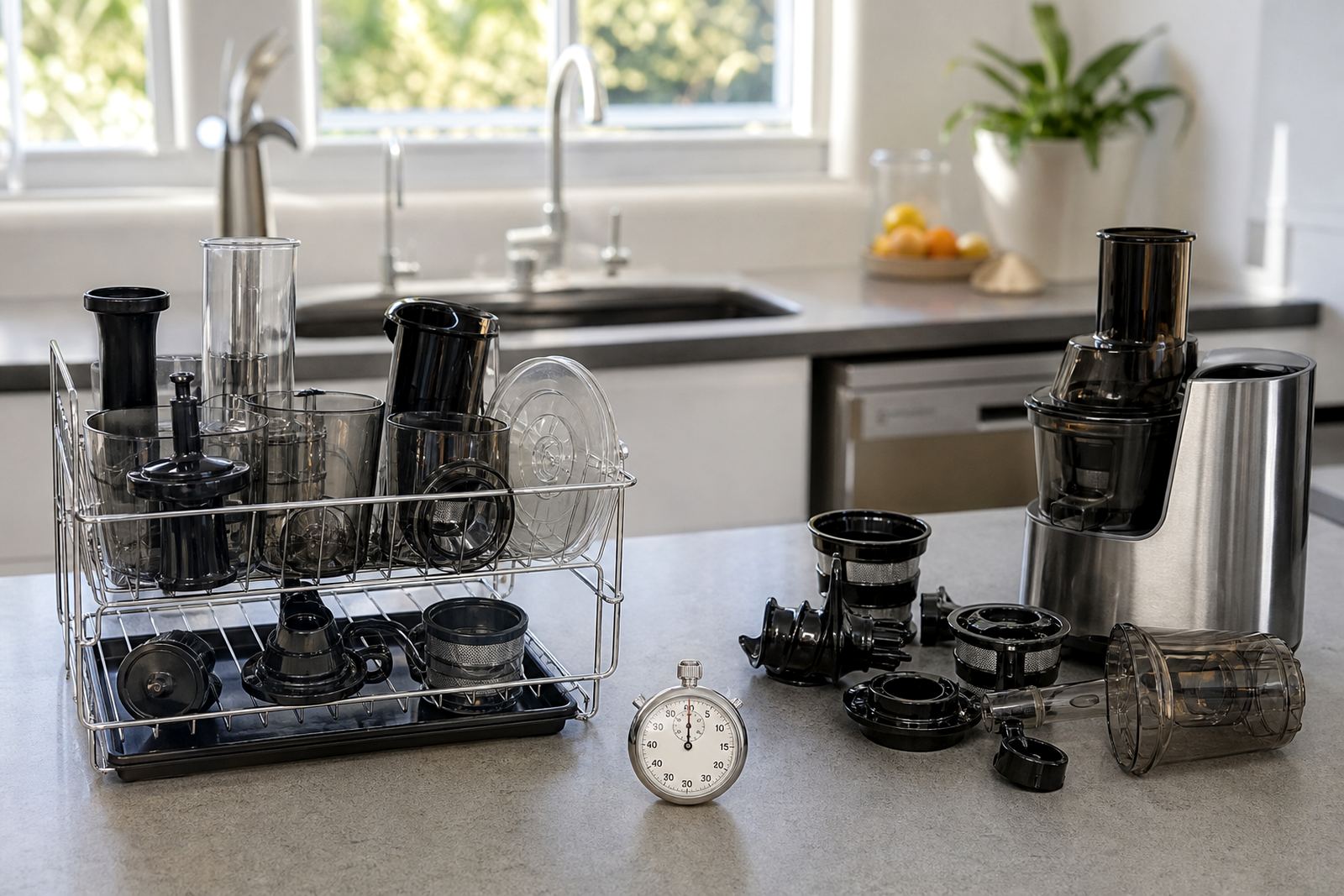
- Let every part air dry before packing it away.
Cold press kits and accessories that change the job
Cold press systems often include extra containers, strainers, pressing bags or cloths and sometimes heavier fittings. These accessories can add time because each one needs to be cleaned, checked and dried properly. Cloths should be rinsed until the water runs clear, then washed with mild soap and dried completely so they do not hold odour or stale moisture.
If your press uses a fine filter, check for fibre build-up at the edges and around the corners where pulp hides. Hard water can leave spots on clear containers, so a quick rinse and wipe helps keep them easier to inspect. If a component sits with trapped moisture, it can affect food safety and create a smell by the next use, especially in a warm kitchen. That is a small thing but it matters.
- Separate wet cloths from rigid parts as soon as you finish.
- Inspect seals, gaskets and any locking collar for sticky residue.
- Dry lids and containers upside down on a clean rack.
- Store cloths fully dry in a covered container or clean drawer.
A clean routine that fits a South African kitchen
In a busy home, the best cleaning routine is the one you can repeat without rushing. Use warm water, mild dish soap and a soft brush. Avoid metal scourers and very harsh cleaners, because they can mark plastic and damage screens. If the municipality has water restrictions in place, a rinse bucket and a final wipe often saves water while still giving a proper clean.
It also helps to clean on a stable surface near the sink, not over a loose towel that can slip. Keep the motor base dry at all times. If juice or water gets into the power area, unplug immediately and let it dry fully before using it again.That avoids mixing half-cleaned parts with power cuts and a cluttered counter.
When a part needs more than a rinse
Not every clean-up issue is solved with soap and water. If the unit starts leaking, rattling, or leaving wet pulp in places that used to stay clear, there may be a seal issue, a blocked screen or a part that no longer sits properly. A screen with fine cracks can hold residue even after washing. A worn gasket can also let juice creep into places it should not go.
Use this checklist before you pack the machine away:
- All parts are dry to the touch.
- No pulp is left in the outlet or around the seal.
- The basket or screen is free of visible build-up.
- The plug and cable are dry and undamaged.
- The latch, lid and feed chute close properly.
If you are not sure about a part, it is better to pause and get guidance than to keep forcing it into use. A small clean-up fault can turn into a bigger repair if it is ignored.