Match the machine to the number of glasses on the table
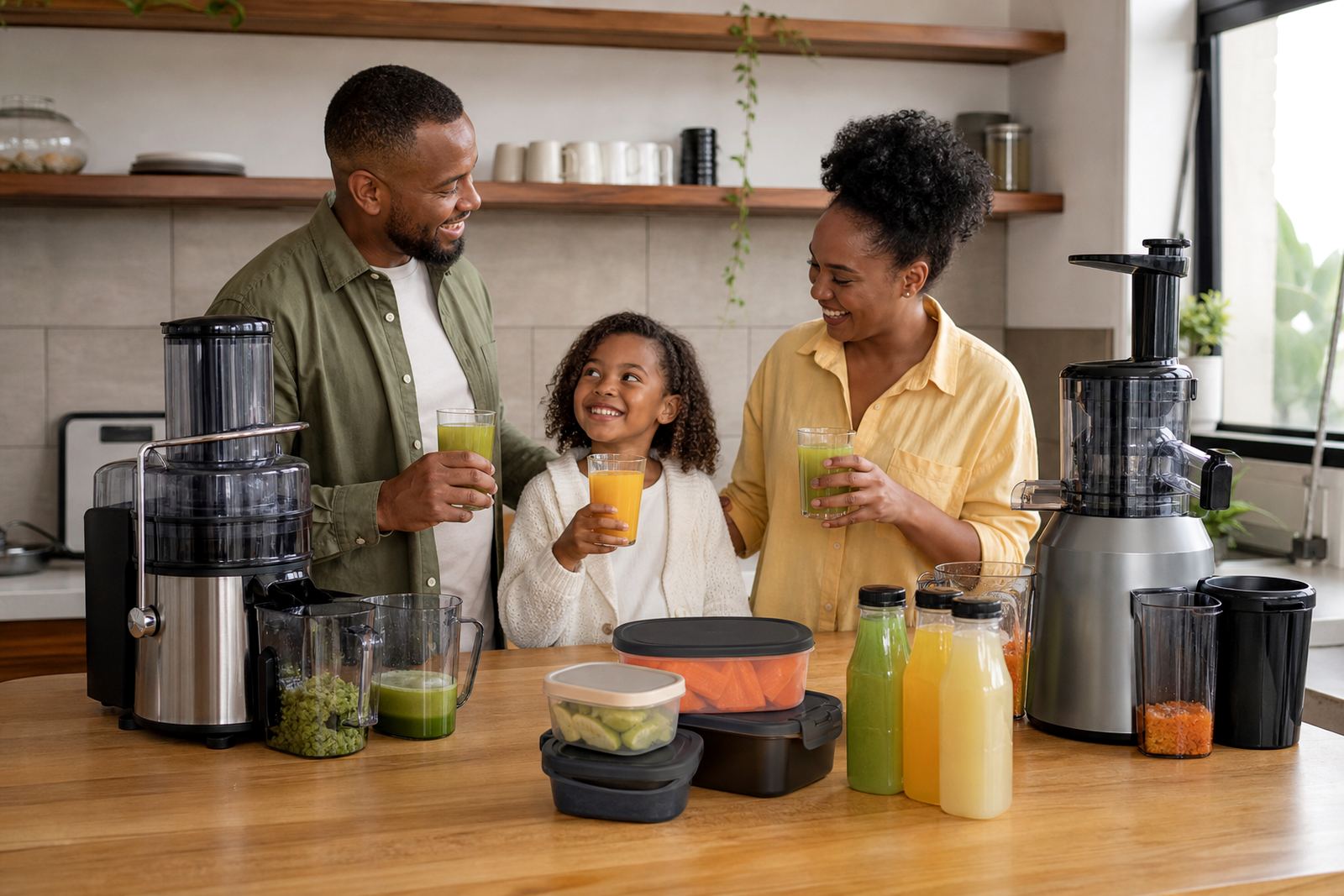
For family use, the first question is not the motor size but how much juice you need in one run. A small household may only need one to three glasses at a time, while a larger family, or a home that packs lunch bottles for school and work, often needs a machine that can handle repeated use without overheating or clogging.
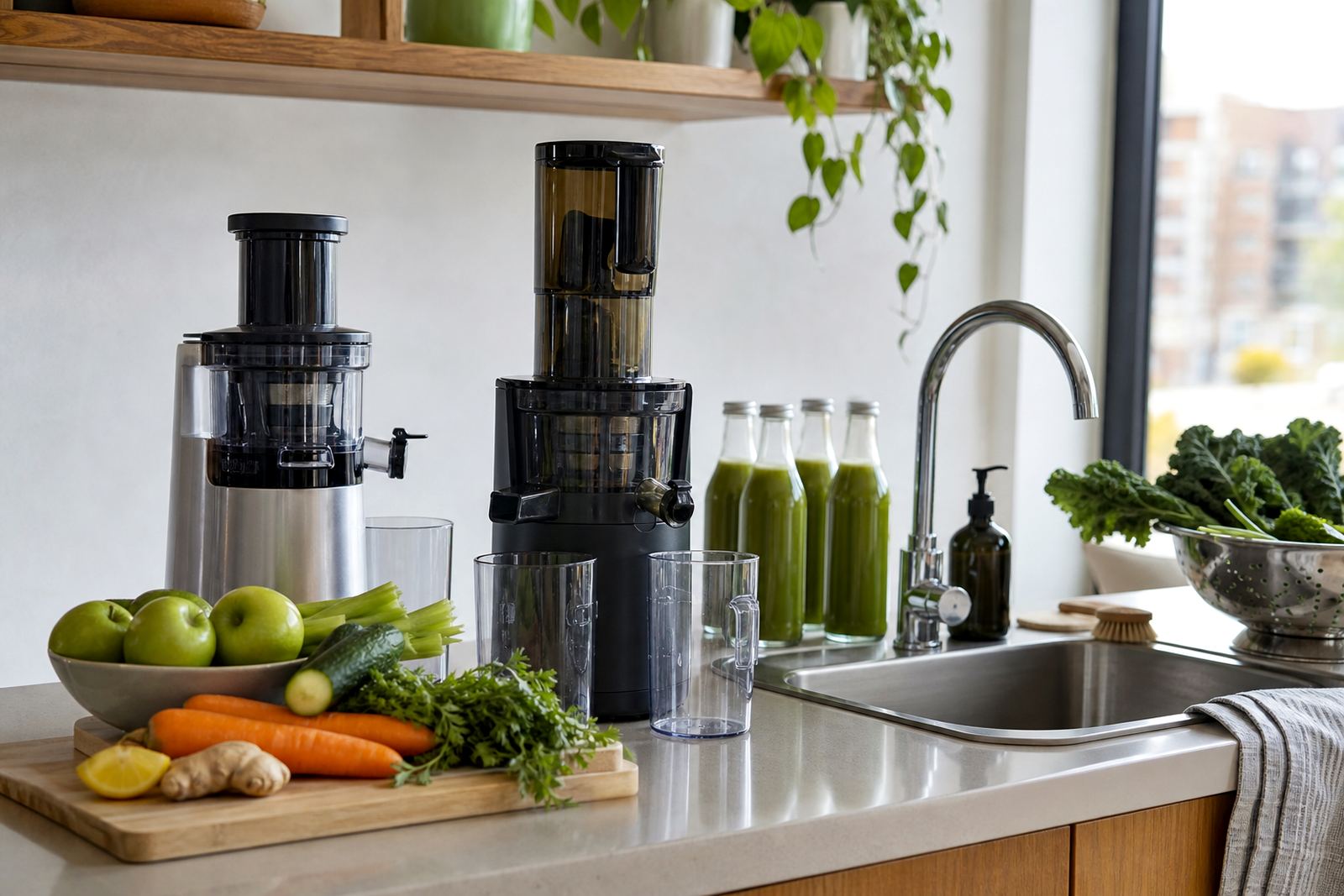
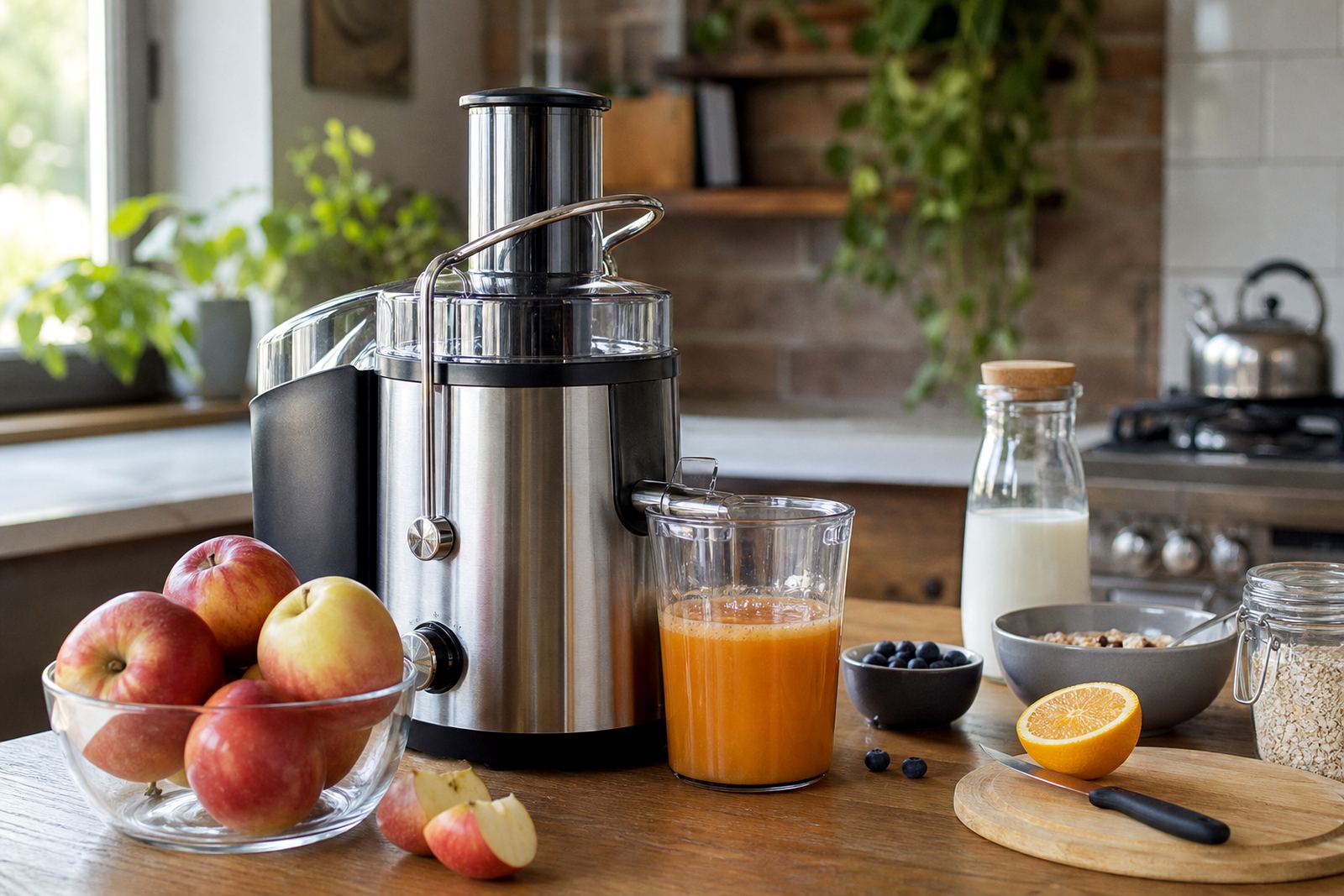
Slow masticating juicers work by crushing produce at a lower speed, which helps with leafy greens, soft fruit and mixed vegetables. They usually make less foam and give a drier pulp, so you get more out of each batch. Centrifugal juicers work faster and suit busy mornings when speed matters more than extraction. Cold presses are useful when you want a slower process and careful handling of softer ingredients, and they can suit homes that prefer to prep batches in advance.
- Choose larger feed openings if you prep many apples, carrots or cucumbers at once.
- Look at juice jug size and pulp bin size, not only the machine body.
- Check whether the juicer can run long enough for a full family round without a cool-down pause.
Bottle planning that saves time before school runs and
Family routines work better when bottles are packed before the machine starts. Keep clean glass or food-grade plastic bottles ready, ideally with tight lids that seal properly in the fridge. For homes in Cape Town, Johannesburg or Durban where mornings can be rushed and power cuts may interrupt the day, a batch plan is often easier than making each glass one by one.
Set out the number of bottles you need before juicing. If you are making different blends, label the lids or use separate jugs so there is no mix-up. Once juice is made, chill it promptly and do not leave it standing on the counter for long periods, especially in warm weather or coastal humidity. If the family is likely to drink over two days, make smaller batches rather than filling every container to the top.
- Use same-sized bottles so portioning is quick and consistent.
- Leave a little headspace in each bottle for expansion during chilling.
- Keep one shelf in the fridge for juice only, away from raw meat and open sauces.
Cleaning without turning breakfast into a second shift
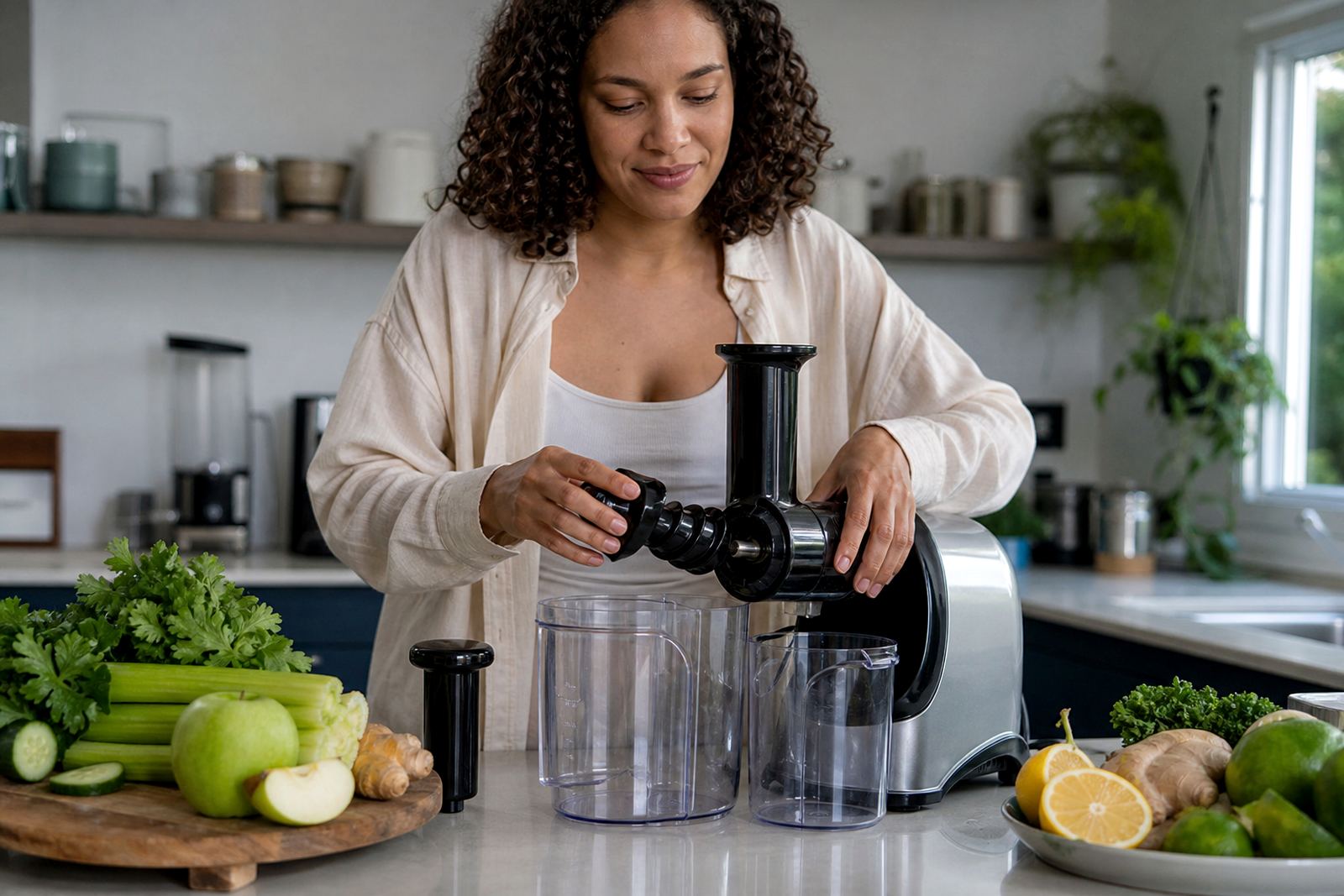
A machine that is easy to clean gets used more often. After each session, switch off the unit, unplug it and separate the working parts. Rinse pulp before it dries on the screen, auger or basket. A soft brush helps lift fine fibres from mesh screens and corners, and warm water is usually enough for daily cleaning. For stubborn residue, let the parts soak briefly and then brush again rather than scrubbing hard.
Families with heavy use should set a cleaning sequence that everyone can follow. One person can disassemble, another can rinse, and another can dry the parts on a clean rack. That makes the job faster and reduces forgotten bits. Never reassemble wet parts and store them straight away, because trapped moisture can affect food safety and leave a smell.
- Wash hands before handling cleaned parts.
- Dry seals, lids and trays completely before storage.
- Check that no pulp remains in the feed chute or under the blade cover.
How to keep screens, seals and lids working properly
In a busy household, wear often shows up first in small parts. Screens can block if fibres build up, seals may loosen after repeated washing, and lids can begin to leak if a locking point is not sitting correctly. These issues do not always mean the machine is finished, but they do need attention.
If a screen is looking tired, clean it carefully after every use and inspect it against the light for bent mesh or residue. Replace seals when they no longer sit tightly in the groove. If the unit starts to drip, check the outlet, the pulp path and the jug position before you assume there is a major fault. A sound machine with one weak seal can often be put right quickly. If vibration or noise changes suddenly, stop and inspect the base, rubber feet and assembly fit.
- Keep small spare parts in one marked container so nothing goes missing.
- Do not force a lid closed if the pulp chamber is overfilled.
- Watch for unusual rattling, which may point to an uneven surface or loose fit.
Storage habits for homes with mixed schedules
Some families juice early, some after school and some in the evening after work. That means the machine may be taken out and packed away more than once a day. Keep the juicer on a dry shelf with enough space around it, not pressed against a wall where the cable bends sharply. In seaside areas like George, Somerset West and parts of Cape Town, wipe all parts fully dry before storage because humid air can leave moisture behind even after draining.
Store accessories together in one tray or tub, including brushes and tools, so setup is quick the next time round. If your household uses the machine daily, leave the base in a fixed spot and only pack away the detachable parts. That reduces handling and saves time during busy mornings. It also makes it easier to notice if a piece is missing before the next run.
A practical family routine from first spin to final rinse
A clear routine helps a larger household avoid queueing at the kitchen counter. Start by washing produce, clearing the worktop and placing bottles nearby. Prepare harder ingredients in smaller pieces, then alternate soft and firm items so the machine does not jam. When the run is finished, let the last pieces clear through before switching off and unplugging.
Use this order as a family routine:
- Wash and sort produce.
- Set out bottles, lids and labels.
- Juice in one continuous session where possible.
- Rinse parts immediately after use.
- Dry fully and store in one place.
For homes in Paarden Eiland, Johannesburg, Durban, Pretoria, George, Stellenbosch and Somerset West, delivery makes it easier to set up a household routine without shopping around town for matching accessories. If anything starts leaking, vibrating or sounding off, a quick check can save a lot of trouble later.