The first question is what you will juice on a weeknight
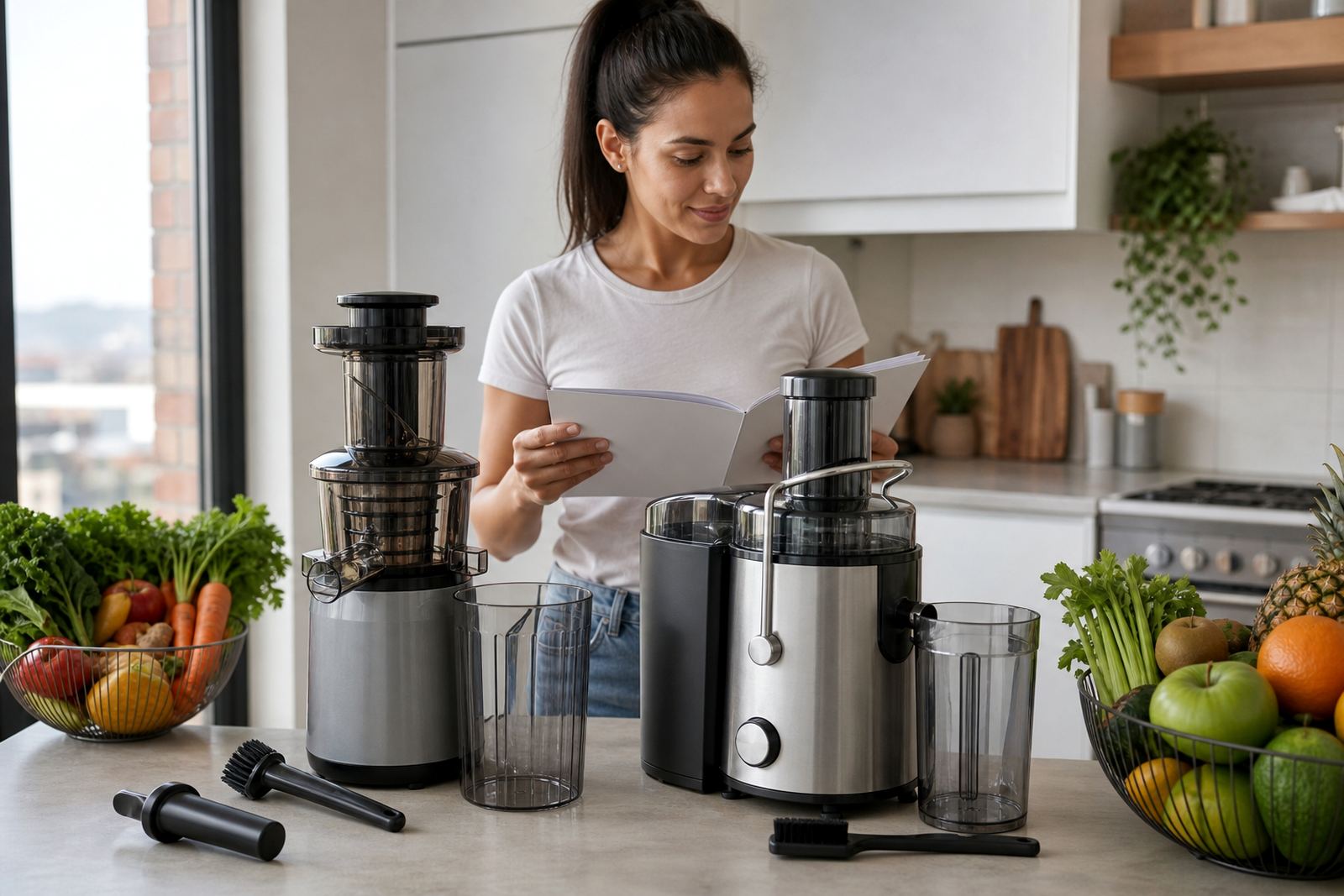
Starter buyers often begin with the fruit in front of them, then forget to ask how much time they have on a normal Tuesday evening. A centrifugal juicer is usually the quickest option for firm fruit and many vegetables, with a fast spinning basket that separates juice from pulp. It suits busy homes where speed matters and the machine will be used in short bursts.
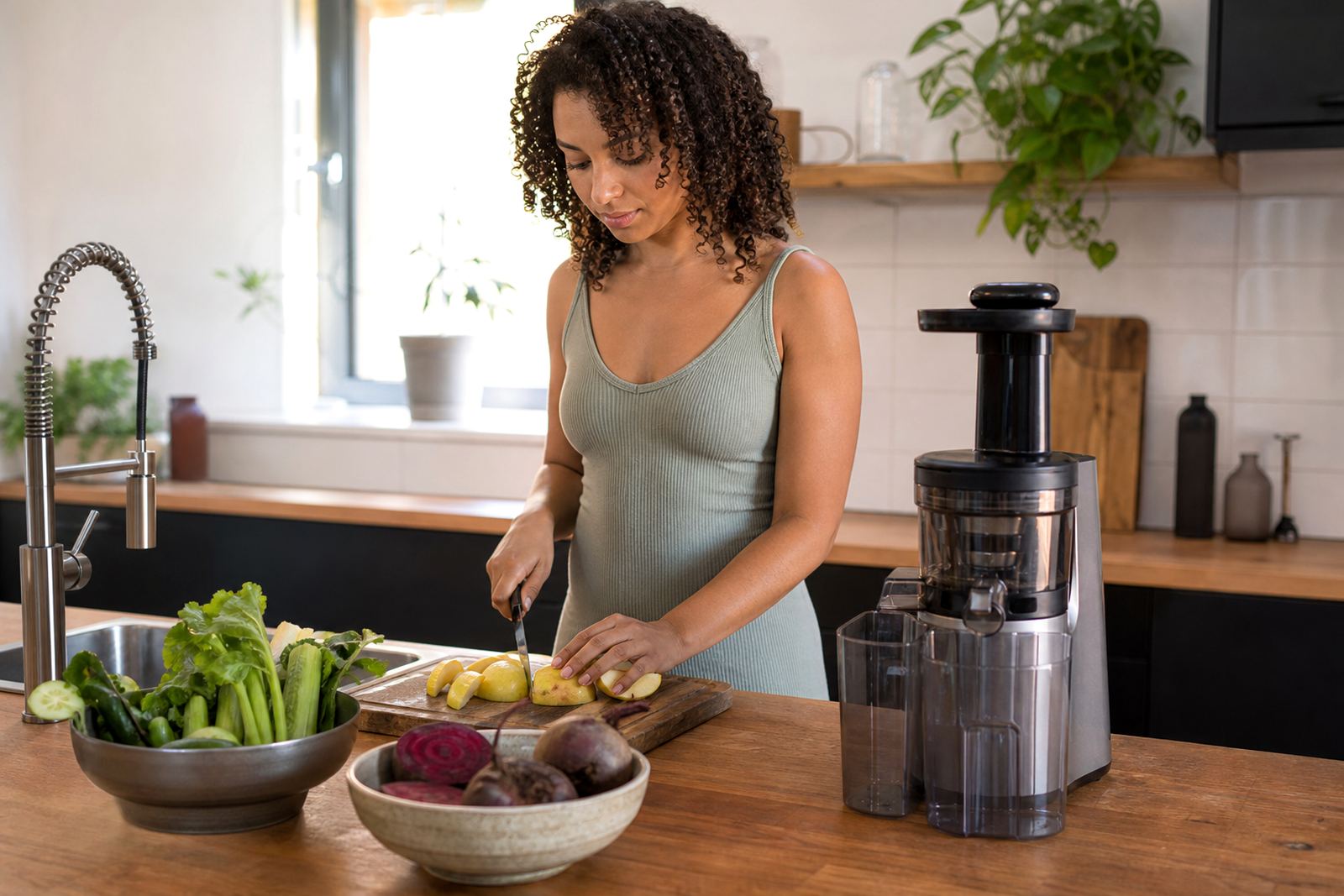
Slow masticating juicers work at a lower speed and use an auger to press and crush produce. They are a better fit when you want more control over texture, less froth and a quieter motor. Cold press machines also use pressure rather than fast spinning, and are often chosen by buyers who want a gentler extraction method and are willing to spend a bit more time on prep and cleaning.
- Centrifugal: faster, louder, best when you want a quick glass and less prep fuss.
- Slow masticating: slower, quieter, better for leafy greens, herbs and mixed produce.
- Cold press: pressure-based extraction, often paired with a cleaner style of juice and careful feeding of ingredients.
What changes once the juice is done
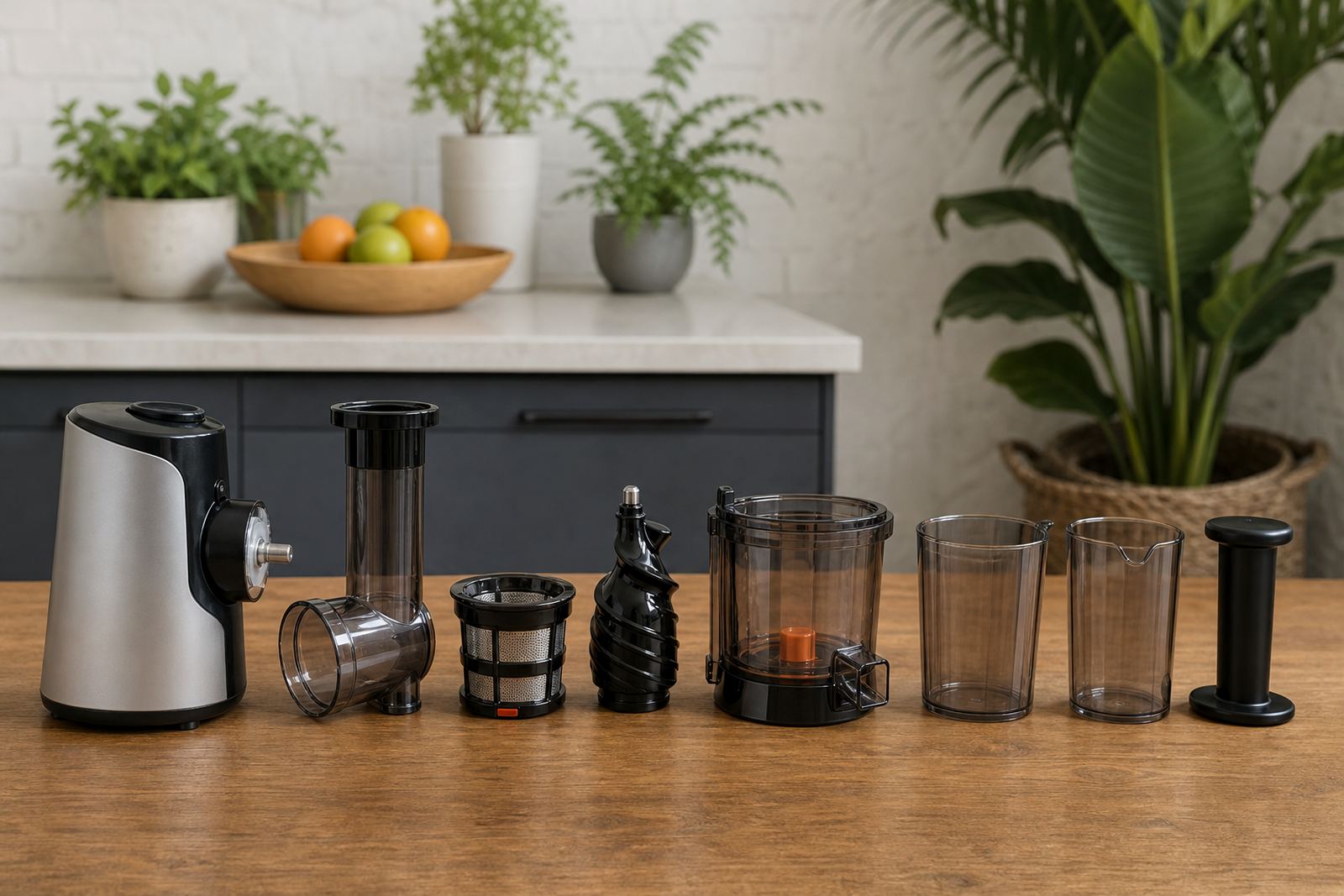
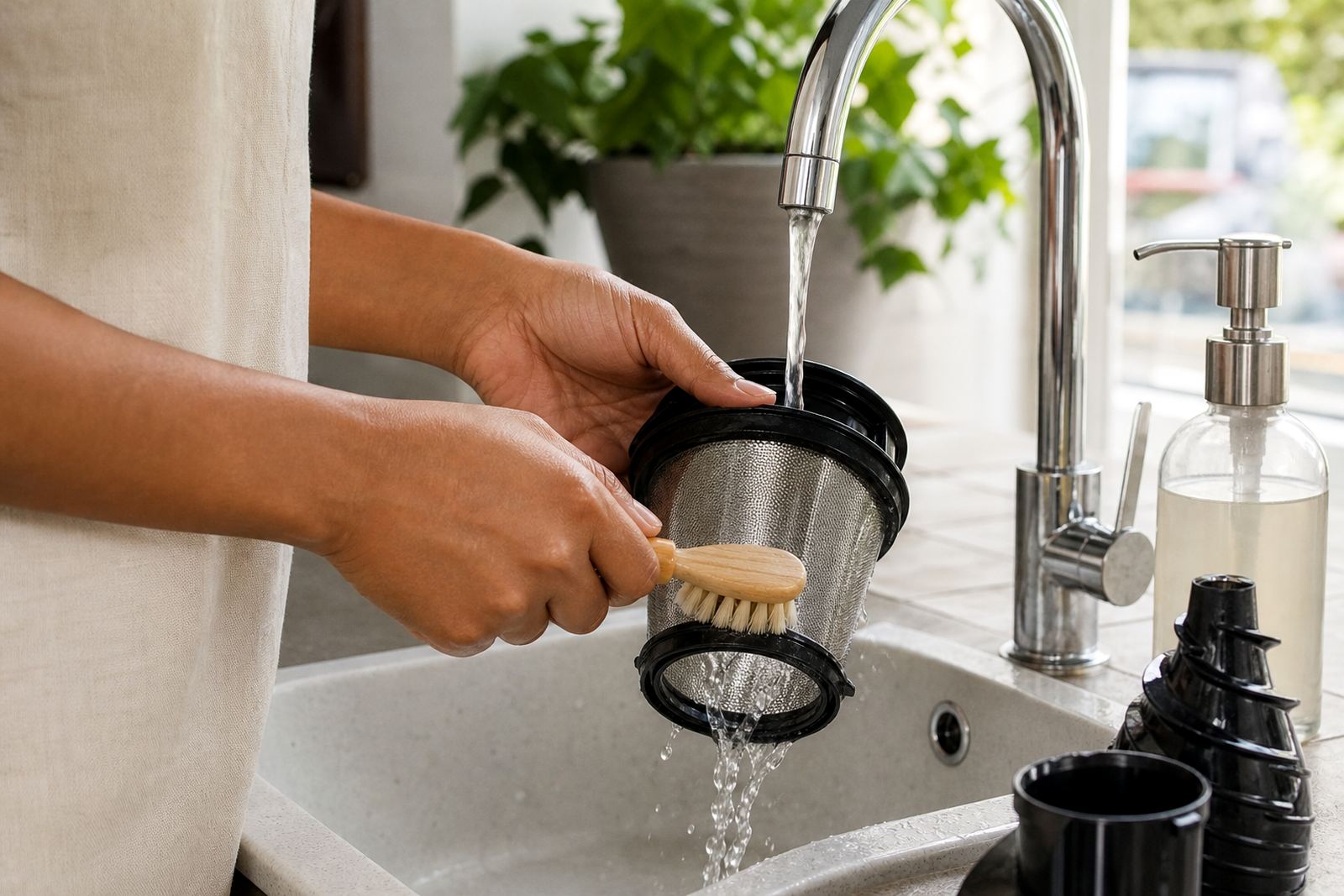
The real difference between starter models often shows up after the juice is made. With a centrifugal unit, you may spend less time making the drink but a little more time wiping splatter, rinsing the basket and brushing fine pulp from the screen. Slow masticating and cold press units usually take longer to assemble and disassemble, yet many buyers find the rinse routine more manageable once they learn the parts.
Think about your sink space, too. In a Cape Town flat with a compact counter and a small double bowl sink, a machine with fewer parts can make weekday use easier. In a family kitchen in Durban where the unit may be used for several servings at once, a wider feed chute and sturdy pulp container can save time, especially when everyone wants the first round before school or work.
- Ask how many removable parts must be washed after each use.
- Check whether the screen, auger and seals can be reached with a brush.
- Look for smooth internal surfaces that do not trap pulp in corners.
Food safety starts with the parts you can see
Any juicer that touches fresh produce must be cleaned properly, dried fully and stored in a way that keeps dust and damp away. Residue left in screens, seals or lids can spoil the next batch and create a sticky surface that is hard to shift later. That matters in coastal areas such as Paarden Eiland and George, where humidity can linger, and in homes where the machine is packed away between uses.
For first-time buyers, food safety is often less about fancy features and more about habits. Wash fruit and vegetables before juicing, use clean boards and knives, and do not leave juice standing in the machine or jug for hours. If a unit has removable seals, screens or filters, make sure they dry fully before storage. A small drip on the base or plug area is worth checking right away, not later.
- Rinse straight after use so pulp does not harden.
- Dry seals, screens and lids before reassembly.
- Keep plugs, cords and switch areas dry at all times.
Noise, vibration and the neighbours wall
Noise is one of the details first-time buyers forget to test. Centrifugal models can be noticeably louder because the motor and spinning basket work at higher speed. That may not bother a solo user in a free-standing house, but it can be a nuisance in an apartment block in Johannesburg or Pretoria where early mornings are close together and walls are thin.
Slow masticating units are usually calmer in tone, while cold press machines also tend to run at a steadier pace. Even so, a machine that shakes on the counter can become annoying if the feet are not level or the load is uneven.
If you plan to use the juicer while others are still asleep, test it on a stable surface and listen for rattles, scraping or pulsing sounds. Those noises can point to a misaligned part, a worn seal or an assembly issue that is easier to fix early.
The starter mistake is usually choosing for the wrong kitchen
Many buyers focus only on the type of juice and forget the practical realities of their kitchen. A machine that suits a large, open plan home may frustrate someone who has limited counter space, no dishwasher and a small cupboard. Likewise, a model with lots of parts may be fine for a household that uses it daily, but feel like too much work if it is only used on weekends.
When comparing options, work through the real chores you want solved. Do you want a quick morning glass before the traffic on the N1, or a calmer routine on Sunday afternoon when there is time to strip the machine down and deep clean it? That answer should guide the size, feed opening, pulp handling and cleaning effort. It is better to buy the machine you can manage than the one with the biggest claims on the box.
- Measure the counter height and storage shelf before ordering.
- Check whether the feed chute suits whole fruit or small chopped pieces.
- Choose a machine you can lift, wash and store without strain.
What a practical first setup looks like in Paarden Eiland
A first-time buyer in Paarden Eiland might order online, then set up the machine at home with a brush, a jug, and a clear sink area ready before the box is opened. That small bit of preparation helps more than people expect. A clean worktop, a bowl for peelings and a place to dry parts all reduce the chance of rushed mistakes. If the machine uses screens or seals, keep the spare pieces and cleaning tools together so they are easy to find later.
For local buyers across Cape Town, Johannesburg, Durban, Pretoria and George, the same habits apply. Start with a short test run using one or two ingredients, then check for leaks, wobble, extra vibration or pulp build-up. If anything feels off, pause and inspect the assembly rather than forcing the machine. That is how a starter model stays useful for longer, instead of becoming another appliance that lives at the back of a cupboard.
MiniPress support for first-time buyers often covers first time setup, deep clean guidance, spare parts help, seal replacement, screen care, leak troubleshooting, noise vibration checks, storage care, cable plug checks, brushes and tools, routine care plans and video support calls. Those practical steps matter more than marketing language, because a juicer is only helpful when it works neatly in your own kitchen.