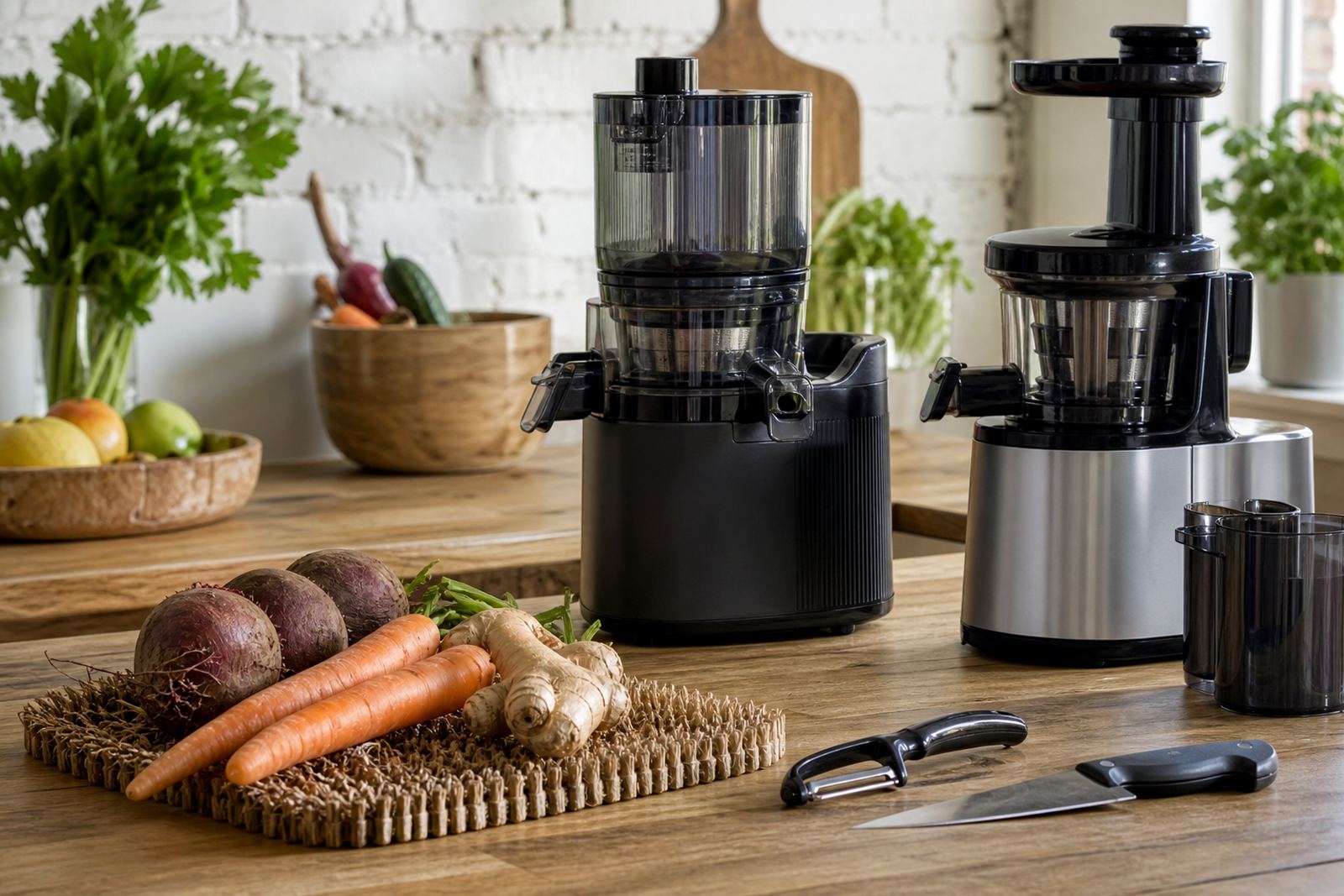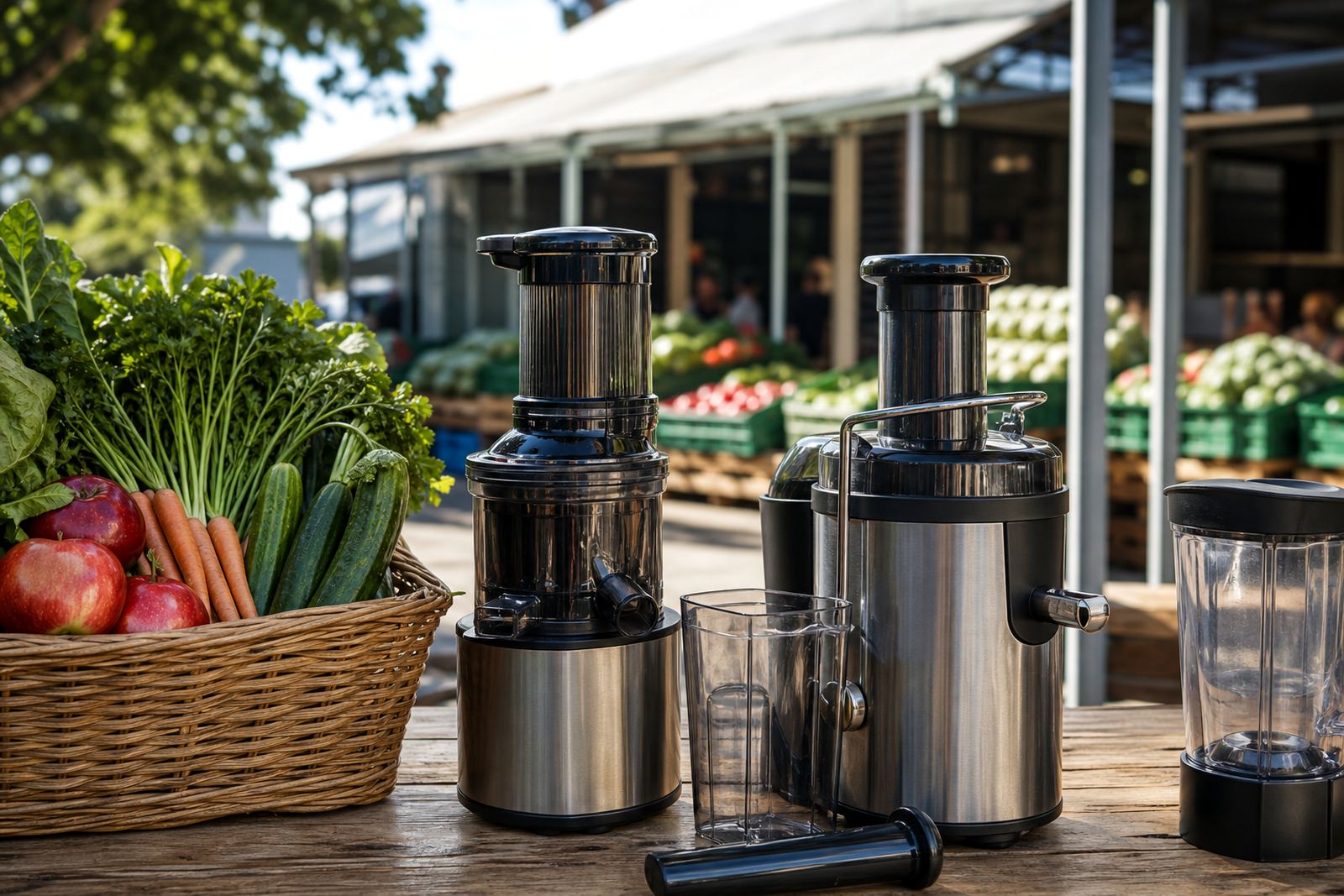
The feed chute is where the work starts
The feed chute is the opening where fruit and vegetables go in. On slow masticating juicers, the chute is often smaller, so produce may need to be cut into strips before feeding it through. On centrifugal juicers, the chute is usually wider and faster, which suits firmer produce and quicker juicing, though the basket still does the real separating work.
If the chute is damaged or warped, the feed can become awkward and the lid may not sit properly. That can lead to splashing, poor feeding, or a machine that feels like it is labouring for no reason. In Paarden Eiland, where many homes deal with salty coastal air and busy kitchens, a clean, dry chute also helps stop residue building up around the lid seal.
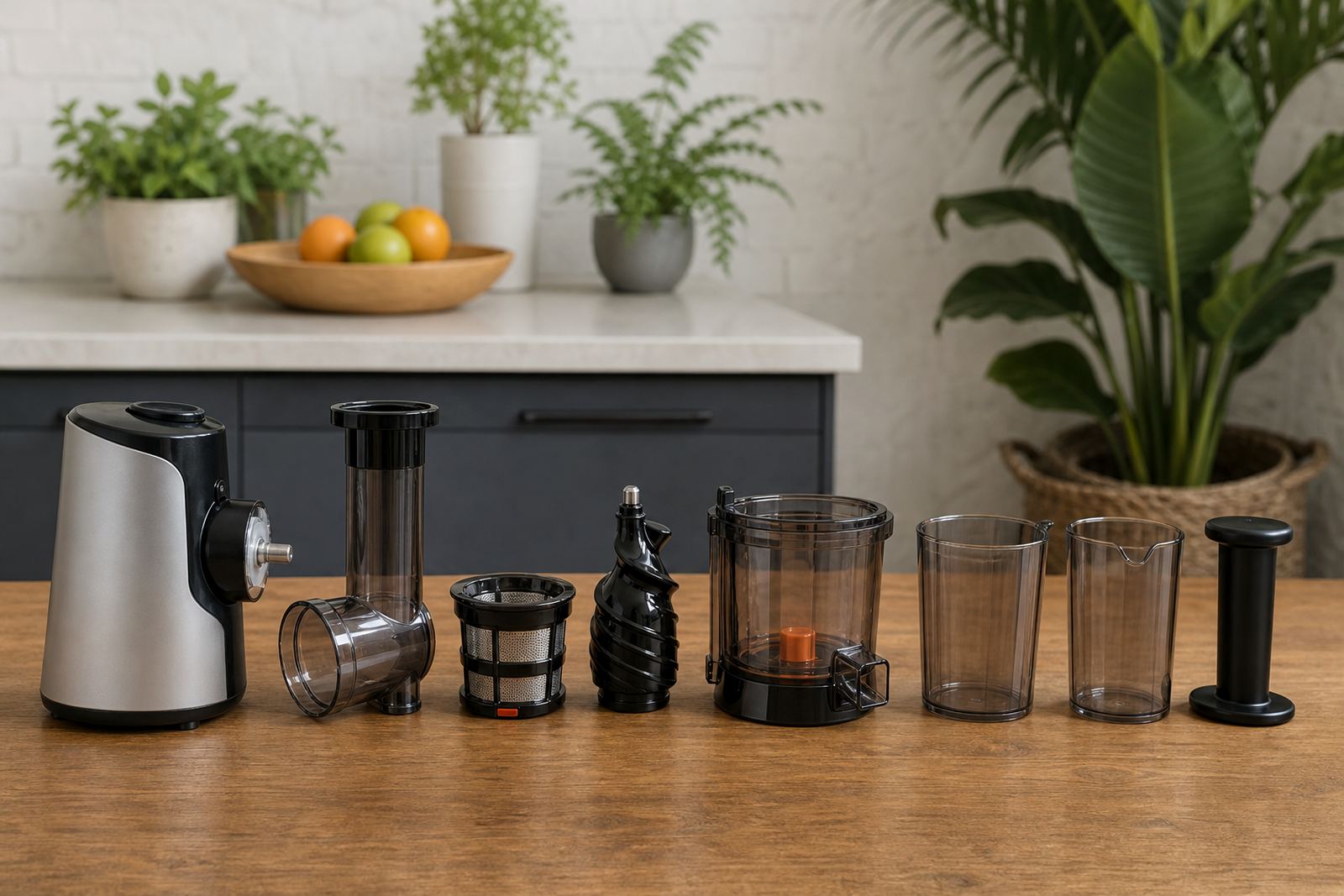
Auger, blade, or basket: the part that actually separates juice
This is the heart of the machine. In a slow masticating juicer, the auger crushes produce against a screen or strainer and slowly pushes the juice out. In a centrifugal juicer, a spinning basket or blade system throws the juice outward while the pulp stays back. Cold presses use steady pressure rather than high-speed spinning, which is why they are often quieter and easier on soft produce.
Different systems handle different jobs, and the part in the middle must stay clean and aligned. A worn auger, blunt blade, or bent basket can affect juice flow, and you may notice pulp getting through where it should not. That is not always a major fault, but it is a sign the machine needs attention.
- Look for chips, cracks, or rough edges
- Check that the part sits firmly on the drive shaft
- Make sure no fibrous bits are caught around the screen
- Rinse straight after use so residue does not dry hard
The screen and pulp outlet do the sorting
The screen, sometimes called a strainer, separates liquid from fibre. Fine screens make a smoother result, while coarser screens may let more fibre through depending on the machine design. The pulp outlet then moves the dry fibre away from the juicing chamber so the machine can keep working.
If the screen clogs, the juicer can slow down or start vibrating. That often happens when leafy produce, soft fruit, or fibrous ingredients are fed too quickly. A good rinse after use helps a lot, but if the screen is scratched, blocked, or bent, cleaning alone will not fix it. In Durban's humid weather, leaving a screen wet overnight can also encourage smell and staining, so it is better to dry it fully.
Seals, gaskets, and lids keep the mess inside
Small rubber or silicone seals do a lot of quiet work. They keep juice inside the chamber, stop leaks around the lid, and help the machine hold pressure where it needs to. The lid and locking clips also matter, because if they do not close properly the juicer may refuse to start or may spray liquid where it should not go.
- Inspect seals for cracks, flattening, or stretching
- Check whether the lid locks evenly on both sides
- Look for juice under the base after each use
- Replace hard or brittle seals before they fail completely
Leak issues are often caused by something small, not a major fault. A loose gasket, a hairline crack in the bowl, or a screen that is not seated properly can all create a drip. That is why a quick once-over before use is worth the minute.
Motor base, switches, and cable care matter more than people think
The motor base powers the whole unit, but it should never get wet. Wipe it with a damp cloth only, and keep moisture away from the plug and switch area. If the machine starts sounding rough, stopping under load, or showing signs of overheating, the base may need checking rather than the juicing parts alone.
A clean plug, sound cable, and dry storage spot help reduce wear. If you spot fraying, a loose plug, or a cable that feels too hot after use, stop using the machine and have it checked before the fault becomes worse.
- Unplug before cleaning or moving the unit
- Keep cables off hot plates and wet countertops
- Do not force the motor if the chute is jammed
- Let the base cool before another cycle
Baskets, brushes, and spare parts make upkeep easier
Good upkeep is not only about the main machine. A spare screen, replacement seal, or cleaning brush can make a big difference when you use a juicer often. It is also easier to keep food-safe surfaces clean when you have the right tools for the shape of the part. A small brush can reach around screen holes and under the rim where pulp likes to sit.
Food safety starts with clean parts, dry storage, and sensible handling. Do not leave cut produce sitting in the chamber, and do not store damp accessories in a closed cupboard. If you are cleaning after a morning rush in Stellenbosch or a late prep in Johannesburg, separate the parts on a towel so they dry fully before reassembly. That small habit saves trouble later.