Start while the pulp is still fresh
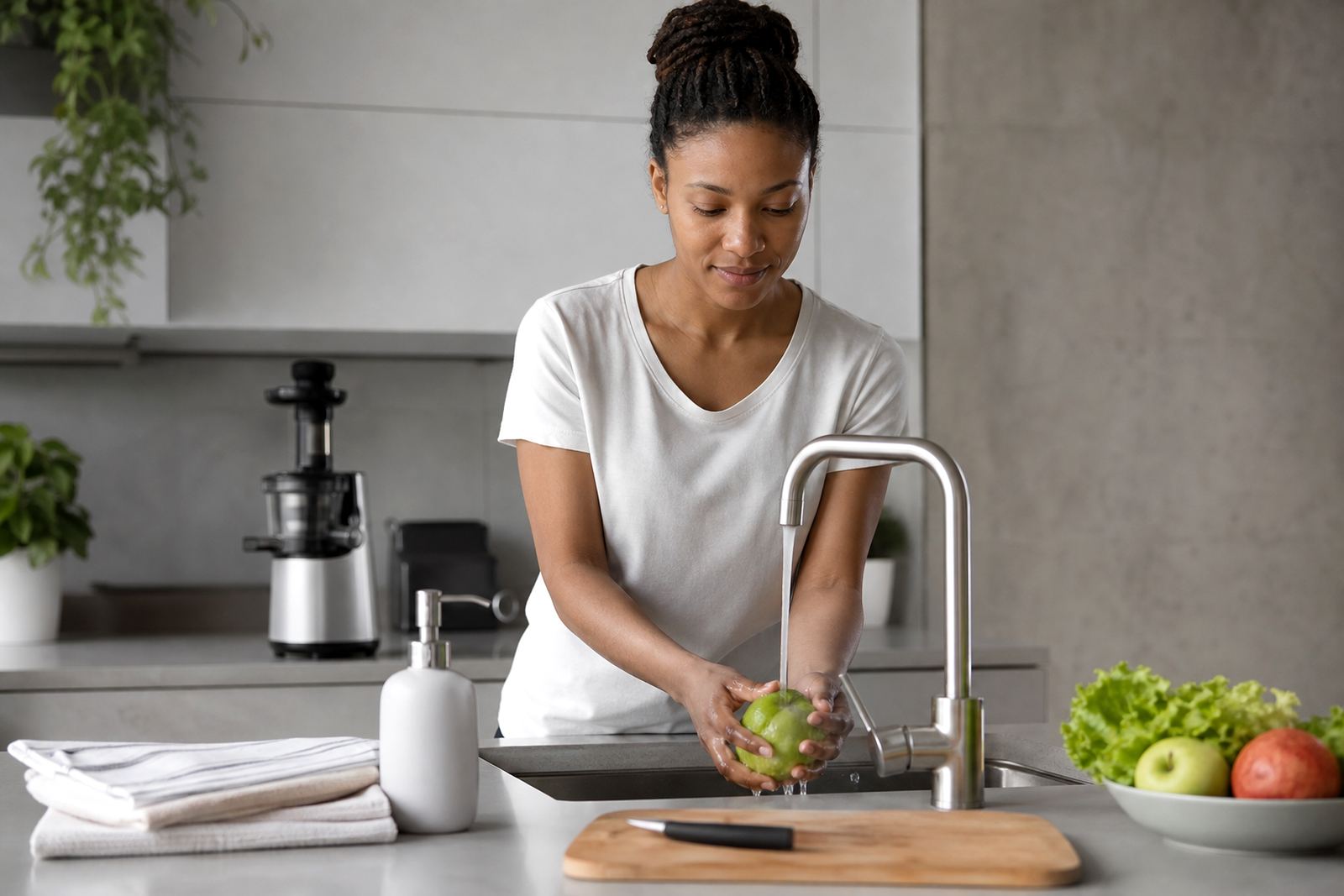
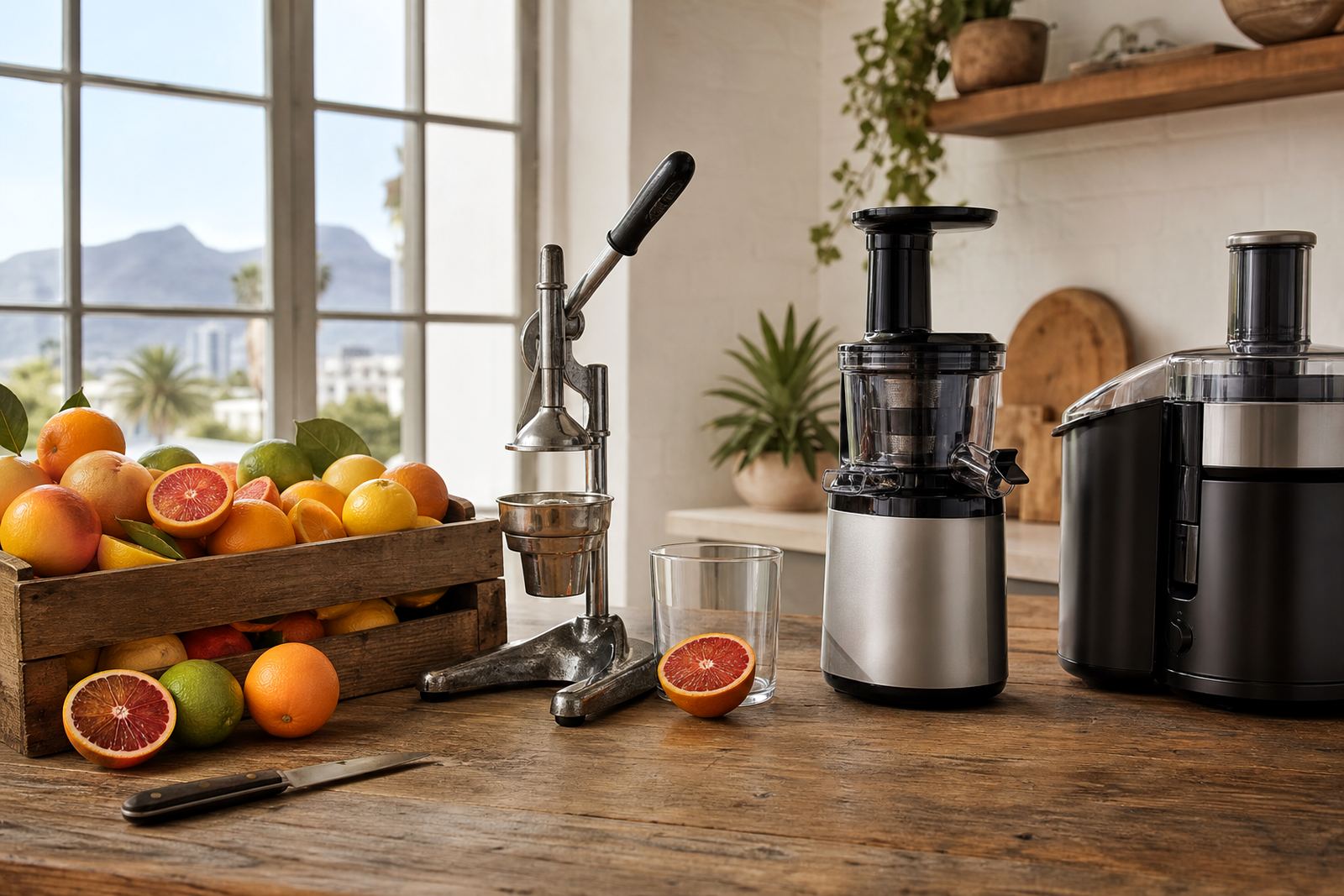
The easiest time to clean a slow masticating juicer, a centrifugal unit, or a cold press is as soon as you finish juicing. Leftover pulp dries fast in the mesh screen, auger grooves and feed chute, which makes later cleaning harder and can leave odour behind. Switch off the machine, unplug it, and separate the removable parts before anything has a chance to set.
For daily use in a kitchen, a quick rinse is usually better than letting parts sit in the sink. In Cape Town, where coastal moisture can leave surfaces damp for longer, it helps to dry each piece fully before storage. That small step reduces water marks and keeps seals and lids in better shape.
The parts that need the most attention
Every juicer has a few pieces that collect the most residue. Focus there first, then move on to the easier surfaces. The screen or filter is usually the slowest part to clean because fibre can lodge in the tiny openings. The pulp outlet, juice spout, lid gasket and feed chute also need a proper wash.
- Rinse the pulp container before the fibre dries hard.
- Brush the screen from both sides under running water.
- Wash the feed chute, lid and juice bowl with warm water and mild dish soap.
- Check rubber seals for sticky residue and lift them out carefully if the model allows it.
- Wipe the motor base with a slightly damp cloth only, never under a tap.
If a part still feels greasy or slippery after washing, clean it again before drying. That matters for food safety and also for grip when you reassemble the machine.
A practical wash routine that fits a busy kitchen
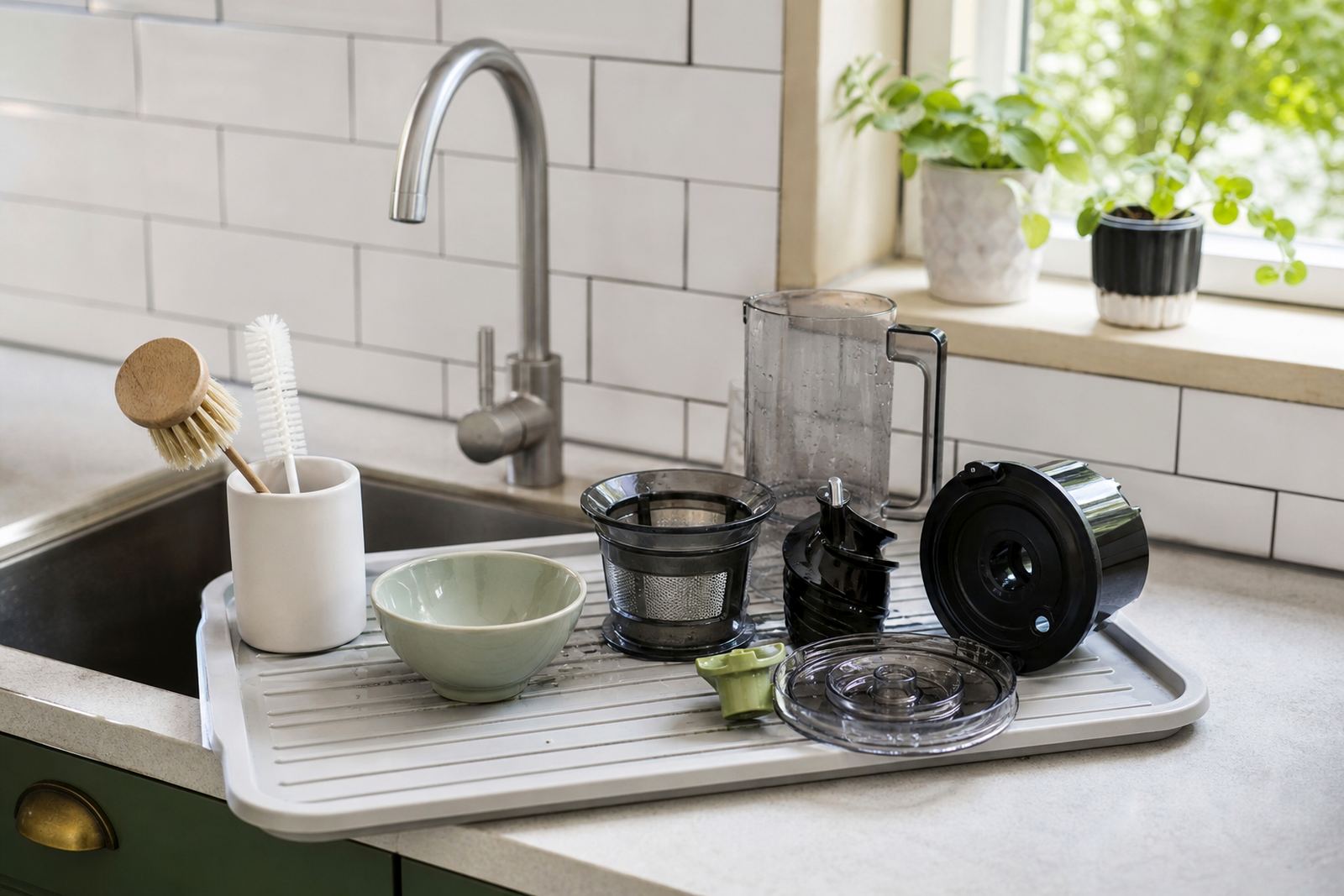
A routine does not need to be complicated. Use a basin or sink with warm water, a mild cleaner suitable for food-contact parts, and a soft brush. Avoid steel scourers on plastic bowls and lids, because they can scratch and cloud the finish. Scratches trap residue and make repeated cleaning harder.
- Pre-rinse all removable parts to loosen pulp.
- Soak the filter, lid and bowl for a few minutes if needed.
- Brush mesh and corners in short strokes instead of forcing the fibres through.
- Wash accessories such as pusher tools, jugs and drip trays separately.
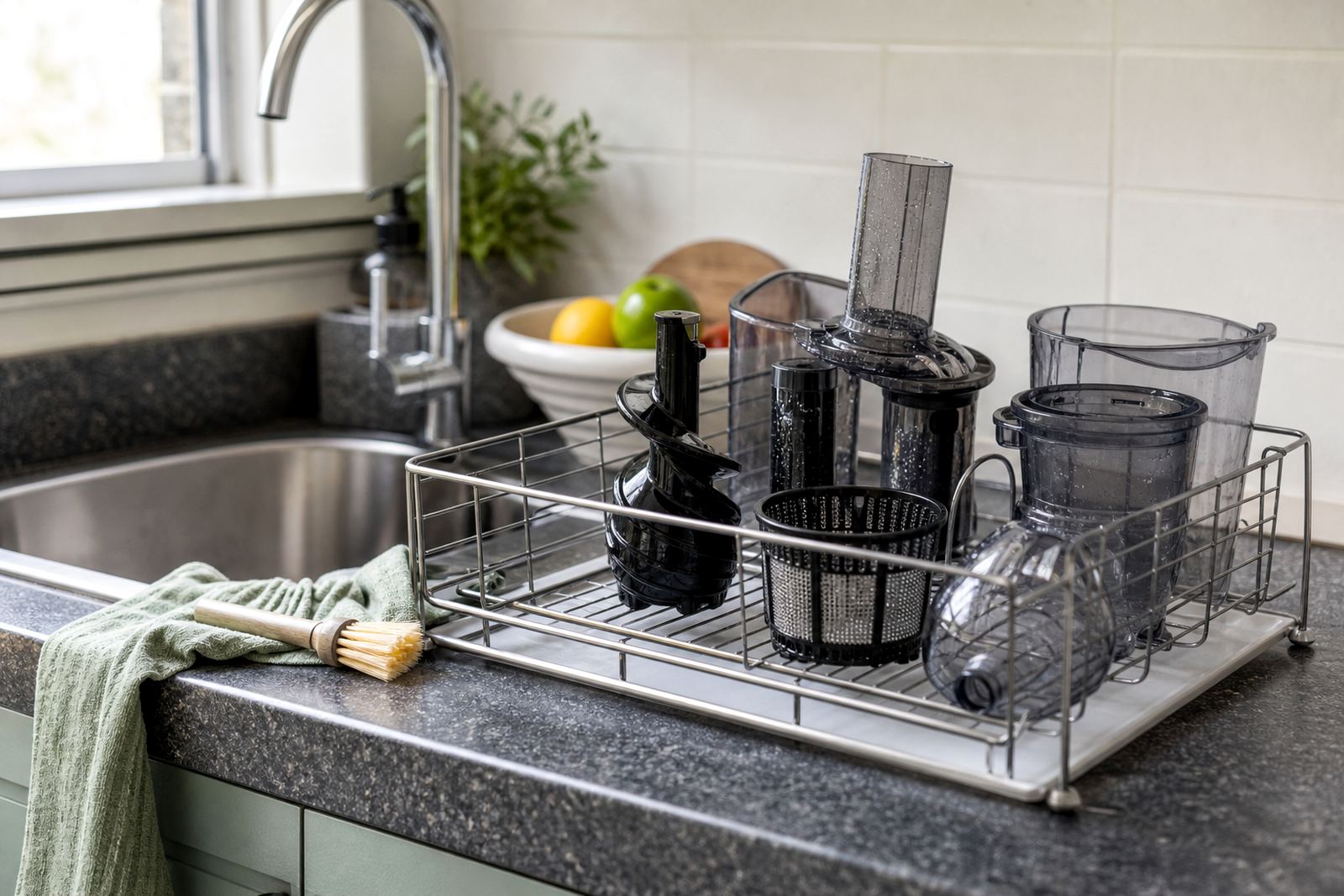
- Air-dry on a clean rack or towel, then store only when fully dry.
The main rule is to act quickly and not let pulp harden.
Food contact surfaces need their own habit
The bowl, lid, spout and collecting jug are food-contact surfaces, so they need more care than the outer casing. Clean them after every use, even if you only juiced a small amount. A quick wipe is not enough if droplets or fibre remain in corners, joins or under the rim.
Pay attention to the worktop too. Juice can drip onto granite, laminate or stainless steel, and sticky marks can attract dust and insects. Wipe the counter, handle area and splash zone with a clean cloth and dry it afterwards. In shared kitchens, that extra minute also helps keep the area neat for the next person.
When a deep clean is worth doing
Daily cleaning keeps the machine in good order, but a deeper clean helps when you notice lingering odour, slow draining, or a screen that no longer clears properly. This is useful after several heavy juicing sessions, especially with fibrous produce that clings to the filter. A deep clean is also a good time to check seals, the feed chute, and any brush marks on the screen.
At times the issue is not dirt alone. A loose seal, worn screen or trapped fibre around the outlet can cause leaking or extra noise. If that happens, clean the part first, then inspect it closely before using the machine again.
Local kitchen habits that make cleaning easier
Paarden Eiland kitchens often work with limited counter space, shared prep areas and the stop-start rhythm that comes with coastal weather and electricity interruptions. In those conditions, it helps to keep a small cleaning caddy close to the juicer: a soft brush, a drying cloth, a small basin and a spare towel for delicate parts. That way the parts are not left standing on a damp sink edge or mixed with other dishes.
For households in Johannesburg, Durban, Pretoria and George, the same habit works well in different ways. In humid areas, dry parts fully before storing. In drier inland kitchens, rinse promptly so pulp does not harden on the screen. Small adjustments save time and keep the machine easier to handle each day.
A clean finish before the parts go back in the box or cupboard
Before storing, check that every piece is dry, clean and correctly aligned. Refit seals only when they are clear of residue, and make sure the screen sits flat with no fibre caught at the edge. If you use a cold press or a slow masticating model regularly, a tidy storage habit can help reduce smells and keep accessories easy to find the next day.
If a part is damaged, bent or leaking, stop using it until it is checked. A small fault can become harder to manage once juice gets into joins or onto the motor base. Good daily cleaning is not just about appearances, it also helps the machine stay safer to use and less fiddly to assemble.