Dry parts first, then decide what stays together
Once a slow masticating juicer, centrifugal juicer or cold press has been washed, the first rule is to let every part dry fully before it goes back on the base or into a cupboard. Moisture trapped in a bowl, auger housing or screen can leave a stale smell, encourage scale build-up and make the next clean harder than it should be. If the weather is damp in Cape Town or salty air is coming in from the coast, give the pieces a little extra time on a drying rack.
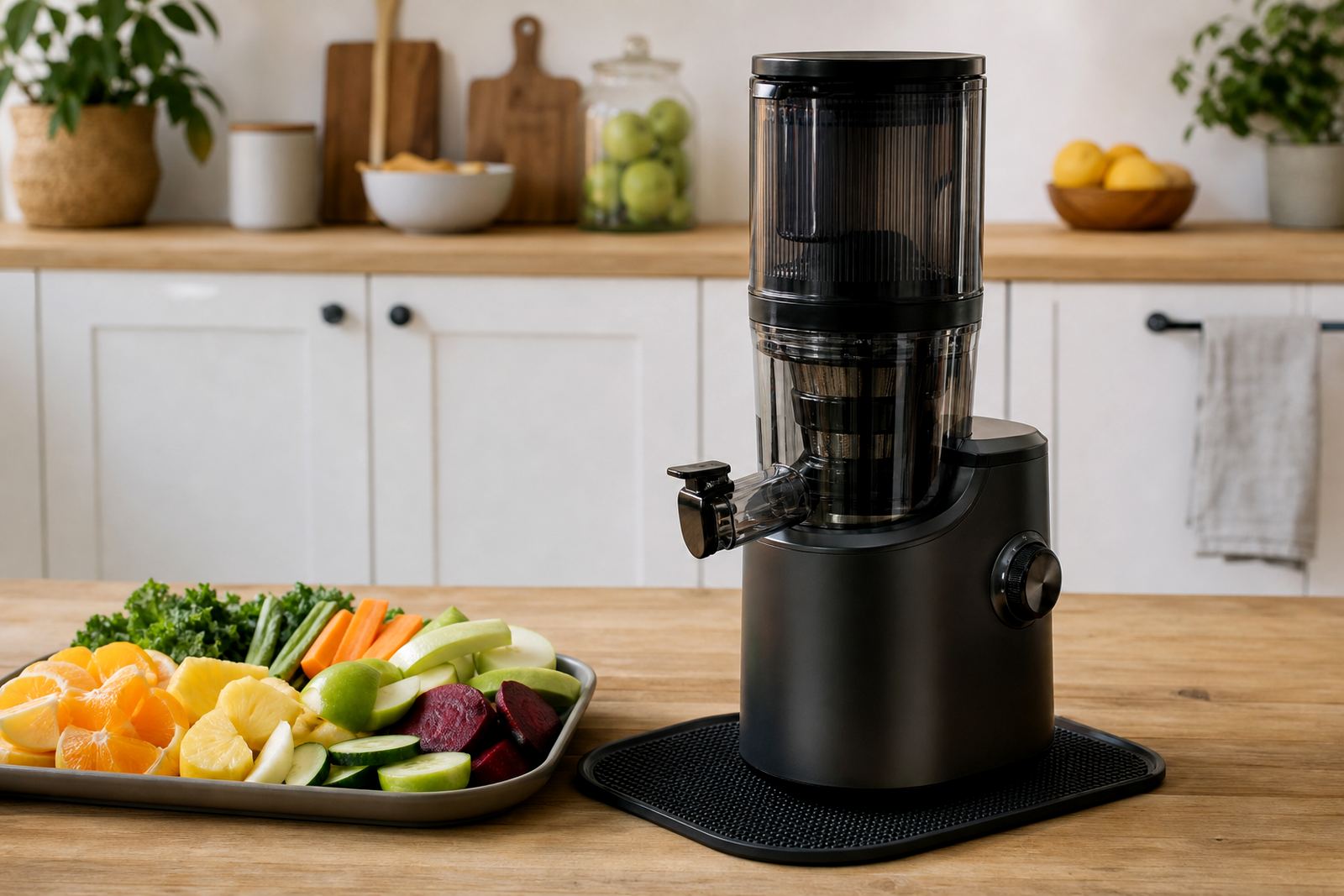
Reassembly is useful when you use the machine most days. If you are short on counter space, putting the main parts back together can keep seals aligned and reduce the chance of small components getting lost. If your unit sits for a week or more between uses, storing the loose parts separately and dry is often better. The trick is not to pack it away while still warm, wet or closed up tight.
The cupboard choice that avoids bent seals and cracked lids
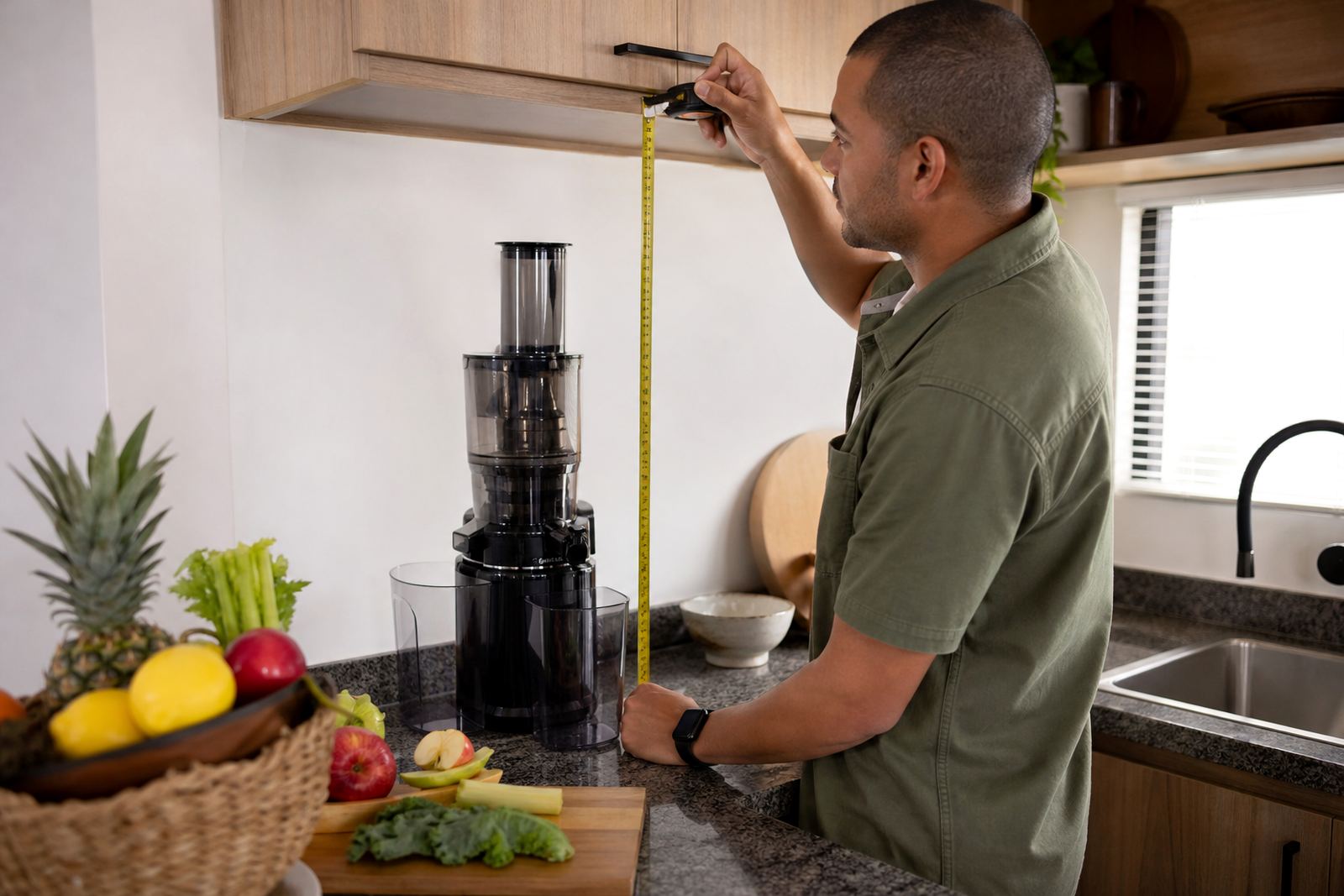
Where you store the juicer matters. A high shelf above the stove is not ideal because heat, cooking vapour and grease can settle on the plastic parts.
- Keep the base unit on a flat surface so the feet do not twist.
- Do not stack heavy pots on top of the lid, bowl or juice container.
- Store the power cord loosely coiled, not wound tightly around the body.
- Keep screens, cutters and seals in a small lidded container so they do not rub against each other.
- Leave a little air space in the cupboard so parts do not stay damp.
If the machine has a narrow feed chute, collection jug or fine mesh screen, those pieces should not be forced into a tight gap. Pressure can warp a cover or nick a screen edge, and that affects how the machine works next time.
Covering the machine without trapping leftovers
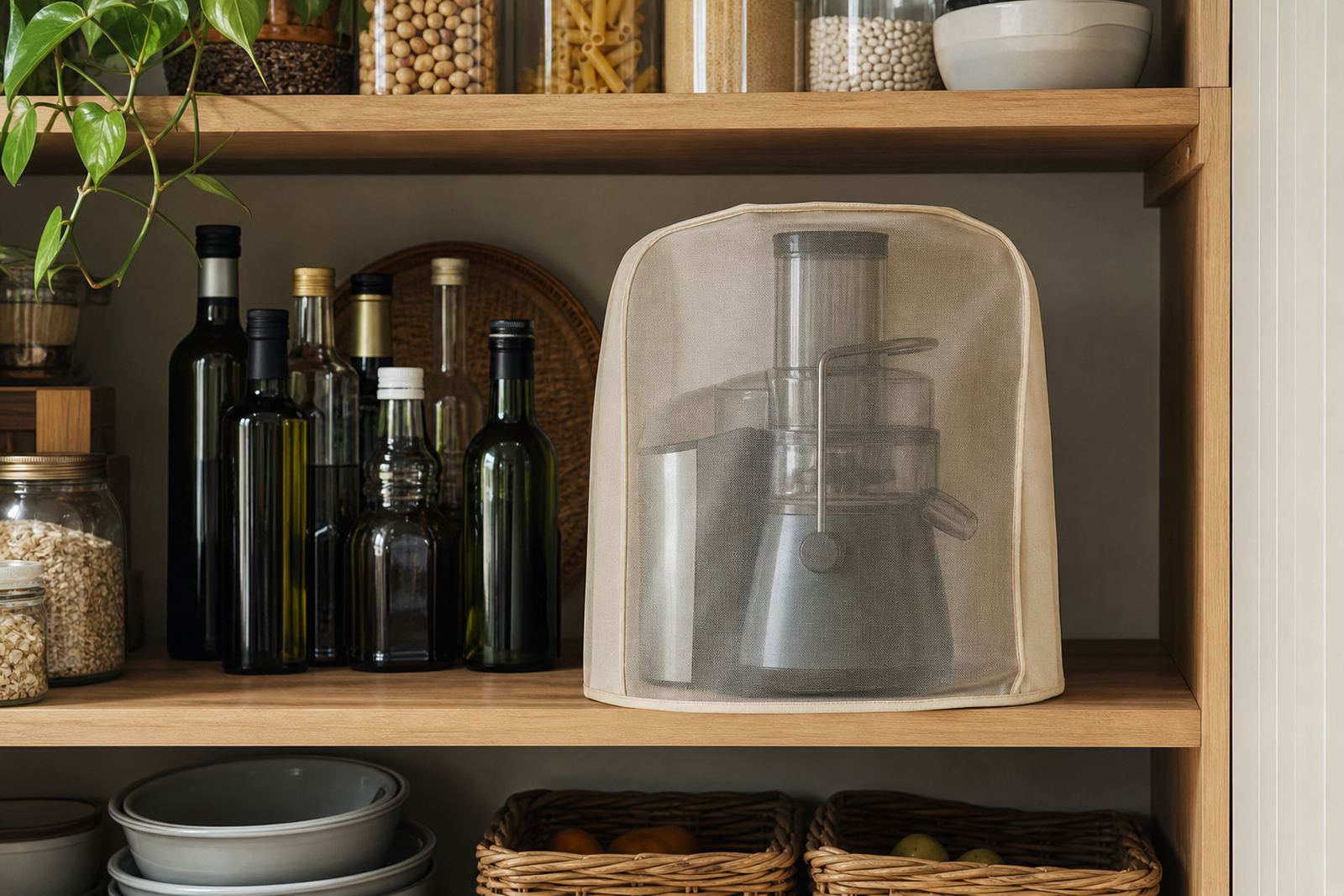
A cover can be useful for dust, but only if the juicer is already clean and fully dry. A cloth cover that breathes is better than a plastic bag that holds in moisture. For homes near the sea in Durban or George, a light dust cover can help keep airborne salt and kitchen dust off the surfaces, especially if the unit stands on an open counter.
Food safety starts with the parts you cannot see. A tiny bit of pulp left in a screen or under a seal can spoil faster than people expect, particularly in summer. Before you cover or pack away the machine, check the feed chute, pulp outlet, juice spout, lid grooves and seals. If there is any residue, wash and dry that area again. It is a small task, but it saves a bigger cleanup later.
Packing away after a weekly juicing routine
Some households use a juicer every morning, while others only bring it out on weekends. The storage plan should match that routine. For daily use, leave the machine close to the plug point and keep the parts reassembled if that makes setup quicker. For occasional use, pack the unit away in a box or cupboard with each part separated by a soft cloth or clean paper towel.
- Label a small container for seals, screens and brushes so nothing goes missing.
- Keep the instruction leaflet with the machine for future reference.
- Store blades, screens and sharp inserts where they cannot knock against tiles or stone tops.
- If the unit has removable pusher pieces, keep them together with the lid.
- Avoid storing next to strong cleaners or open spice tins, as smells can cling to plastic.
In a Stellenbosch flat with limited counter room, for example, a compact storage box under the sink can work well if it stays dry and clear of the plumbing trap. Just make sure the box is not parked beside a leaking dish soap bottle or a damp cloth pile.
When the machine should stay partly open
Some owners like to leave the lid loose or the hopper slightly open after cleaning. That can help air circulate, but only where dust, insects and steam are not a problem. In a busy kitchen, an open machine can collect flour, crumbs and even cooking spray, so it is not always the best choice. A covered, dry cupboard is often the safer bet.
If you are storing a cold press, pay extra attention to the auger, strainer and juice outlet. Those parts have narrow surfaces where residue can sit quietly. If the juice path is not dry, the next batch may pick up off smells or sticky residue. Food safety is mostly about temperature, moisture and clean contact surfaces. Keep all three under control and the unit stores far better.
Small checks before the next round of use
Before using a stored juicer again, check the cord, plug, seals and locking points. A cable pinched behind a cupboard door can crack over time. A seal that has dried out or gone stiff may need replacement, and a loose latch can cause vibration or a poor fit on first start-up. If the machine sits in a garage or outbuilding, look for dust, insects and moisture before you plug it in.
MiniPress handles storage guidance, first time setup, seal replacement, screen care, leak troubleshooting and routine care support for customers across Cape Town, Johannesburg, Durban, Pretoria, George, Stellenbosch and Somerset West. If a part does not sit properly after cleaning, it is better to sort it out before the next use than force it into place.
Good storage is not about overthinking it. It is about dry parts, the right cupboard and a clean machine ready for next time.
A quick Cape Town example from a shared kitchen
In a Paarden Eiland work kitchen, a unit used by two staff members each week had been left assembled on a counter, with the lid covered by a tea towel. After a few damp mornings, the screen started to smell stale and the seal went sticky. The fix was not complicated: the parts were dried separately, the cover was changed to a breathable cloth and the machine was moved into a lower dry cupboard with the cord loosely tied.
That kind of change suits homes as well. Whether the kitchen is in a Durban apartment, a Pretoria townhouse or a family home in George, the same storage habits apply. Keep moisture out, protect the parts and store the machine where it will still be easy to reach the next time you need it.