Why one glass looks smooth and the next feels gritty
Pulp texture starts with the fruit or vegetable itself. Watery produce like peeled citrus or ripe pears breaks down quickly, while fibrous ingredients such as ginger, celery and leafy greens leave more strands behind. Hard produce, especially carrots and beetroot, can produce a finer or coarser finish depending on how the feed chute handles the pieces and how fast the machine pulls them through.
Speed matters too. A centrifugal juicer spins fast and is handy when you want to process larger amounts quickly, but the high-speed action often draws more air into the juice and can leave a lighter, frothier finish. A slow masticating juicer works at a lower speed and tends to press and squeeze the ingredient rather than blitz it, so the result is often denser with a drier pulp. Both styles have a place, but they do not leave the same mouthfeel.
Screen holes decide how much fibre stays behind
The screen, sometimes called the strainer, is one of the biggest reasons juice texture changes. A fine screen holds back more pulp and gives a smoother pour, while a wider screen allows more soft fibre to pass through. That is why the same machine can make a very different result depending on the screen fitted for the job.
- Fine screens suit softer fruit and mixed juice where you want a cleaner finish.
- Coarser screens can help with thicker blends and ingredients that clog easily.
- Blocked screens reduce flow and make the output feel heavier, so rinsing between batches helps.
- Damaged mesh or worn screens can let uneven particles through and should be checked early.
If you are juicing in a Cape Town kitchen on a windy morning, or in Durban where humidity can make residue tacky, a clean screen makes a noticeable difference. A quick rinse during use often keeps the texture steadier and saves you from forcing the machine.
How slow presses handle celery, carrots and soft fruit
Cold presses and slow masticating juicers are usually better for people who want more control over pulp. The auger crushes the ingredient slowly, so the fibre is extracted in a more measured way. That makes them useful for leafy greens, celery and herbs, though very soft fruit can sometimes need a firmer mix or smaller pieces to avoid a mushy feed.
With harder ingredients like carrots, the cut size matters. Smaller chunks feed more evenly and can reduce strain on the motor, while oversized pieces may bounce in the chamber and leave uneven pulp. If the machine is working too hard, the pulp can come out wet rather than dry, which usually means the feed rate is too fast or the screen is partly blocked.
- Cut fibrous ingredients into shorter lengths before feeding them in.
- Alternate soft and hard pieces to keep the chamber moving evenly.
- Stop and clear the screen if the pulp starts looking paste-like.
- Listen for a change in pitch, it often signals a blockage or overload.
Centrifugal juicers and the rougher finish they can give
Centrifugal juicers are fast and practical for busy homes. They are often chosen for apples, carrots and mixed fruit when speed matters more than absolute dryness in the pulp. The high-speed blade and spinning basket can leave a slightly wetter pulp, and the juice may separate more quickly after standing for a while.
That does not mean the texture is poor. It simply reflects the design. If you want a lighter drink for same-day use, this can be perfectly workable. If you are making a batch for later in the day, keep the container sealed and chilled, and use clean utensils so nothing unwanted gets mixed in. In hot weather, especially in Johannesburg or Pretoria, that extra care matters because juice can warm up quickly on a counter top.
Cleaning habits that protect taste and food safety
Pulp texture is affected by cleaning as much as by the machine itself. Old residue dries in the screen, seals and juice outlet, then breaks loose into the next batch. That can create a gritty finish and also leaves food bits in places that should be washed after every use. A proper rinse right after juicing is easier than scrubbing dried fibre later, and it helps keep the parts in better order.
For food safety, wash all removable parts in warm water with a mild detergent, then dry them fully before storage. Pay special attention to brushes, gaskets and any narrow channels where juice can sit. If a machine has been standing unused, inspect the feed chute and sealing edges before the first batch. In coastal areas like Paarden Eiland, Stellenbosch or Somerset West, moisture in the air can make trapped residue linger longer than expected.
- Rinse the screen before pulp hardens in the mesh.
- Dry all parts fully before reassembly.
- Check seals for cracks, swelling or looseness.
- Store cleaned components in a dry cupboard, not next to damp cloths.
A Cape Town kitchen test for matching texture to the job
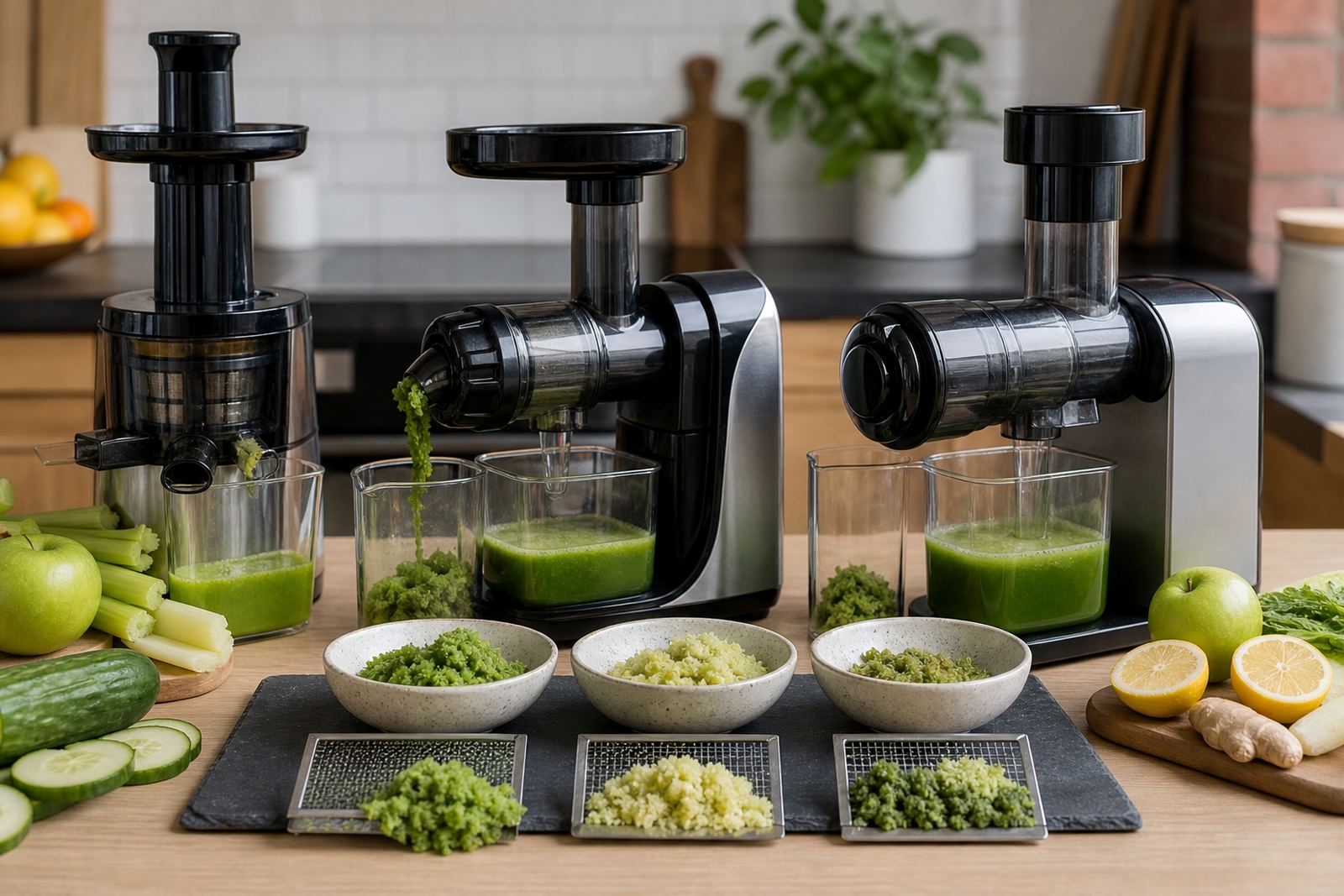
At our Paarden Eiland base, one practical way to compare texture is to run the same ingredients through different machines and note the difference in the pulp. Try apple, carrot and celery in separate batches, then look at how wet the pulp appears and how much froth the juice holds. A slow press will usually leave the driest pulp, while a centrifugal machine may leave a more airy finish. Neither result is wrong, it just tells you how the machine is behaving.
If a home in George wants a smoother pour for everyday use, a finer screen and slower feed can help. If a household in Durban wants quick batches for a family kitchen, a faster machine may be the better fit. The key is to match the ingredient, the screen and the cleaning routine to the way the kitchen is used. That is what keeps pulp predictable instead of messy.
When a machine starts sounding louder than usual, throws out wet pulp or leaks around the housing, those are signs to check the seals, screen and feed path before the next batch. Small faults often show up first in the texture.