When a Seal Starts Talking Back
Seals and gaskets sit quietly in the parts that handle pressure, liquid and movement. In a slow masticating juicer, they help guide pulp and juice through tight chambers. In a centrifugal juicer, they help keep the fit snug around the bowl, lid and spout areas. In a cold press unit, good sealing matters even more because the machine works with steady pressure and slower turning parts.
The first signs are often small. A machine that used to stay dry may start leaving damp marks on the counter. You may notice juice collecting around the base, drips near the pulp outlet, or a slight smell of trapped moisture after cleaning. A seal can also harden over time, especially in kitchens where the unit is washed often and left to dry in strong sun or near warm appliances.
In Paarden Eiland and other coastal areas, humidity can shorten the life of soft parts. Salt air and frequent use can make rubber or silicone feel sticky, cracked or flattened. If a seal no longer sits tightly in its groove, the fit changes and the machine may not hold liquid the way it should.
The Telltale Marks Most Home Users Miss
Not every worn seal gives a dramatic warning. Some signs are easy to overlook if you only look at the machine while it is running. A lid that used to lock in smoothly may feel slightly loose. A juice jug may wobble where it once sat steady. A feeder section may show thin stains that keep reappearing after washing.
Here are the most common clues to watch for:
- Repeated leaking from the same join or seam
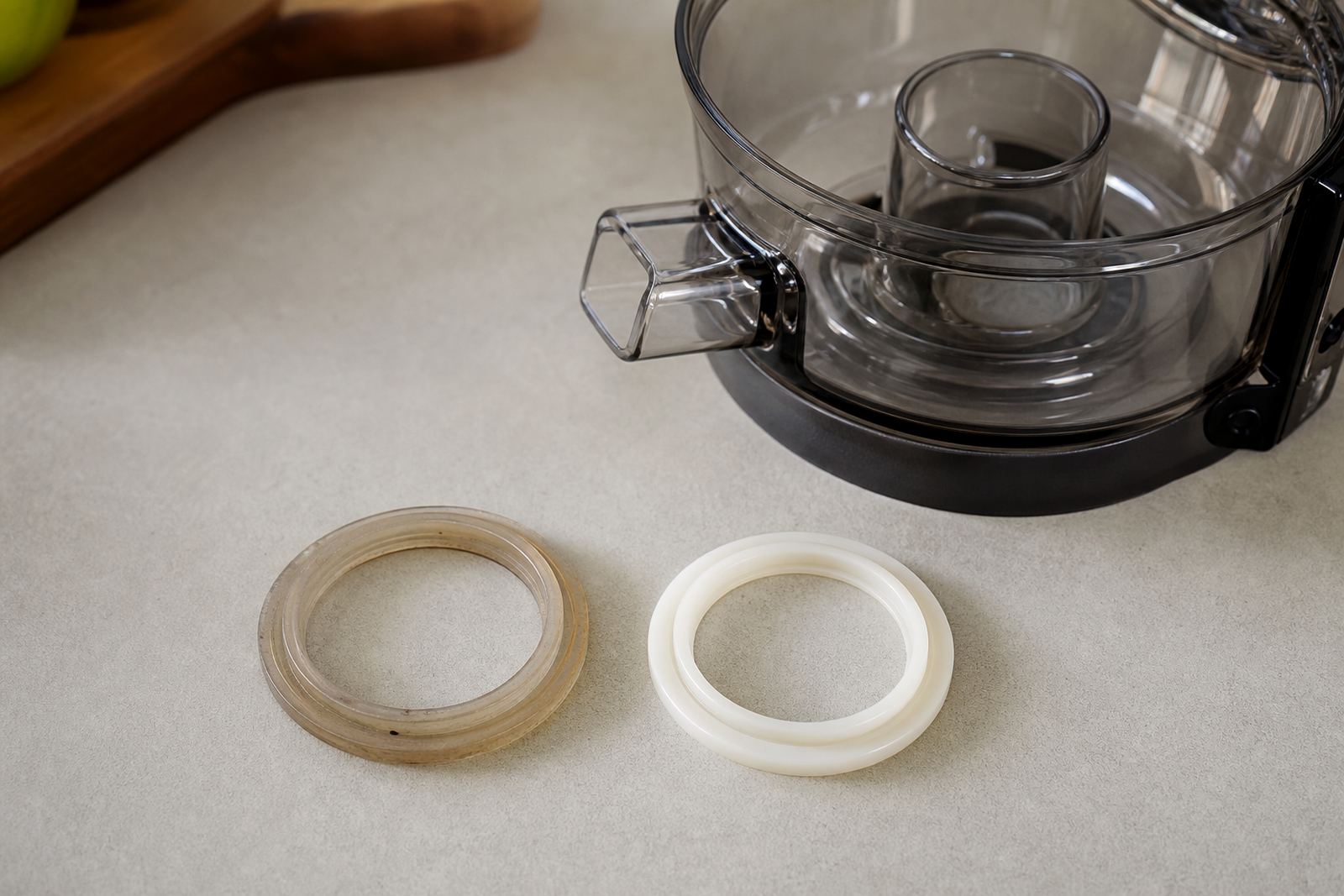
- Darkened, cracked or flattened rubber
- A seal that slips out of place during assembly
- Extra noise from air or liquid escaping around the fit
- Pulp that seems wetter than usual because the pressure is not holding properly
- Water left behind in the machine after rinsing and drying
If a part smells stale even after a proper wash, that can also point to an area where liquid has been sitting too long. A worn seal may not be the only cause, but it is one of the first places to check.
Cleaning Habits That Protect the Seal
Good cleaning does not just keep a juicer looking neat, it also helps the sealing surfaces last longer. Small bits of fruit fibre or leafy pulp can collect in grooves and make a seal sit unevenly. If that happens often, the machine may leak even though the rubber itself is still usable.
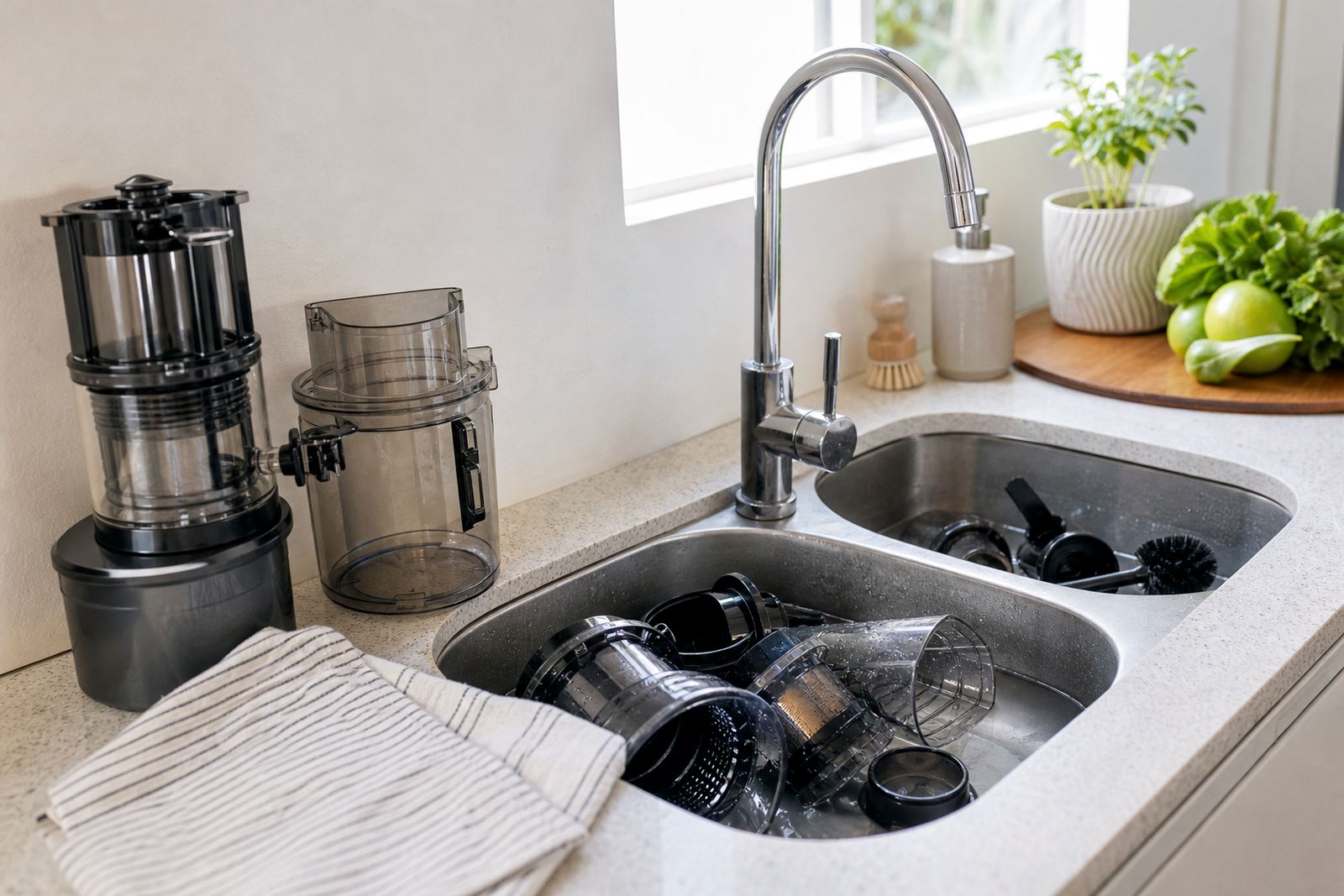
Use lukewarm water and a soft brush to clean the groove where the seal sits. Avoid sharp tools that can nick the edge. Dry the part fully before putting it back. If the seal is removable, check that it has not stretched or twisted during washing.
A few practical habits help a lot:
- Take the parts apart soon after use so residue does not dry hard
- Rinse away acidic juice residue from citrus, apple and berry blends
- Leave parts to air dry on a clean rack, not on a damp cloth
- Do not force a seal back into place if it looks twisted
- Keep the machine away from heat that can harden soft parts
For households in Durban or George where kitchens can stay humid, proper drying matters even more. A seal that stays damp tends to hold grime and loses its shape faster.
Leak Patterns Tell You Where to Look
Different leaks point to different problems. If liquid escapes near the top, the lid seal or locking fit may be the issue. If the leak comes from lower down, the bowl seal, spout seal or base joint may need attention. A drip that appears only when the machine is under load often means the seal is still in place but no longer tight enough under pressure.
Noise can help as well. A whistling sound, a rattling fit or extra vibration can mean air is getting in where it should not. That does not always mean the motor is at fault. Sometimes the problem is a small piece that has worn thin and can no longer hold the pressure path properly.
When checking for leaks, place the machine on a dry surface and run a small test batch. Watch the joins carefully, especially around the pulp exit and juice outlet. If you see repeated wetness in one spot after a proper clean, the seal at that point deserves attention.
Food Safety Means More Than a Quick Wipe
A worn seal is not only a nuisance, it can also make thorough cleaning harder. Tiny gaps can trap juice, pulp and rinse water. If that material is left behind, it can spoil the clean finish you expect from a kitchen appliance. This matters for any home juicer, whether it is used daily or only now and then.
For safe handling, the machine should come apart cleanly and reassemble without forcing. A seal that has split, gone sticky or started shedding bits should be replaced rather than patched. Temporary fixes with tape, glue or makeshift packing are not suitable for parts that come into contact with food or liquid.
Watch for these food-safety warning signs:
- Visible mould or staining in the seal groove
- Odour that returns soon after washing
- Sticky residue that does not rinse away
- Cracking that opens wider when the part bends
- Water pooling in hidden corners after drying
If any of these show up, it is time to stop using that part until it has been checked. A clean machine is easier to trust than one that keeps hiding residue in worn edges.
A Cape Town Kitchen Example That Fits Many Homes
In a Paarden Eiland household, a family using a cold press unit noticed juice beading around the front of the chamber after every weekend run. At first it was blamed on overfilling, but the leak kept returning even with smaller batches. The seal had flattened on one side and was no longer sitting evenly after washing and reassembly.
That is a common pattern in homes across Cape Town, Johannesburg and Pretoria. The machine may work for months with no trouble, then start showing only a small drip. Once the fit changes, the leak usually gets worse during busier use or when the machine is not dried properly between batches.
For users in Stellenbosch or Somerset West, where kitchens may see more fruit prep during warmer months, regular inspection can prevent a small issue becoming a messy one. If a seal looks tired, replacing it early is usually easier than dealing with repeated leaks and extra cleaning.
What to Do Before the Leak Gets Worse
If you suspect a worn seal, remove the part and inspect it in daylight. Look for cracks, flat spots, stretching, stiffness and any build-up around the edge. Compare how it sits in the groove with how it should sit when the part is dry and clean. If the seal no longer returns to shape, that is a strong sign it has reached the end of its use.
Replacement parts should match the machine model and the exact seal position. A part that is nearly the same can still sit wrongly and cause fresh leaks. Keep the old seal if needed for comparison, and check the fit after installation before using the juicer with a full load.
If you need help with seal replacement, deep clean guidance, leak troubleshooting or a routine care plan, MiniPress supports home juicer users across Cape Town, Johannesburg, Durban, Pretoria and George through the enquiry form on our contact page.