Straight after juicing, do this first
Switch off the unit, unplug it, and let moving parts stop fully before you touch anything. Remove the pulp container, juice jug and feed parts, then empty leftover pulp into the bin or compost, where suitable. Rinse the removable parts with lukewarm water as soon as possible, because dried fibre is harder to shift later.
For slow masticating juicers and cold presses, take care not to force parts apart. If a screen, auger or press basket feels tight, release it gently and check for trapped pulp or a twist in the locking ring. For centrifugal juicers, clear the lid, pusher and filter basket before residue hardens around the fine mesh.
Wash the parts without stressing the finish
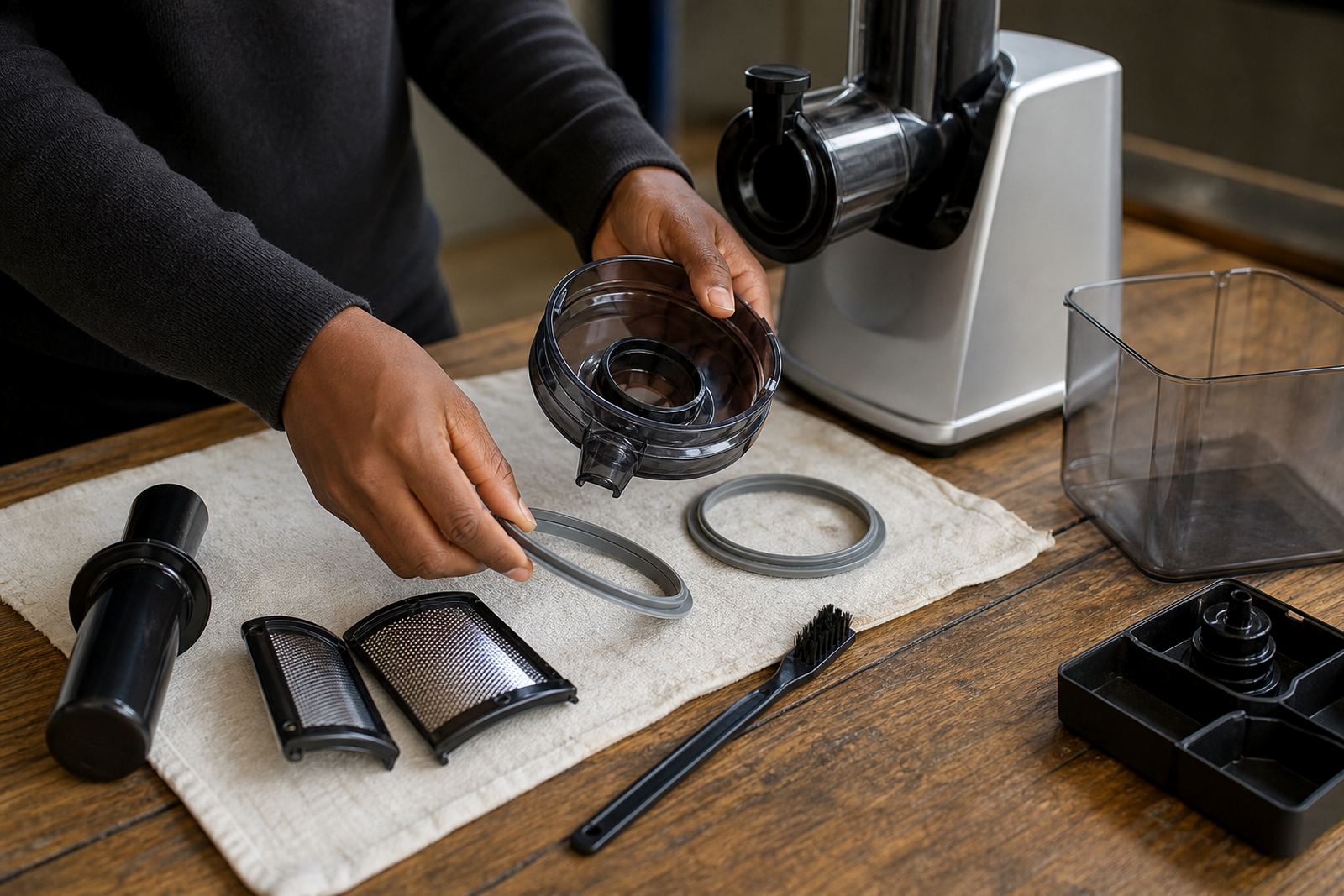
Use warm water, mild dish soap and a soft brush or sponge. A small brush helps around slots, seals and mesh areas where pulp builds up. Avoid harsh scouring pads on clear lids and polished surfaces, because they can scratch and make future cleaning harder. Hot water is fine for a rinse, but not so hot that it distorts plastic parts.
- Soak sticky parts for 5 to 10 minutes, then brush again.
- Rinse until no soap residue remains.
- Check rubber seals and rings for grit, pulp or tears.
- Dry each part with a clean cloth, then leave it open to air dry.
Drying matters in humid coastal air
In Cape Town and other coastal areas, trapped moisture can linger inside seals and joins. If parts are stacked while still damp, odours and cloudy marks can form. After washing, shake off excess water, towel-dry where practical, and place the parts on a clean rack or tea towel with space between them. Do not reassemble the unit until all parts are fully dry.
Wipe the motor base with a lightly damp cloth only. Never run water over the base or put it in the sink. Keep the plug and cable dry too, and check that the plug pins are clean before storage or the next use.
Handle screens, blades and press parts with care
Fine screens, cutters and press components need careful handling so they keep their shape and balance. Do not bang them against the sink or use metal utensils to scrape residue off. If a screen has small blocked holes, rinse it from both sides and brush along the grain of the mesh rather than across it.
- Hold screens by the rim, not the mesh.
- Store blades and cutters separated from other kitchen items.
- Keep seals flat, not folded or pinched.
- Replace any cracked plastic, warped basket or loose gasket before use.
Food safety checks before the next batch
Clean equipment is only part of safe food handling. Wash your hands before assembly, and make sure fruit and vegetables are rinsed well under running water. Remove spoiled sections before feeding produce into the machine. If you are working with softer fruit, leafy greens or herbs, process them promptly and refrigerate juice soon after making it.
Never use damaged parts that could shed fragments into the juice. If you notice mould, persistent odour or sticky residue that will not clear, stop using the unit until it has been thoroughly cleaned and checked.
When to ask for help with seals, noise or leaks
If the machine starts vibrating more than usual, leaking at the base or making a scraping sound, stop and inspect the assembly before the next use. A seal may be seated badly, a screen may be clogged, or a part may need replacing. Our team in Paarden Eiland supports customers across Cape Town, Johannesburg, Durban, Pretoria, George, Stellenbosch and Somerset West with first time setup, deep clean guidance, spare parts help and seal replacement advice.
MiniPress clients can reach us through the enquiry form on our contact page for support with routine care, cable and plug checks, video support calls and storage care. For home users, a steady cleaning routine often prevents bigger problems later, especially after frequent juicing or long storage.