Start with the parts on the counter, not in a rush
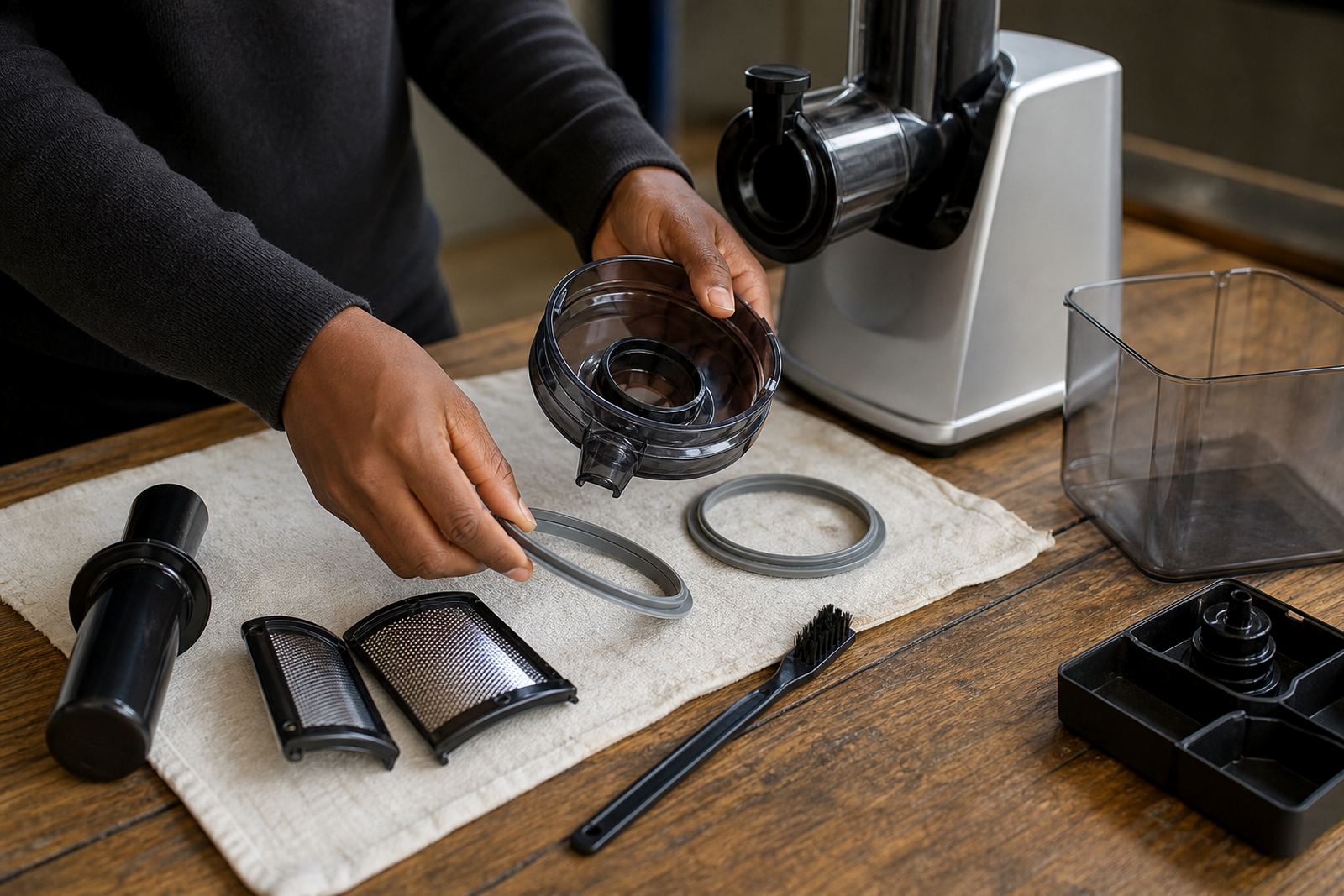
Before plugging anything in, unpack the unit on a dry surface and check that the main body, feed chute, pusher, auger or cutting parts, juice jug, pulp container and cleaning pieces are all present. Keep packaging out of the way so nothing slips under the machine. If your model uses a power cord, make sure the plug and cable are intact, with no cuts, kinks or crushed sections.
For a first setup, wash removable parts in warm water with mild soap, then rinse well and let them air dry fully. Do not soak the motor base or rinse it under a tap. Dry hands matter here too because a wet grip can make fitting parts awkward, especially on compact kitchen counters.
Where the machine sits makes a real difference
Place the juicer or cold press on a level counter close to a socket, with enough space behind and beside it for airflow and for the pulp container to clear the edge. In many Cape Town flats and small kitchens, the best spot is away from the stove, kettle steam and direct sun. Coastal humidity in places like Paarden Eiland, Durban and George can add moisture to stored parts, so keep cloths and brushes dry after use.
A stable surface helps with vibration and with spills. If the machine rocks, move it rather than forcing the feet to settle. On tiled or polished tops, a thin non-slip mat can help reduce movement but it should not block the base vents.
- Keep the unit away from sink splashes and open windows in windy weather.
- Leave enough room to remove the pulp bin without lifting the machine.
- Use a socket that is easy to reach so the plug can be disconnected quickly if needed.
Slow masticating, centrifugal and cold press setup is not identical
Slow masticating juicers usually use a turning auger that feeds produce through more steadily, while centrifugal units use a fast spinning basket and tend to need firmer locking of the lid and feed chute. Cold press machines often work at a gentler speed and can be more sensitive to how the parts are aligned. If the lid is not seated correctly, the machine will often refuse to start or it may rattle at once.
During setup, fit each part in the order shown by the product itself. Listen for the click or lock point, then give the assembled top a light check by hand before switching on. If a hopper, screen or cap is included, make sure it is seated square. A misaligned screen can cause leaking, uneven juice flow or extra noise.
First run checks before you put in fruit or veg
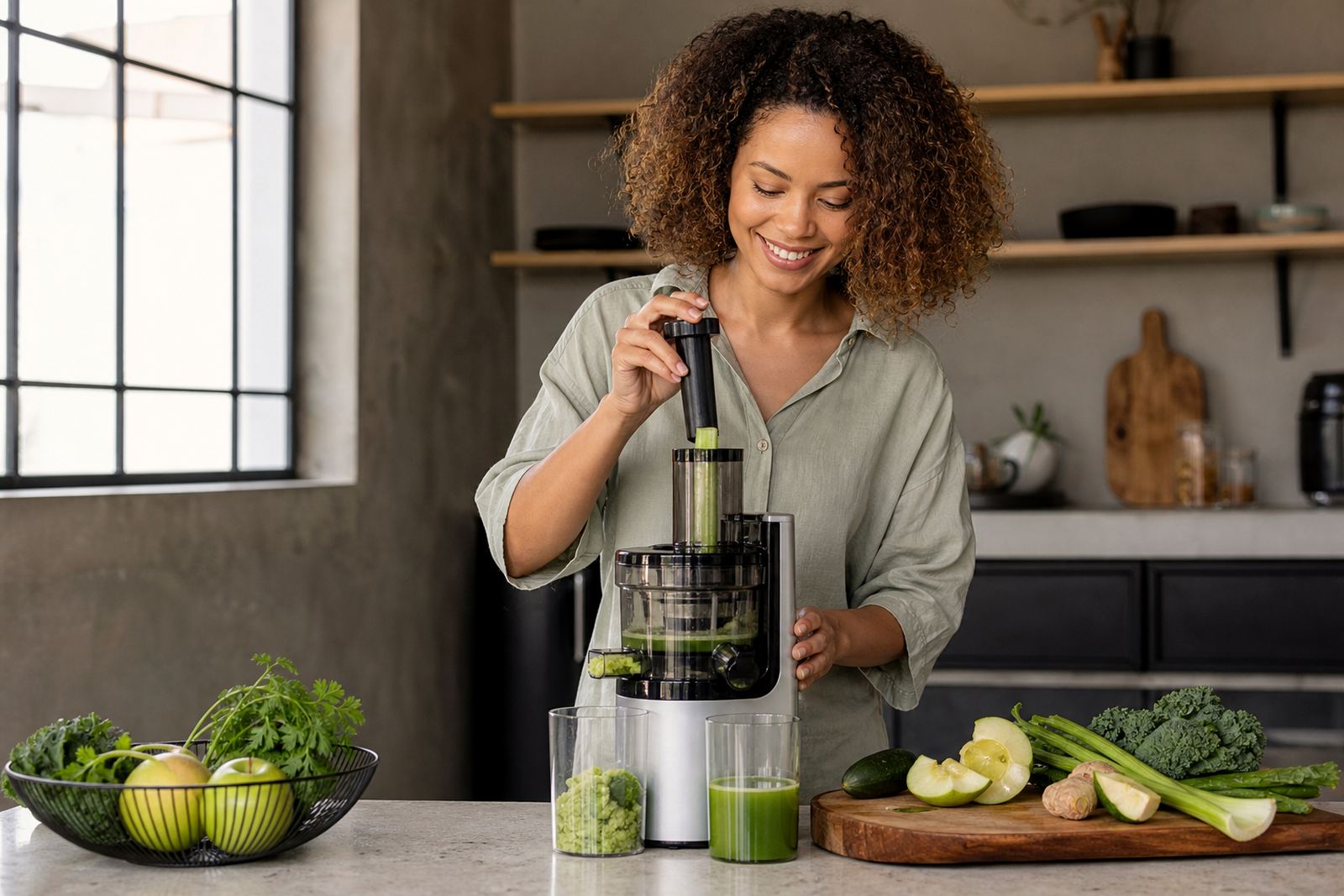
Run the machine briefly with no produce inside. This helps confirm that the motor starts smoothly, the feed opening is clear and the container sits correctly under the outlet. A short dry run also makes it easier to hear if there is an unusual vibration, clicking or scraping sound before food goes in.
After that, test with a small amount of softer produce if the model allows it. Cut ingredients into manageable pieces so they feed evenly and do not force the motor. Hard pips, large stones and long fibrous stalks should be removed unless the product instructions allow otherwise. Do not push with heavy pressure, let the auger or basket do the work.
- Check that the juice and pulp outlets are lined up correctly.
- Watch for drips around the seal or screen area.
- If the machine shakes, stop and recheck the assembly before continuing.
Food safety and cleaning after the first use
Once the unit has been tested, wash the removable food-contact parts as soon as possible so residue does not dry on. Cleaning sooner helps reduce stains and makes the next wash easier. Use a soft brush for the screen, fine mesh or pulp channel, because a hard scrub can damage delicate surfaces. Rinse until no soap remains, then air dry fully before storage.
Keep raw produce, the work top and your hands clean before juicing. If a part has a crack, warped edge or loose seal, stop using it until it is replaced. Food safety depends on both the machine and the way it is handled, especially in warm kitchens where residue can spoil quickly.
When something feels off, check these points first
Many setup issues are small and easy to sort out. If the motor hums but nothing moves, the lid may not be locked, the chute may be overloaded, or a safety switch may not be engaged. If juice leaks onto the base, check the seal, spout cap and screen fit. If the unit is noisy, look for a trapped piece of peel, a loose container or a surface that is not level.
For cable, plug and switch concerns, disconnect the unit before inspecting anything. Never use a damaged cable or a socket that sparks. If the product has a long storage period or has travelled across South Africa by courier, inspect the moving parts again before first use because slight shifting can happen in transit.
- Re-seat the bowl and lid carefully.
- Clear any fibre from the screen or auger housing.
- Confirm the plug is fully inserted and the socket is working.
Help from our Paarden Eiland team when you need it
MiniPress supports home users across Cape Town, Johannesburg, Durban, Pretoria, George, Stellenbosch and Somerset West with setup guidance and practical aftercare. From our Paarden Eiland base, the team can assist with first time setup, deep clean guidance, seal replacement, screen care, leak troubleshooting, noise and vibration checks, storage care and cable plug checks.
If you need help with a fresh delivery or you are unsure about the order of assembly, send the details through the enquiry form on our contact page. It helps to include the model type, the issue you are seeing and whether the problem happens during assembly, first spin or cleaning. That way the right person can talk you through the next step without guesswork.